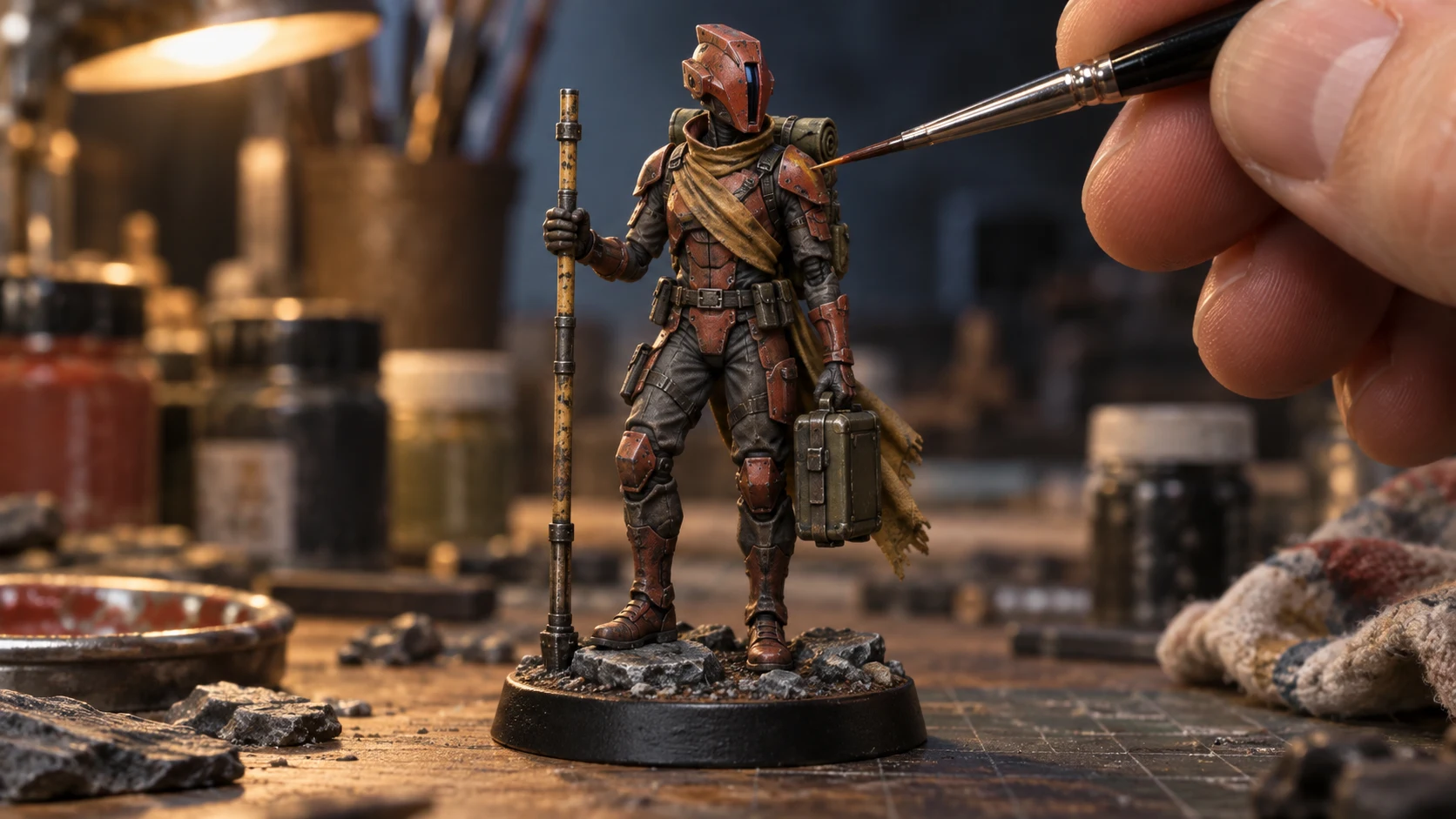
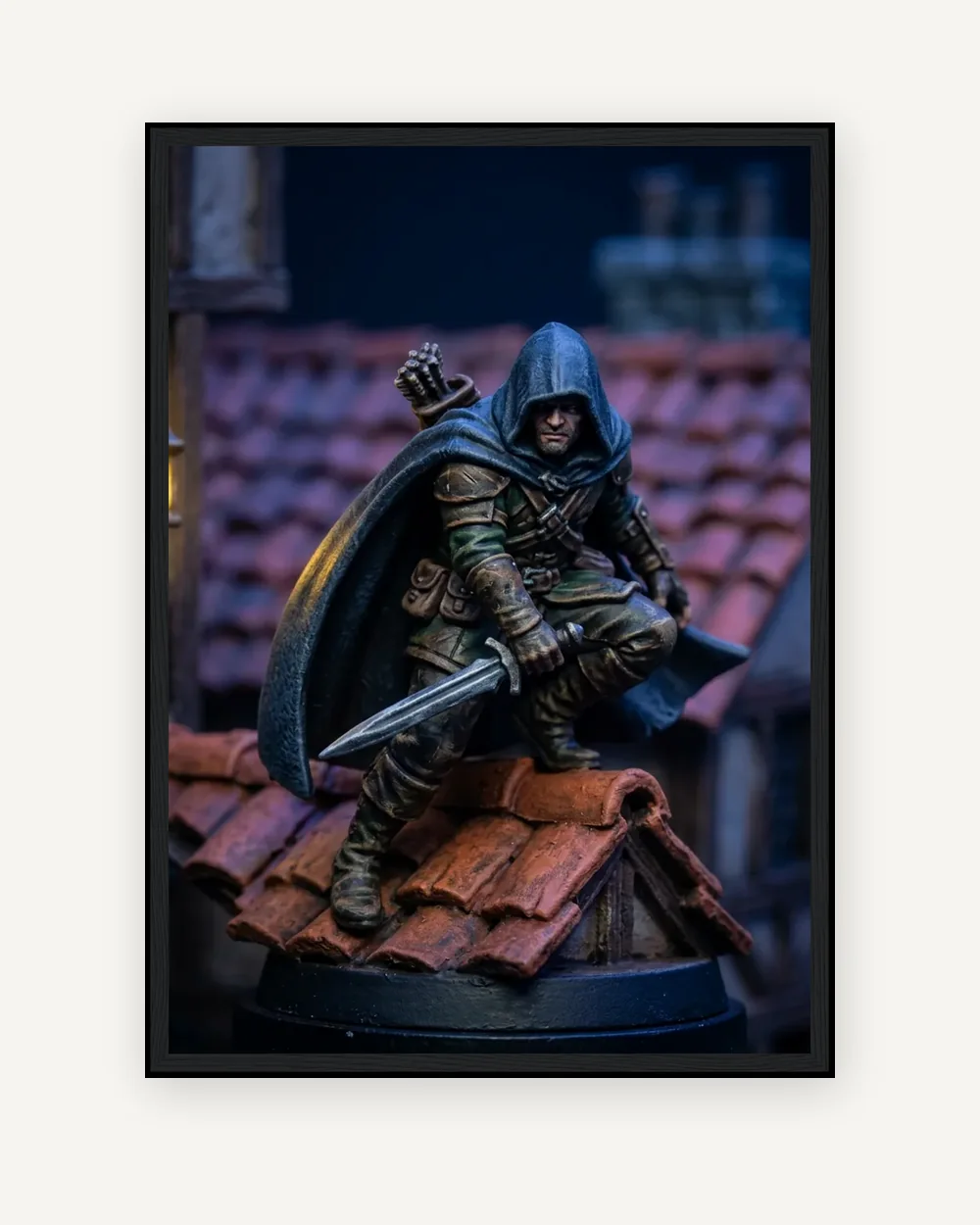
Turn photo into painting: your miniature, in a painted-style scene.
Turn photo into painting-style art, starting with the miniature you spent hours on. It sits on a shelf, or in a foam-lined box, out of sight. Photograph it and we place it in a scene worth looking at: a woodland path, a tavern, a battlefield at sunset, or a stone courtyard. The studio is told to leave your paintwork alone.
Jump to a section · 3 sections
You've spent hours on that miniature. The glue, the primer, the thin coats, the wash in the recesses, the dry-brush on the edge highlights. And now it sits on a shelf, or worse, in a foam-lined box, where only you and the cat see it.
What we do is not repainting. Your figure is already painted, by you, and the one thing this studio will not do is paint over that work. Every style prompt carries the same instruction: Treat the photographed character as a locked foreground. Preserve its exact silhouette, miniature proportions, face, pose, painted colors, brushwork, armor, clothing, weapons and sculpted details. Do not redesign, repaint, resculpt, embellish or turn it into a different realistic character.
What changes is everything around it, and that part is new.
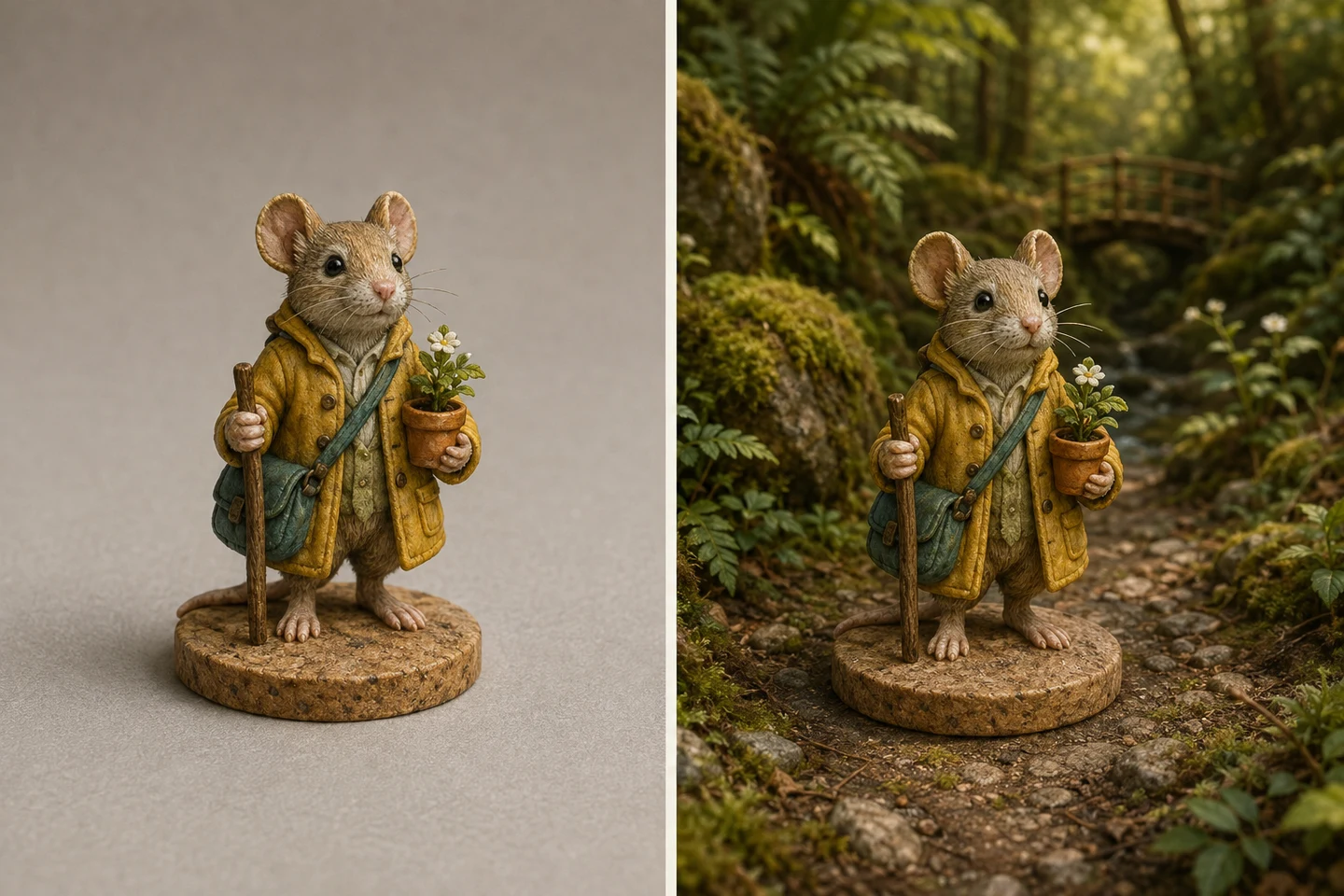
Turn photo into painting-style art: how the process works
Three steps, and the middle one is where the work happens.
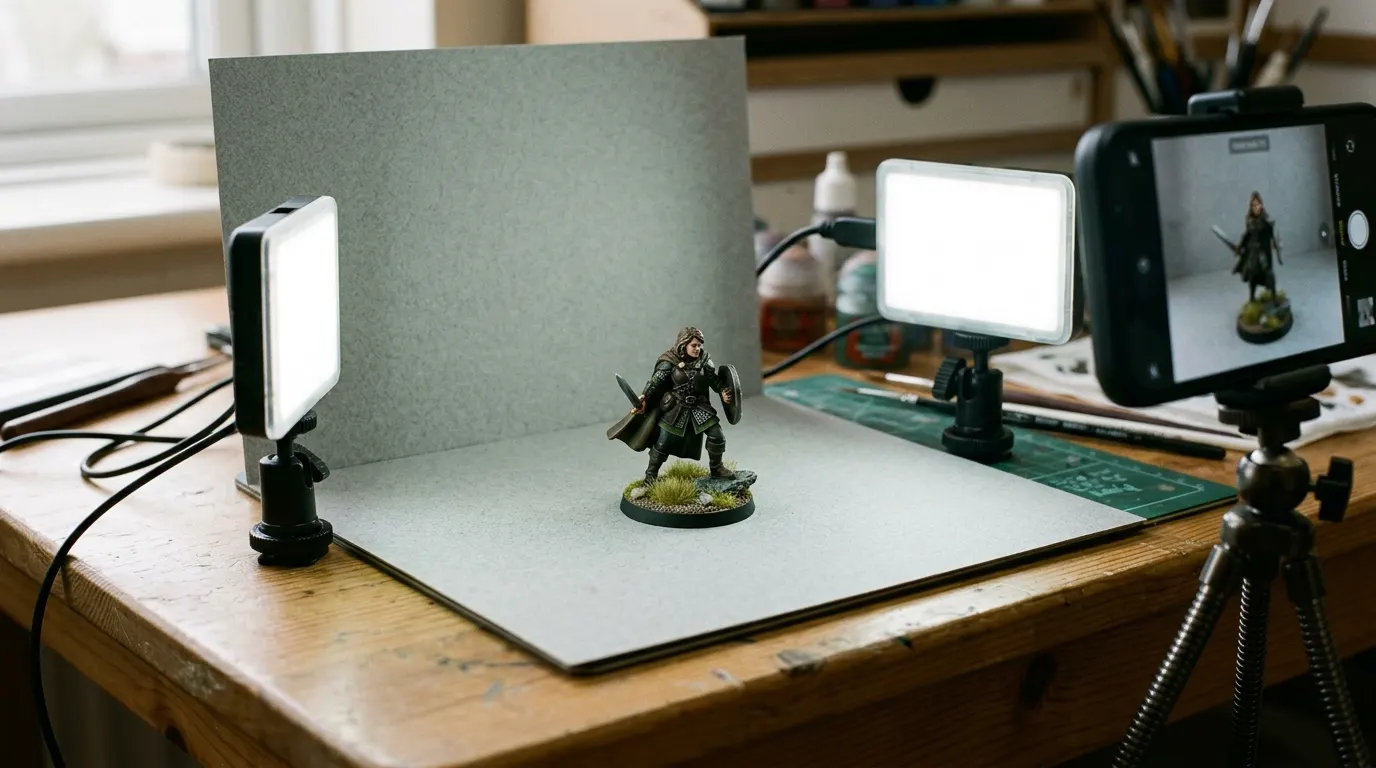
Step one: upload a photo. Any photo of your painted miniature works, but some work better than others. The photography guide covers the lighting, the backdrop and the angle. The short version: good light, plain background, fill the frame.
Step two: choose a scene and approve the render. You get a watermarked preview at screen resolution. If it is wrong (the light does not match, the terrain does not continue under the feet, the figure reads as plastic), generate another. Three free watermarked previews a day, and you verify your email to use the studio. When one is right, you tick the box against that specific render, and that tick unlocks the cart.
The tick matters more than it sounds. The render you approve is what we print from: after payment the same composition is re-rendered at full print resolution from the picture you accepted, not from the prompt being run again. Re-rendering can still shift fine detail, so check the preview against your original before you approve it.
Step three: it arrives. Your chosen product is made to order for US delivery, with shipping rates shown at checkout for your address.
| Style | Setting | Note |
|---|---|---|
| Woodland Path | A forest footpath, mossy stones, ferns | The gentlest; suits a ranger, druid or scout |
| Paintwork Portrait | A restrained stone courtyard | For when the paint job is the point |
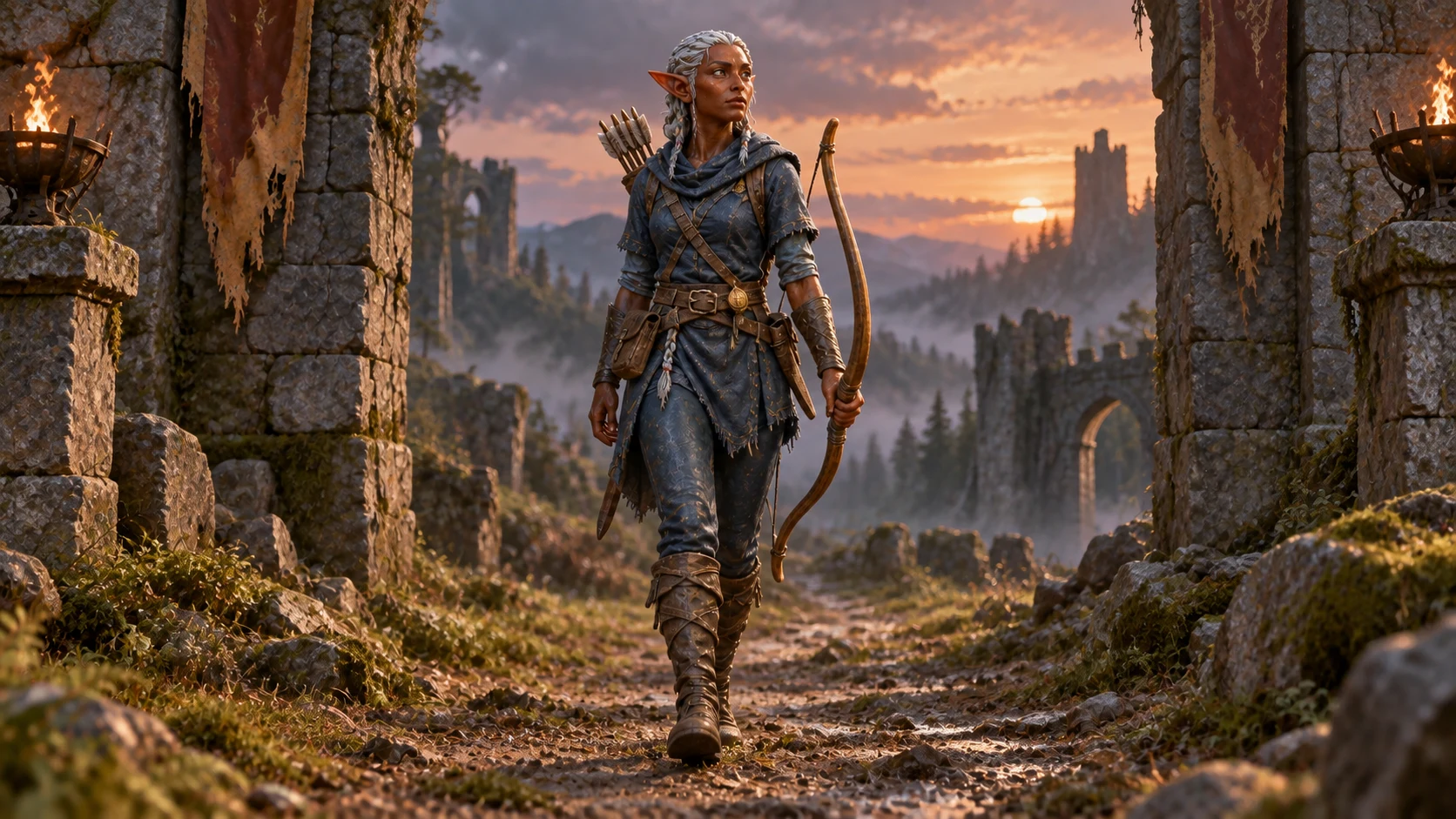
| Hero Portrait | A ruined fortress entrance at dusk | Wants a strong silhouette |
| Into Battle | A mountain battlefield at sunset | Dirt and stone beneath the figure |
| The Tavern | Timber, a stone hearth, distant tables | The downtime portrait |
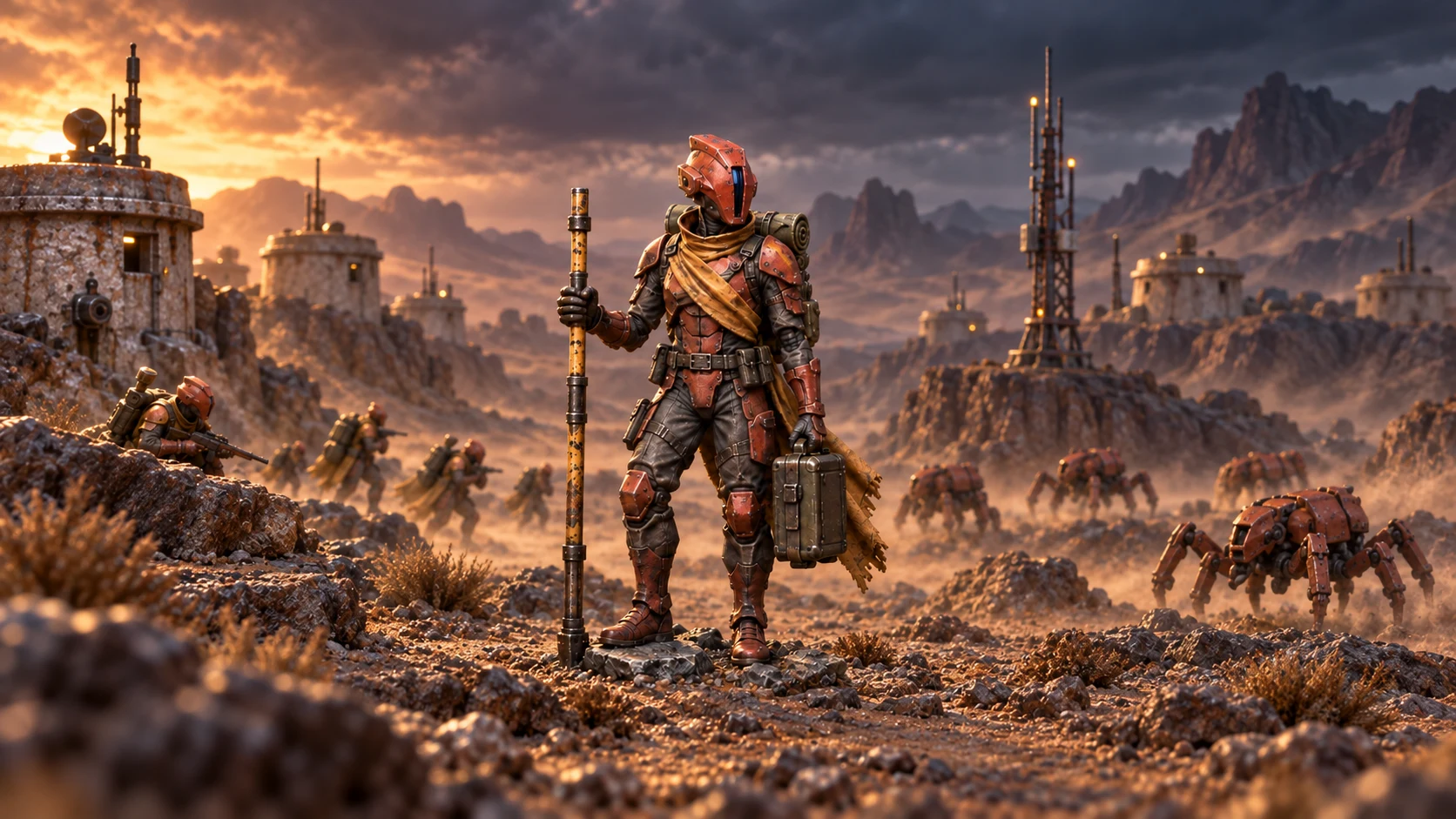
The five styles
All five replace the surroundings and leave the figure alone. The display base comes off and scene terrain continues under the unchanged feet; the paintwork, pose and proportions are the ones you photographed.
Woodland Path. A forest footpath: mossy stones, ferns and soft canopy light, with the figure standing on the continuous forest floor. The gentlest of the five, and the one that suits a lone ranger, a druid, a scout.
Paintwork Portrait. A restrained stone courtyard, distant architecture softly blurred, soft diffuse light. The setting stays out of the way, which makes this the one to pick when the paint job is the point.
Hero Portrait. The entrance to a ruined fortress at dusk, subtle rim light and distant mist. The most dramatic framing here, and it wants a figure with a strong silhouette.
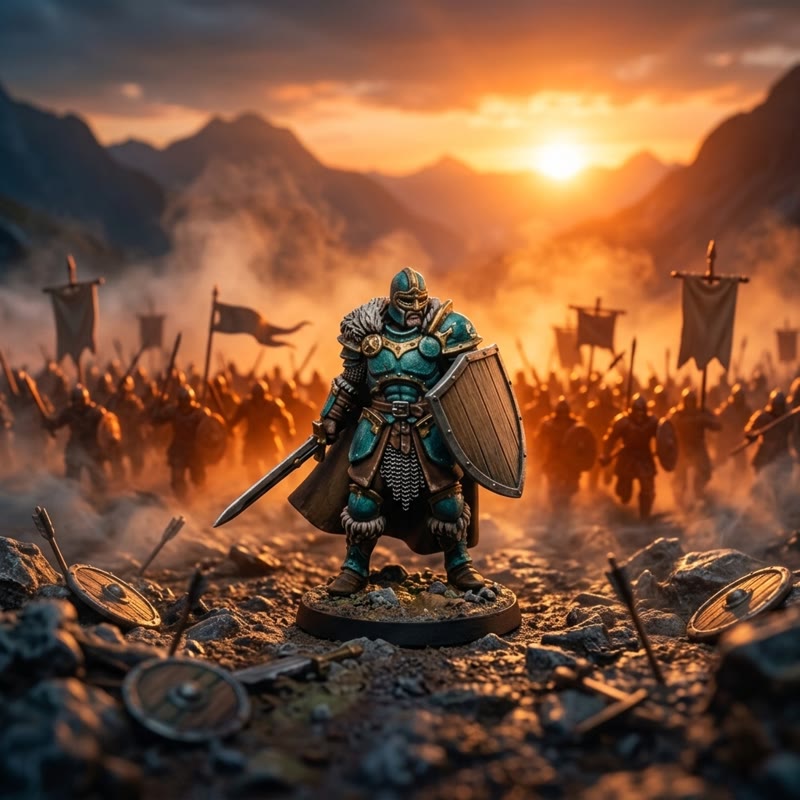
Into Battle. A mountainous battlefield at sunset: distant armies, drifting smoke and muted light, with irregular dirt and stone directly beneath the figure.
The Tavern. Warm timber, a stone hearth and distant tables, the figure standing on the floor at the same scale as the room. The downtime portrait, and the one people pick for a character they have played for years, not a display piece.
Why not take a better photo?
Sometimes that is the right answer, and Paintwork Portrait keeps the setting quiet enough for it. But a photograph of a 32mm figure on a desk is a record of a thing. Putting that same figure on a woodland path at dusk, at A3 on a wall, is the difference between a record and a picture, and the figure in it is still the one you painted, brush marks and all.
If that sounds worth hanging, upload a photo and see. The watermarked preview is free and the render is yours to judge. If you'd rather keep the photo exactly as you shot it, print your miniature photo as it is.
Compare the available US sizes and USD product prices before ordering. Shipping is calculated at checkout for your cart and US address; an expedited rate appears when available.
Questions and answers
How does the miniature photo to print process work?
Upload one photo of your painted miniature, choose one of five styles, and approve a free watermarked preview on screen. The approved render is the one printed, at full resolution, after payment.
Do you repaint my miniature?
No. Every style prompt instructs the studio to preserve the exact painted character: same silhouette, same pose, same colors, same brushwork, same sculpted details. All five styles replace the surroundings; the display base comes off and scene terrain continues under the unchanged feet.
What styles are available?
Five: Woodland Path, Paintwork Portrait, Hero Portrait, Into Battle and The Tavern. All five place your character in a scene. Paintwork Portrait is the most restrained of them, a stone courtyard that keeps the attention on your paintwork.
What photo should I use?
Diffused daylight from one side, a plain background, and the miniature in sharp focus filling the frame. A phone on macro mode is enough.
Can a free app turn a photo into a painting?
Yes. Plenty of free converter tools exist, and what you get depends on the tool and the photo you feed it. This store does something narrower: you upload a photo of a miniature you painted and choose one of five scenes. The studio is told to keep your paintwork and change only the surroundings. After you verify your email you get three free watermarked previews a day, and the one you approve is printed on the product you pick. The previews cost nothing; the print does.
Can ChatGPT turn a photo into a painting?
It can restyle one. OpenAI’s help page says you can upload an existing image to ChatGPT and describe the changes you want, and that ChatGPT Images is available on all tiers, on the web, iOS and Android (OpenAI Help Center). What comes back is a new image, so compare it with your original before you print it. Our studio does a narrower job: it’s told to keep the miniature you painted and replace only the setting, and you approve a watermarked preview before anything is made.
How do you turn a photo into a painting on an iPhone?
On a supported iPhone, Apple’s Image Playground app can start from a photo in your library and make a new image in a style you pick. Apple’s guide says it needs Apple Intelligence, which on iOS 27 runs on an iPhone 15 Pro, iPhone 15 Pro Max or any iPhone 16 model or later (Apple Support). To print a painted miniature through us instead, upload the photo as a JPEG, PNG or WebP up to 10 MB, and either print it as it is or set it into one of the five scenes.
Can Canva turn a photo into a painting?
Canva’s photo editor changes a photo from a text prompt: its feature page says Magic Edit lets you click an element or brush over an area, then type what you want to change (Canva). Whether the result reads as a painting depends on what you ask for. Our scene studio does one fixed job. It’s told to keep the figure you painted and change only what’s around it, and you can always print the photo unchanged instead.