DnD room ideas, starting with the wall
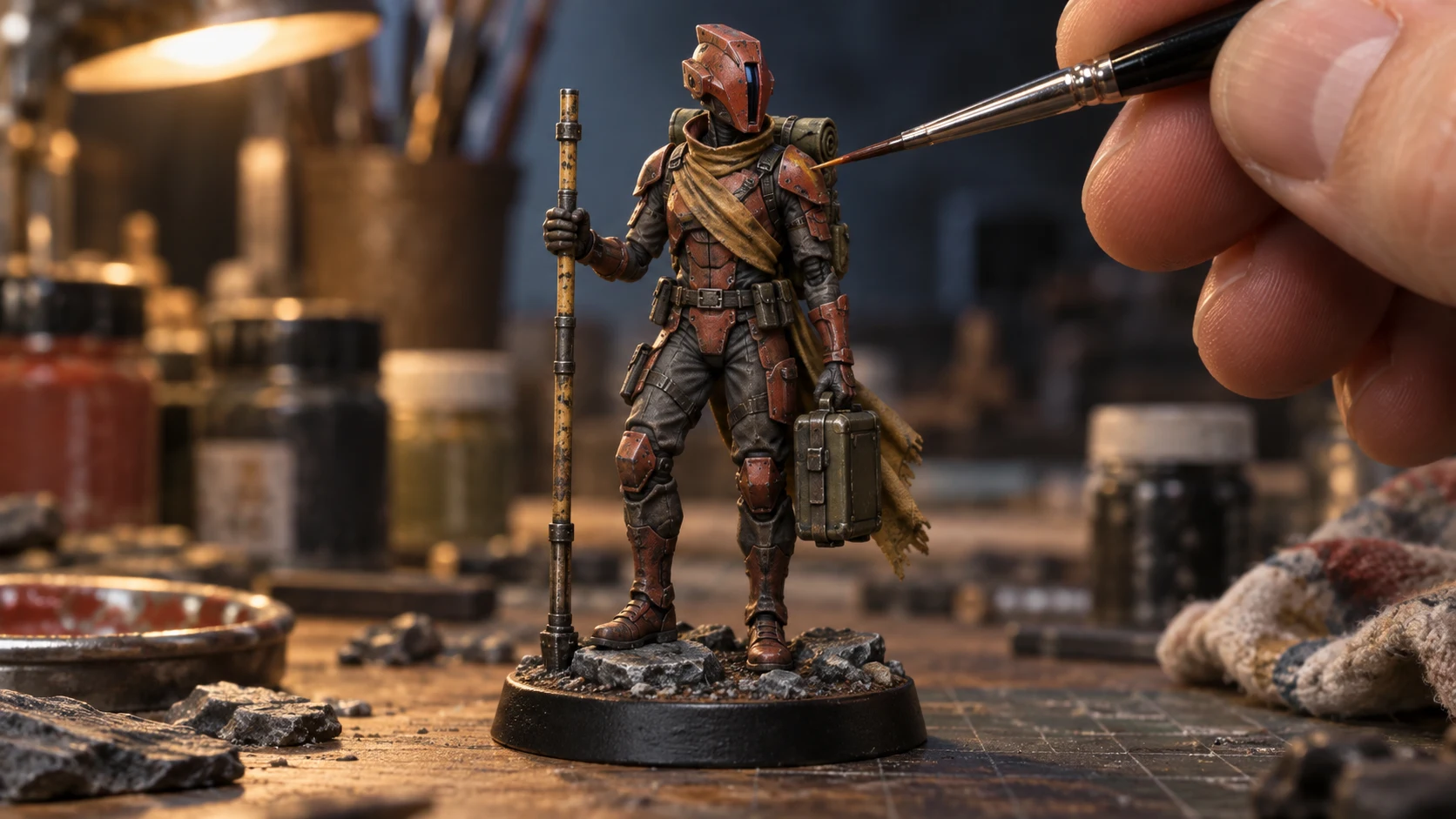
DnD room ideas for a painter start from the same point every time: the desk is covered in pots and brushes, the shelf is full of half-painted models, and the walls are bare. The hobby has taken over the space. The fix is making it look like you meant it.
Jump to a section · 8 sections
A gaming room feels personal when it shows the things you make and play. Start with one image you own: a painted miniature, a drawing or an illustration you have permission to print.
Choose the wall you see most
Measure the clear space above a desk or beside a shelf in inches. Mark the proposed print dimensions with paper before choosing a size. A large mockup photograph can't tell you whether the object will fit your room.
Paper, canvas or a rigid panel?
Paper prints leave the framing choice open. Framed prints include the selected frame. Canvas adds texture; metal and wood panels make the material part of the image. Compare these in our format guide.
Tabletop game room wall decor, by format
Pick the size from the wall and the material from the room. These are the wall formats this store prints, with the sizes each one comes in:
- Art prints on paper, from 8 x 10 in to 27.6 x 39.4 in (70 x 100 cm), for a frame you already own.
- Framed prints at A3 or A2, in a wooden frame in black or natural, with a plexiglass front.
- Canvas in four sizes, from 11.8 x 15.7 in to 23.6 x 31.5 in.
- Metal prints in three sizes, from 11.8 x 15.7 in to 19.7 x 27.6 in.
- Wood prints at 11.8 x 15.7 in or 15.7 x 19.7 in, where pale areas let the wood show through.
- Acrylic prints at 12 x 12 in or 16 x 20 in, on a 4 mm panel.
Let small details have space
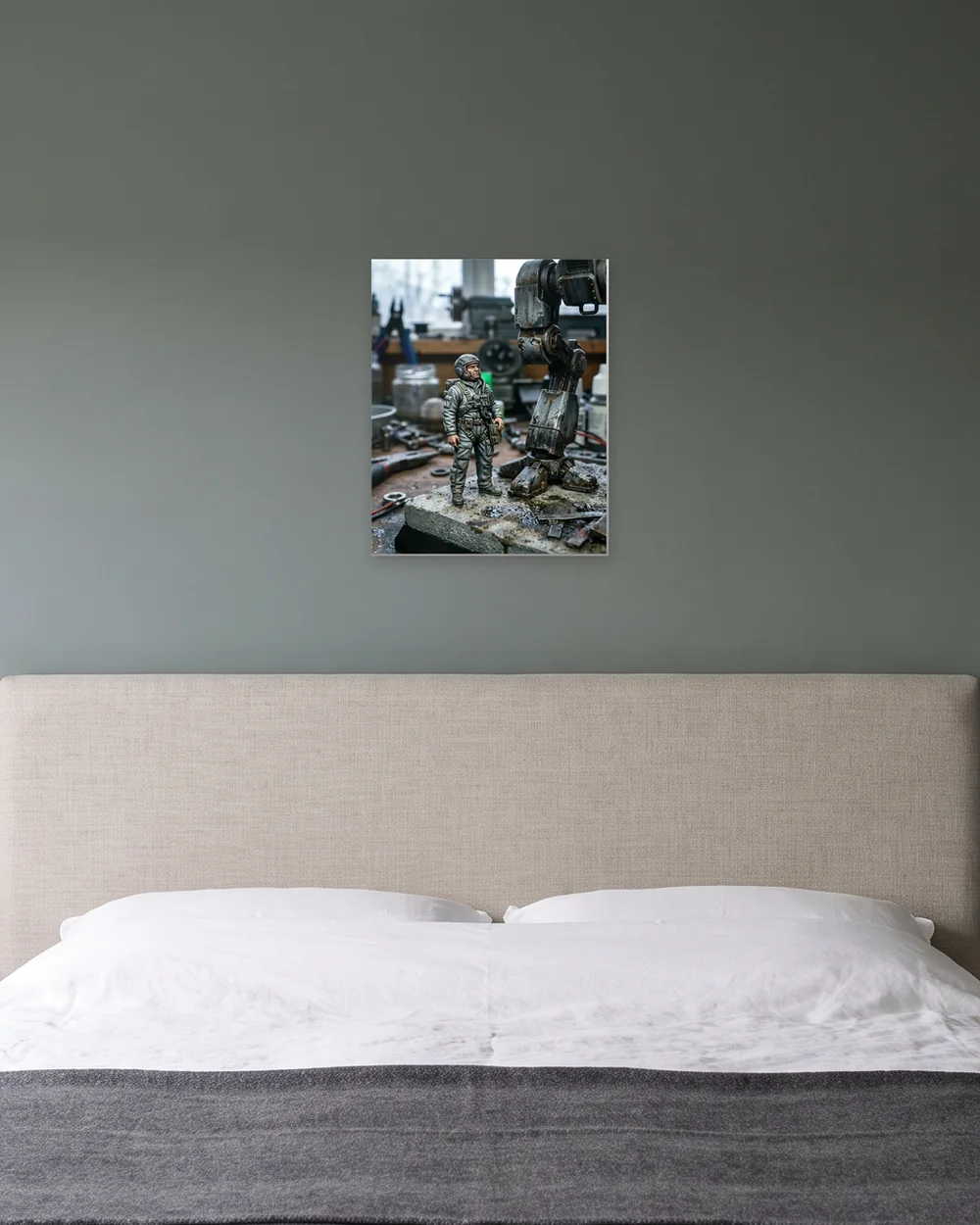
A single miniature can work well as a close portrait. An entire army photographed from a distance needs more pixels and a larger print to keep each figure readable. Inspect the crop and resolution warning in the product selector.
DnD room ideas that start with what you made
Three that cost little beyond the print: hang one portrait of the figure you're proudest of at eye level above the desk; put a lineup photo of the whole army above the table it plays on; and give the display shelf a single print of one model from it, so the eye knows where to look. Each starts from a photo you can take this evening.
A tabletop gaming room built around your hobby
Keep display shelves clear enough to reach the models safely. Give painting supplies their own working area, then use artwork to connect the desk and display space. Our hobby room guide and gallery wall layouts develop those choices.
Plan the delivered cost
Product prices are in USD. Shipping depends on your cart and destination, with faster options shown when available. Choose an object you'll enjoy every day before adding more pieces.
Check current US products, sizes and USD prices. Shipping is added at checkout for your address. A-series dimensions on these reference pages are not a promise that every size is available to order.
Take the measurements into the product choice
Compare canvas prints, metal prints and framed prints using their listed dimensions. For several pieces, start with our gallery-wall planning guide.
Questions and answers
What should I put on the walls of a DnD room?
Art prints of your painted miniatures, framed at eye level. One or two large prints work better than a gallery wall of small ones. We make prints from miniature photos: upload a photo, pick a scene, and approve the render before anything is printed.
How do I display painted miniatures?
A glass-fronted display cabinet with LED strip lighting is the standard. IKEA Detolf is the default. Put the best models in, rotate as you paint new ones. Our display guide covers the options.
What lighting works best for a hobby room?
Two kinds: cool-white task lighting for the painting desk, and warm-white ambient lighting for the room. The display case needs its own LED strip inside the glass.
How do I organize a miniature painting desk?
The desk surface is for what you're working on now: cutting mat, paint rack, water pot, the current miniature. Everything else lives in drawers or on shelves behind the desk. A brush holder keeps the brushes tips-up.
What is the ideal layout for a game room?
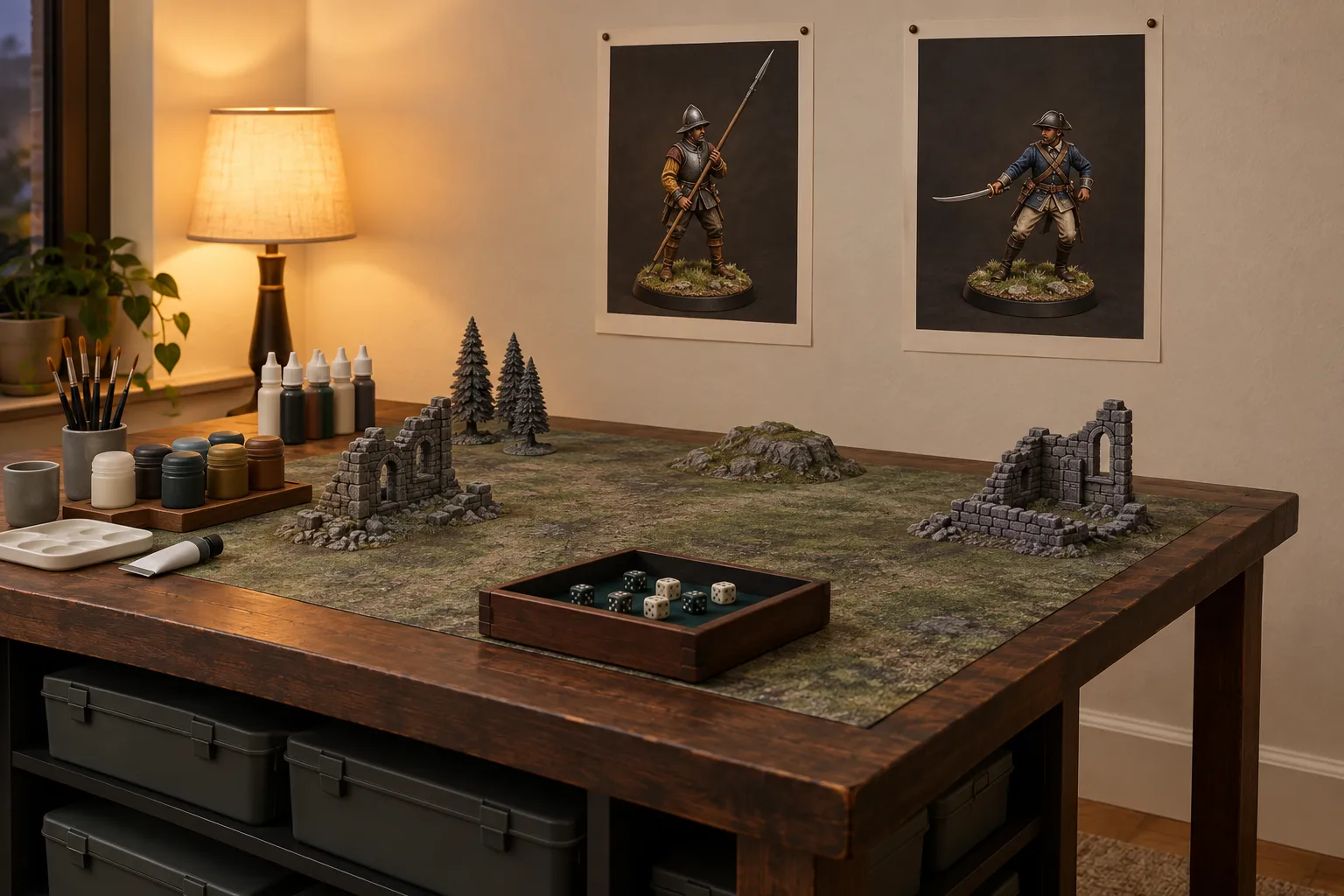
There isn’t one layout, but three zones keep a room working: the table or screen where you play, a painting desk with its own light, and a display shelf you can reach without moving anything. Put the wall art on the wall you face most, usually above the desk, at eye level. Measure that wall in inches before you pick a print size, and keep the shelf near the desk so the models you’re working on stay off the playing surface.