From your first army to your next campaign.
Miniature painting, character artwork, tabletop gifts, and practical printing advice. Find a subject below or search for your question.
Tabletop gaming and printing guides
-
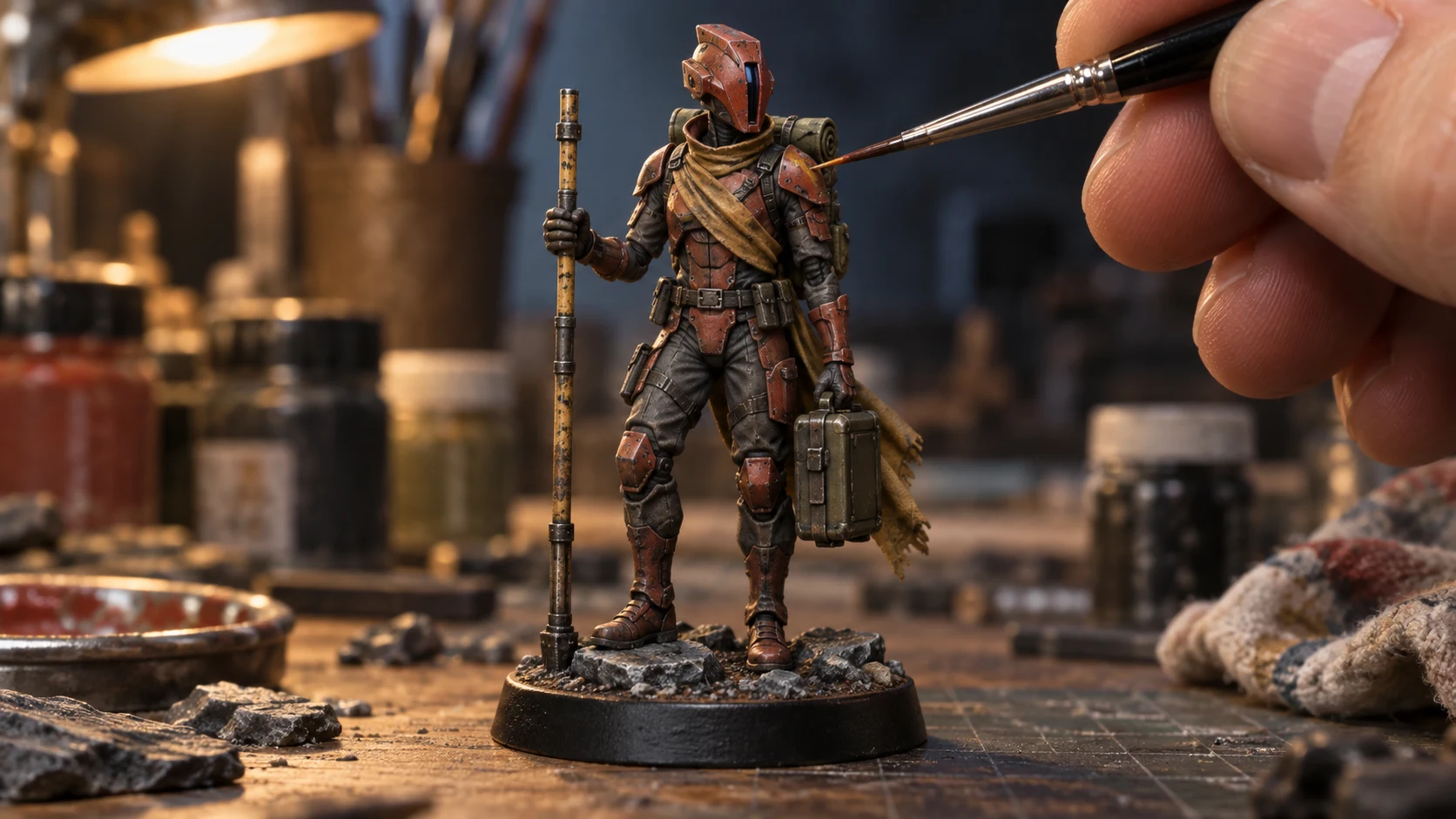 From your file to your favorite thing. A few small checks make a big difference to your finished print.
 -
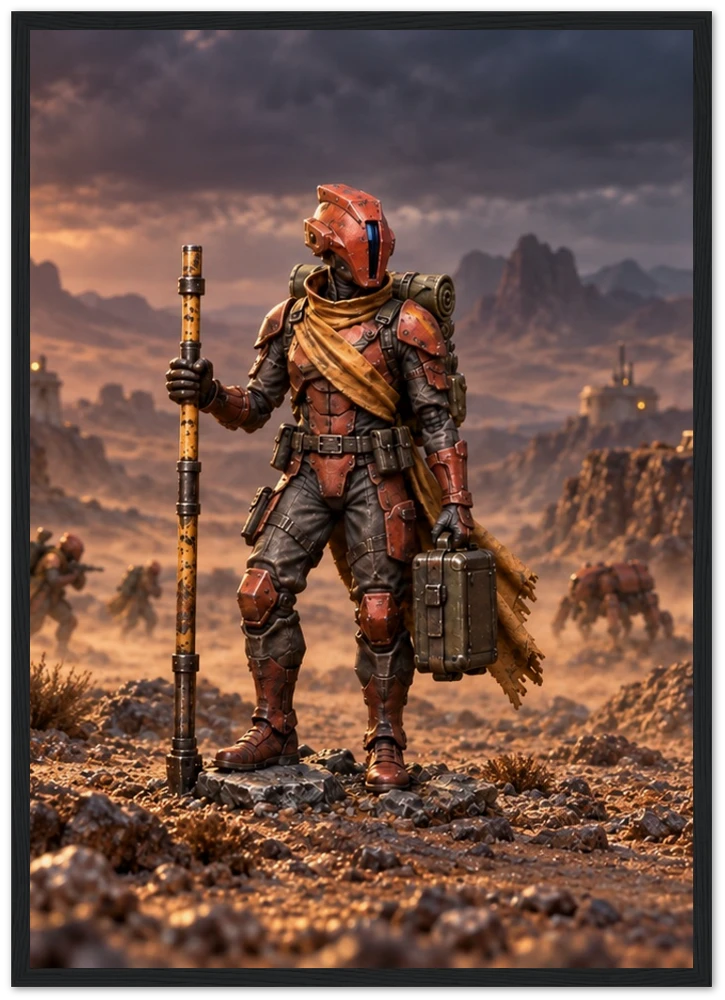 Where will your artwork live? Choose the object around the way you want to enjoy the image.
 -
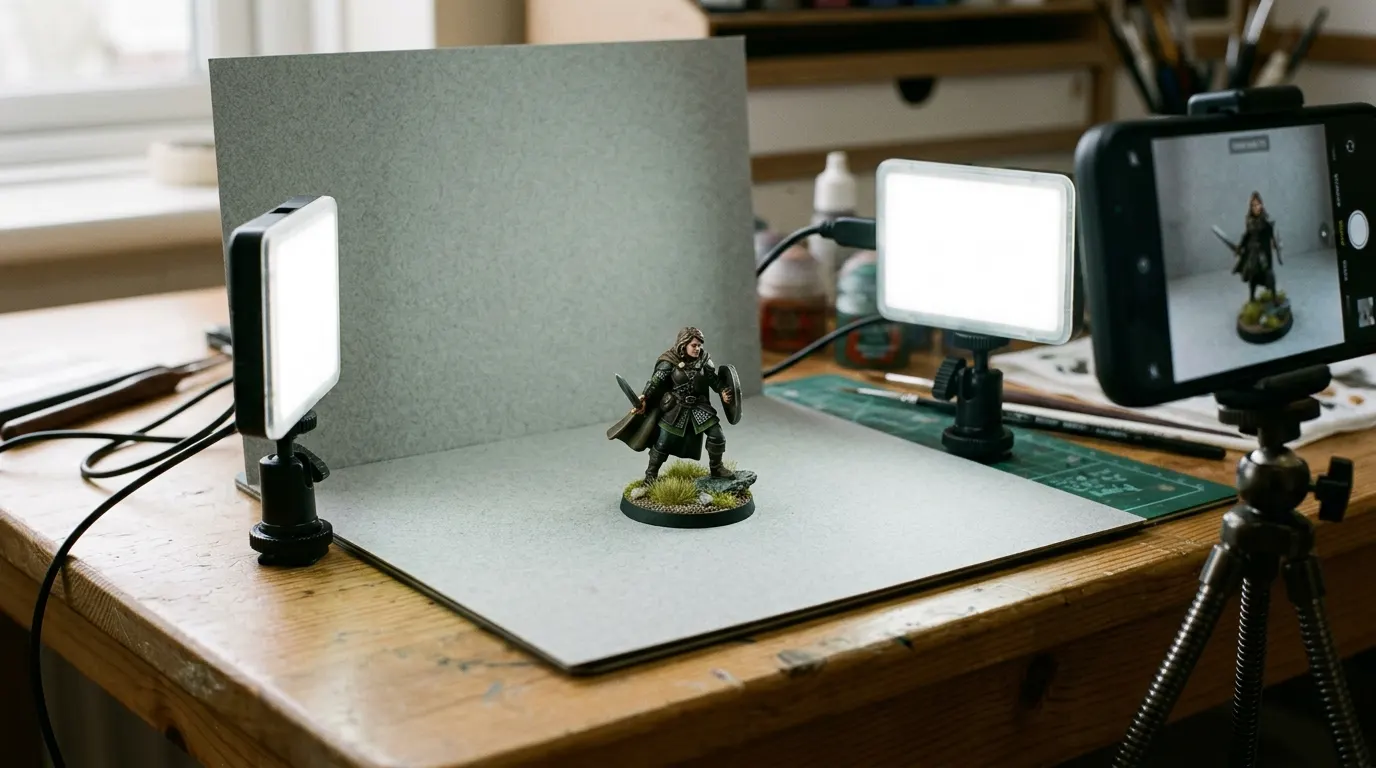 Give your miniature a good close-up. A clear reference photo gives both direct prints and optional AI scenes a better starting point.
 -
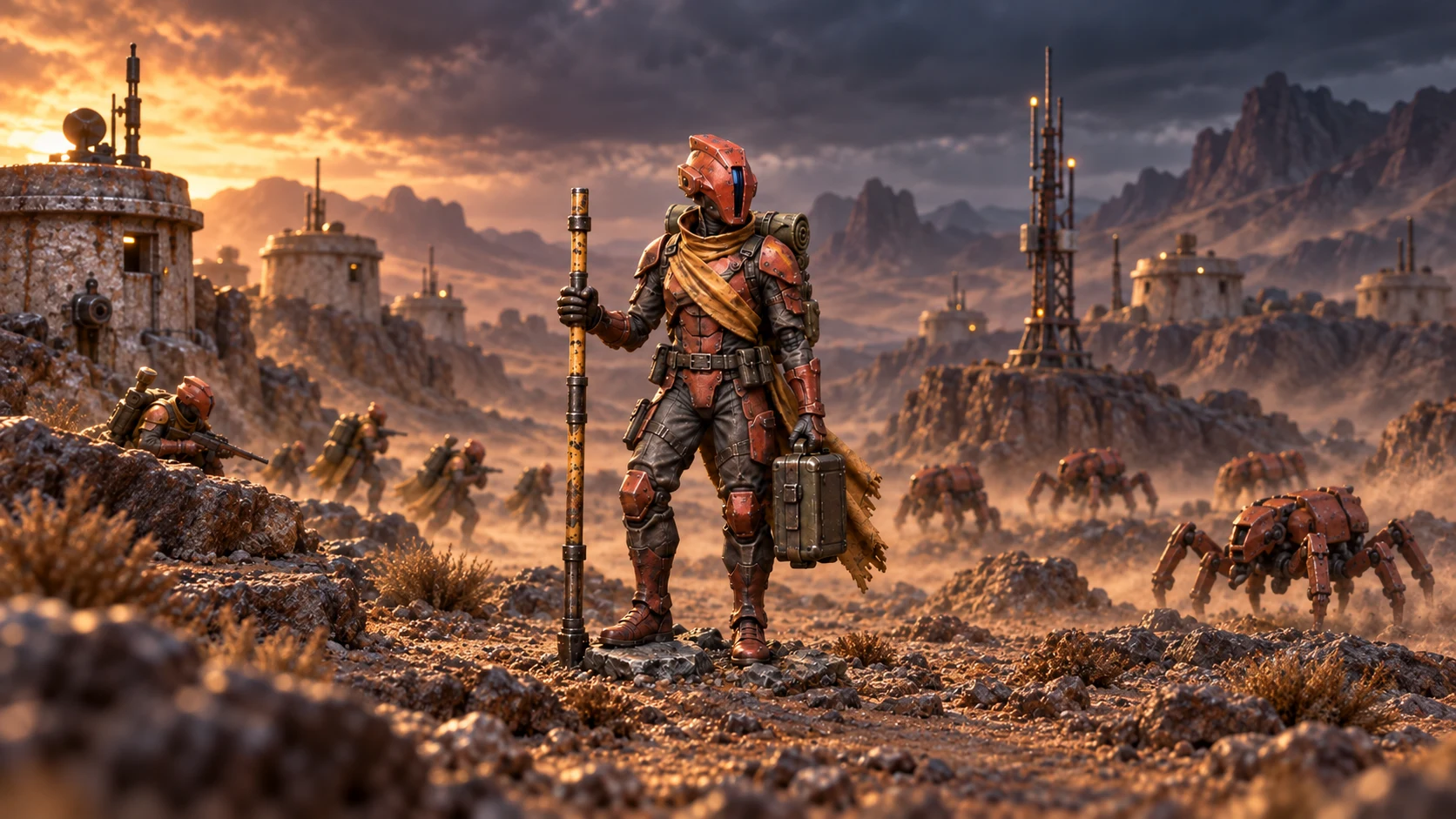 Still your character? Take a closer look. What to inspect before you approve an AI miniature scene.
 -
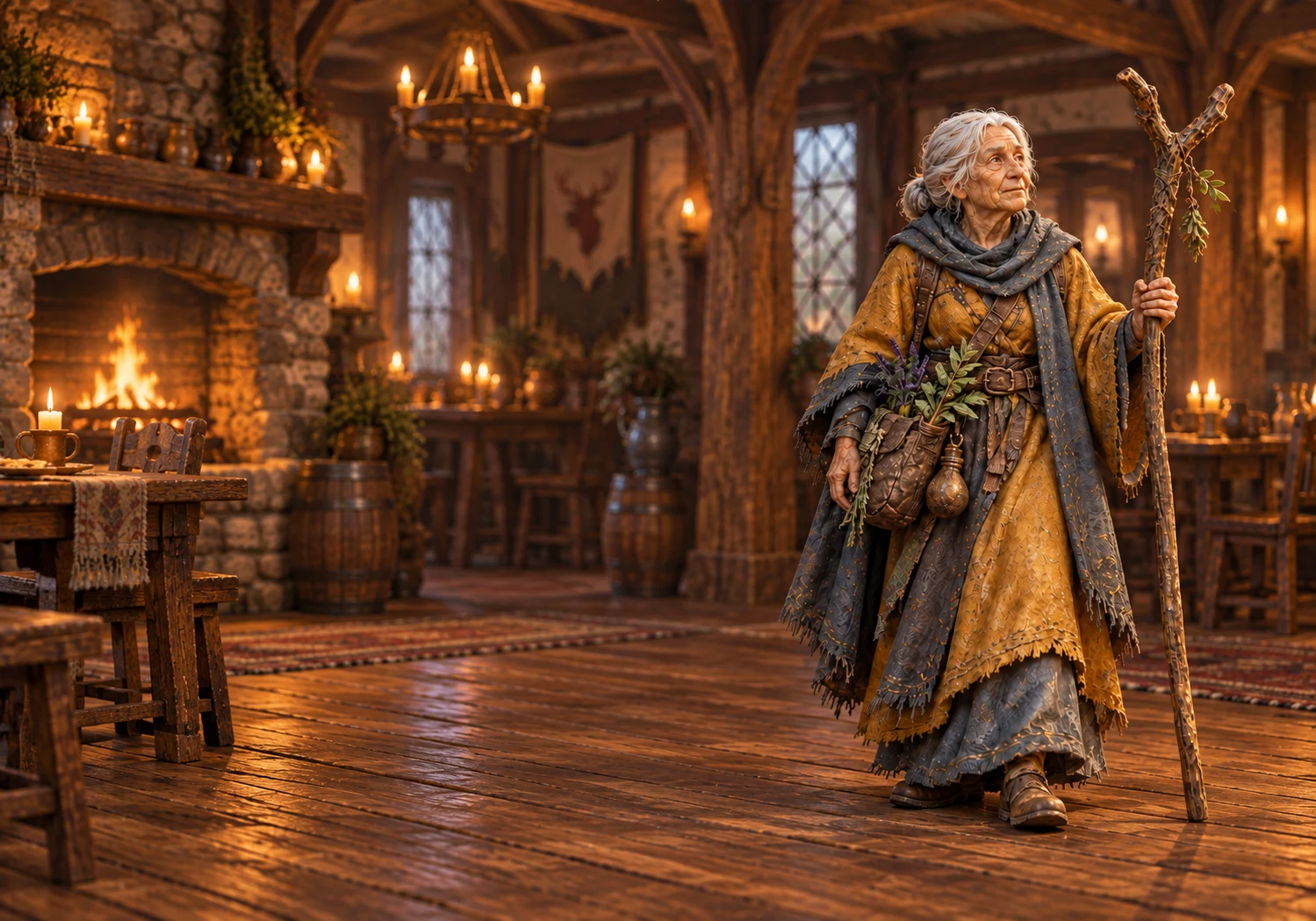 Make a gift from something they made. Thoughtful choices for artists, miniature painters, and the people who cheer them on.
 -
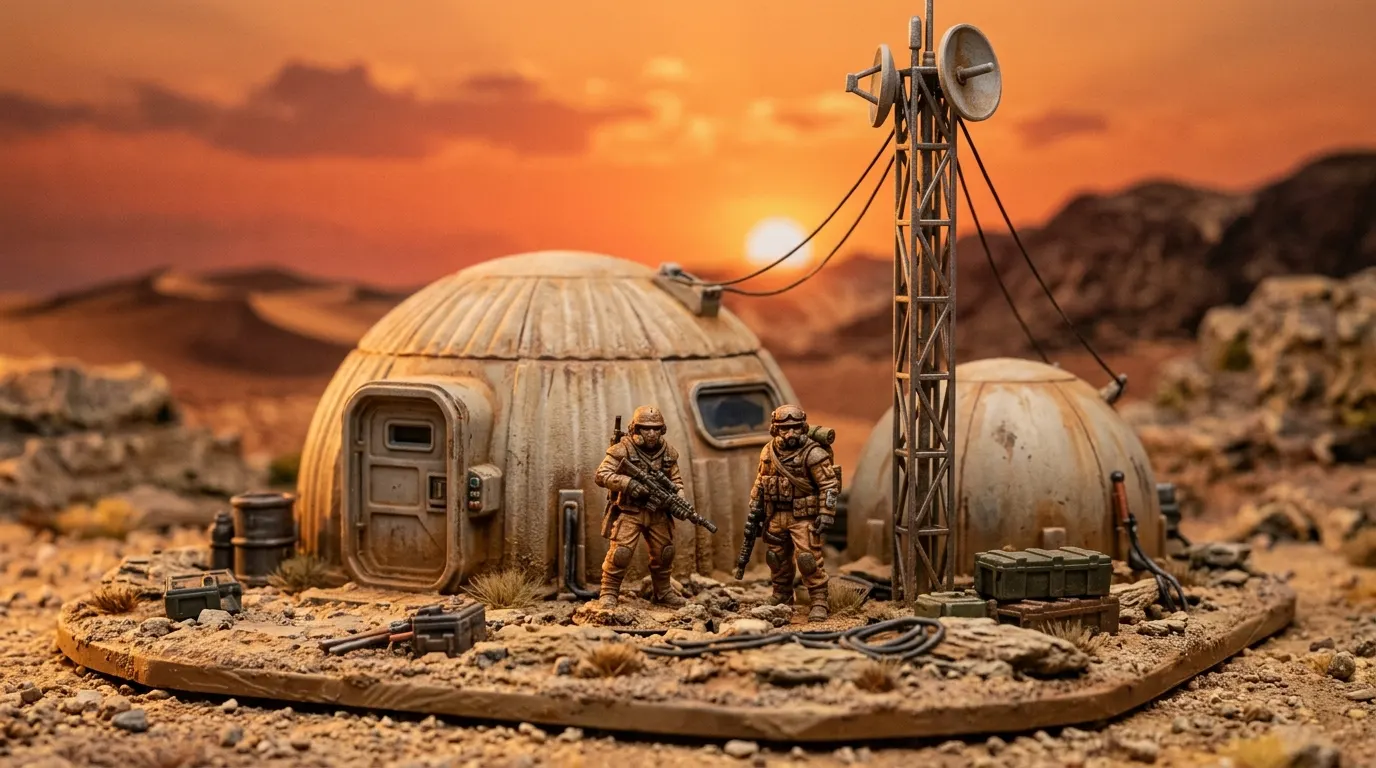 Miniature photo backdrops: choose a scene for your painted figure Miniature photo backdrops should help you see the figure and understand its story. Decide what deserves attention before choosing an AI scene. The image below is an AI-generated illustration of the idea, not a customer result or a guarantee.
 -
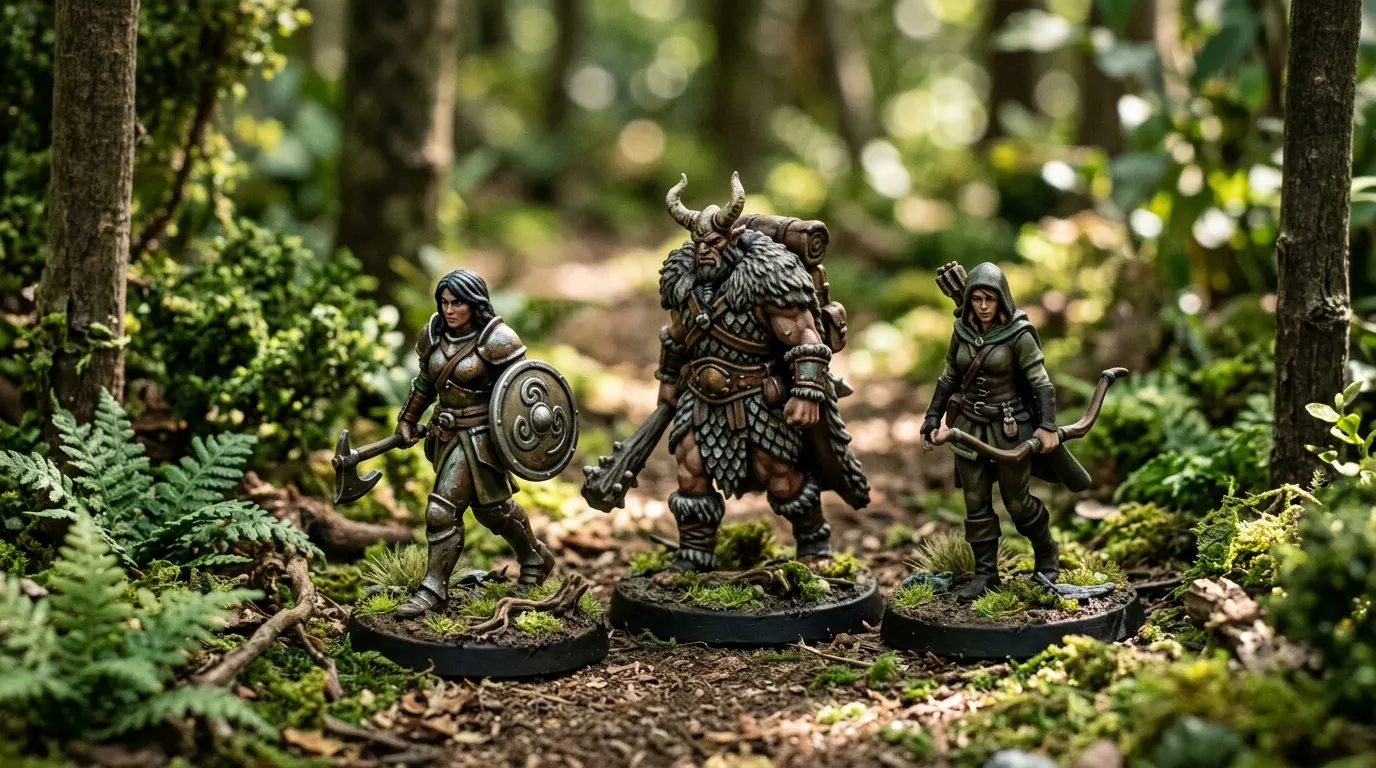 Tabletop gaming gifts: turn a shared hobby memory into a gift Tabletop gaming gifts work when the image brings back a particular evening, character or finished project. Then choose an object that fits the person receiving it.
 -
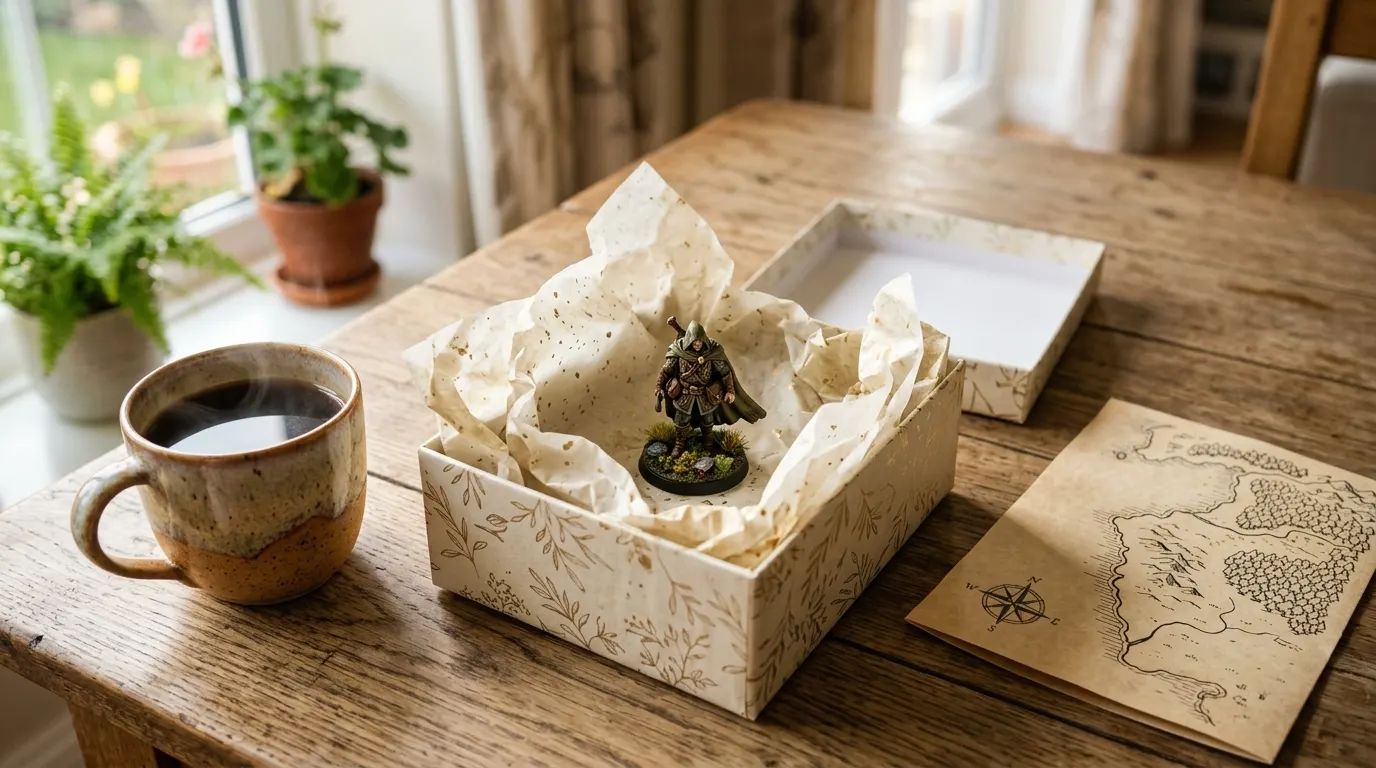 Gifts for miniature painters: celebrate the work they painted Gifts for miniature painters begin with the model they are proudest of, which may not be the largest or the most recent. Find the piece they would choose themselves.
 -
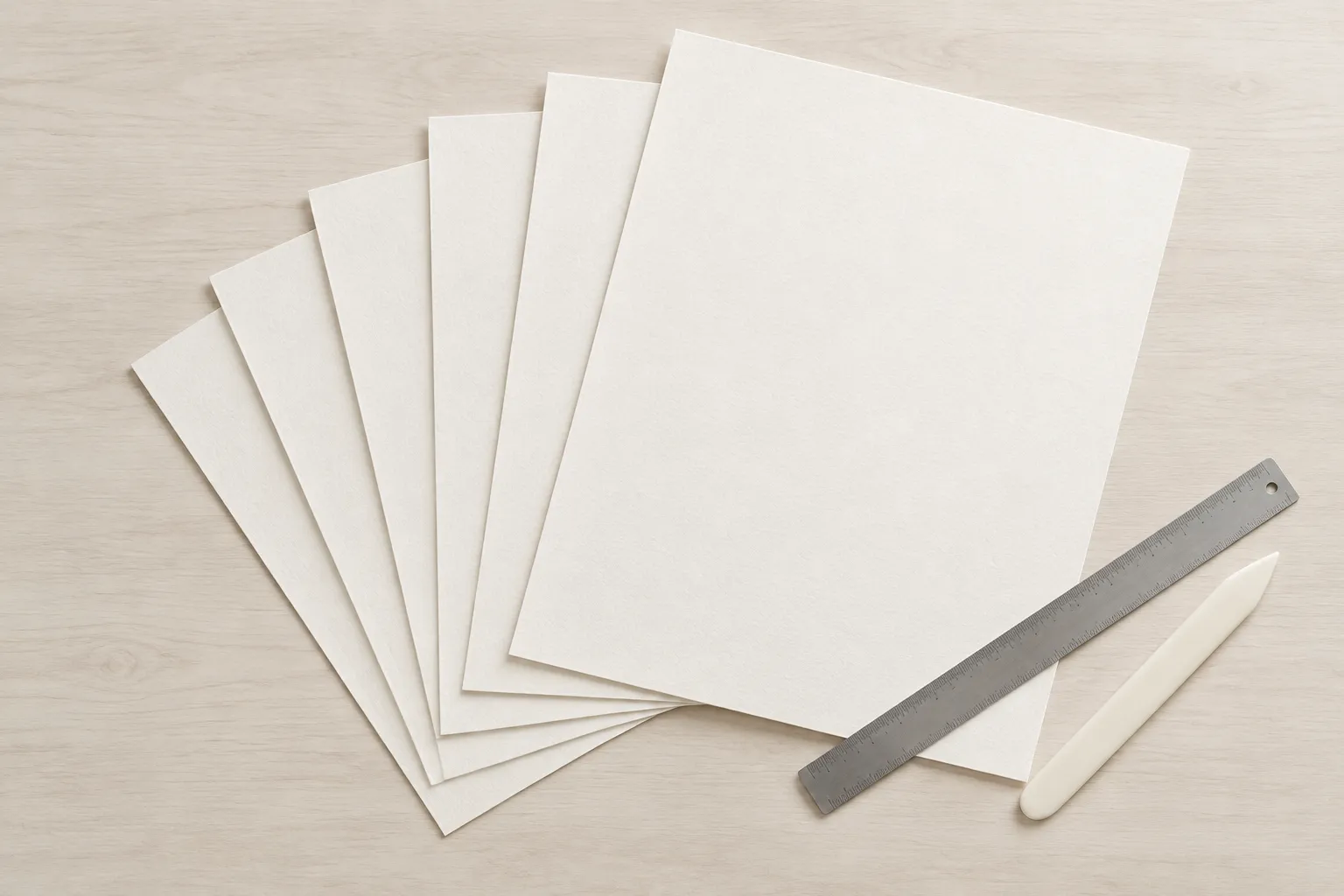 A-series paper sizes, A1 to A5 A-series paper sizes: the A series in millimeters, centimeters, inches and pixels. A0 is 841 × 1189 mm and every size after it halves the longer side, so all of this is arithmetic rather than a table anyone has to trust.
 -
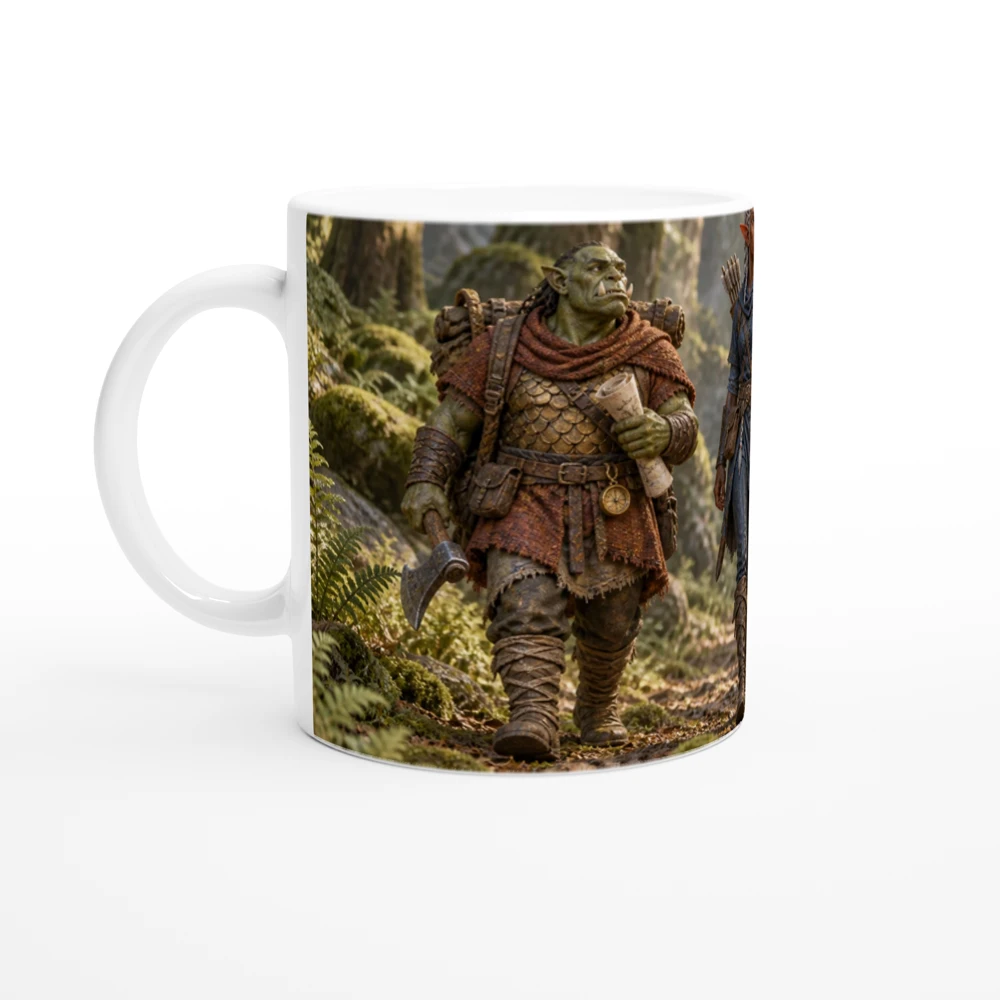 Print your art on a mug: what actually survives the curve Print your art on a mug and you are not printing a picture, you are printing a band 200 mm wide and 96 mm tall that bends away from the reader on both sides. Almost every disappointing photo mug is a good image put on a shape that could not hold it.
 -
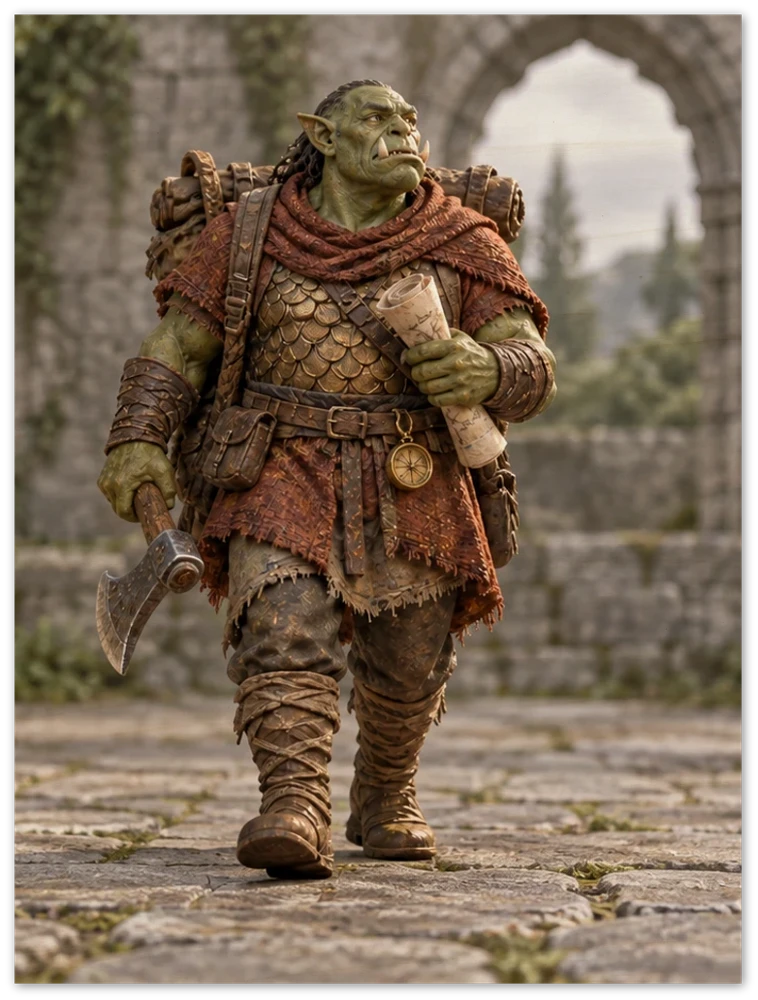 Personalized gifts for him, when he buys his own things Personalized gifts for him are hard for one specific reason: the man who is difficult to buy for is usually the man who buys what he wants the moment he wants it. Anything you can choose, he could have chosen. What he cannot buy is something made out of his own work.
 - Secret Santa ideas that survive January Secret Santa ideas usually fail on the same two constraints: a fixed budget, and a colleague you know socially but not well. Almost everything bought under those conditions is funny for an afternoon and in a drawer by February.
-
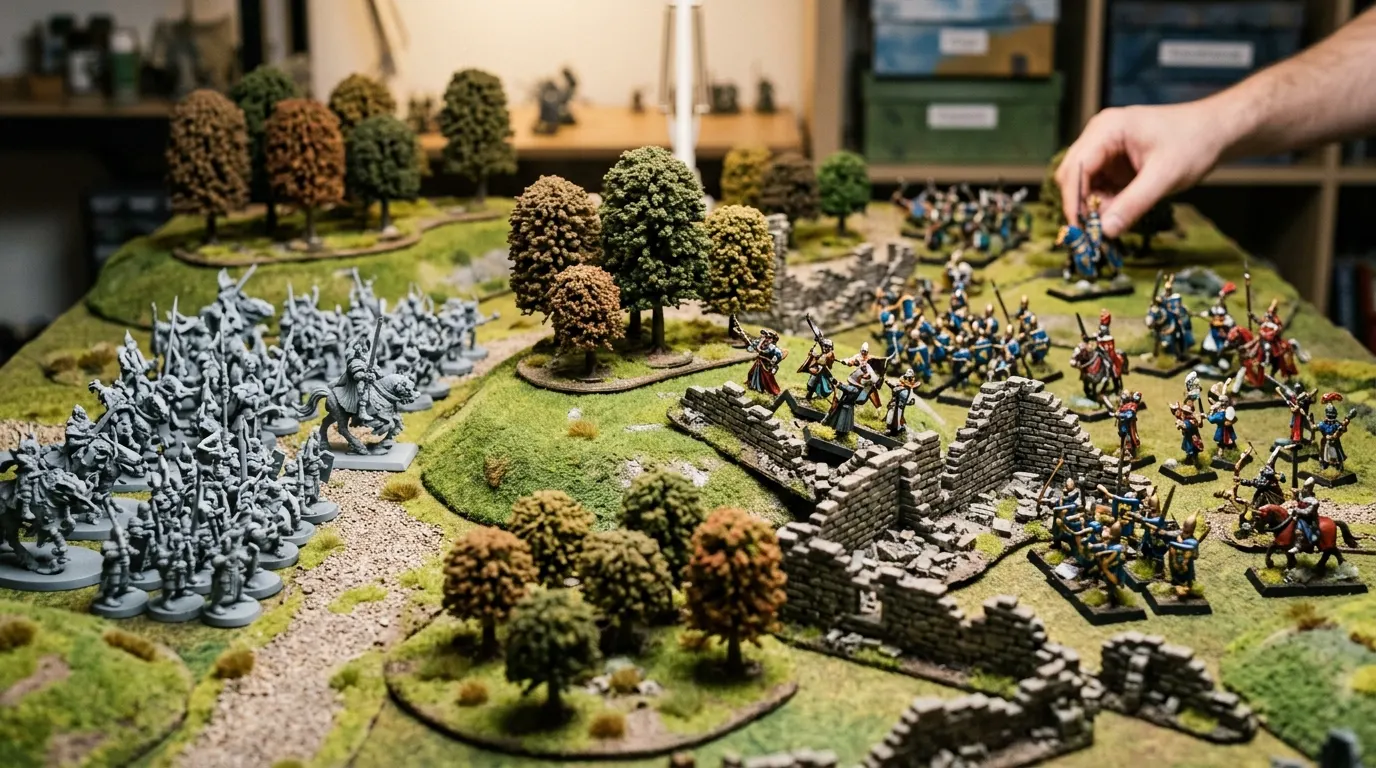 Man cave ideas for a room that shows what you do Most man cave ideas end at buying things that announce the room is a man cave: a neon sign, a framed film poster, a metal plaque about beer. A room built that way looks like every other one, because everything in it came from the same shops.
 - Gifts for gamers, made out of their own game Gifts for gamers nearly all fail the same way. The shops sell objects that refer to a game — a logo, a character somebody else drew, a slogan — and the person receiving it already owns the game. What they do not own is anything made from their own hours in it.
-
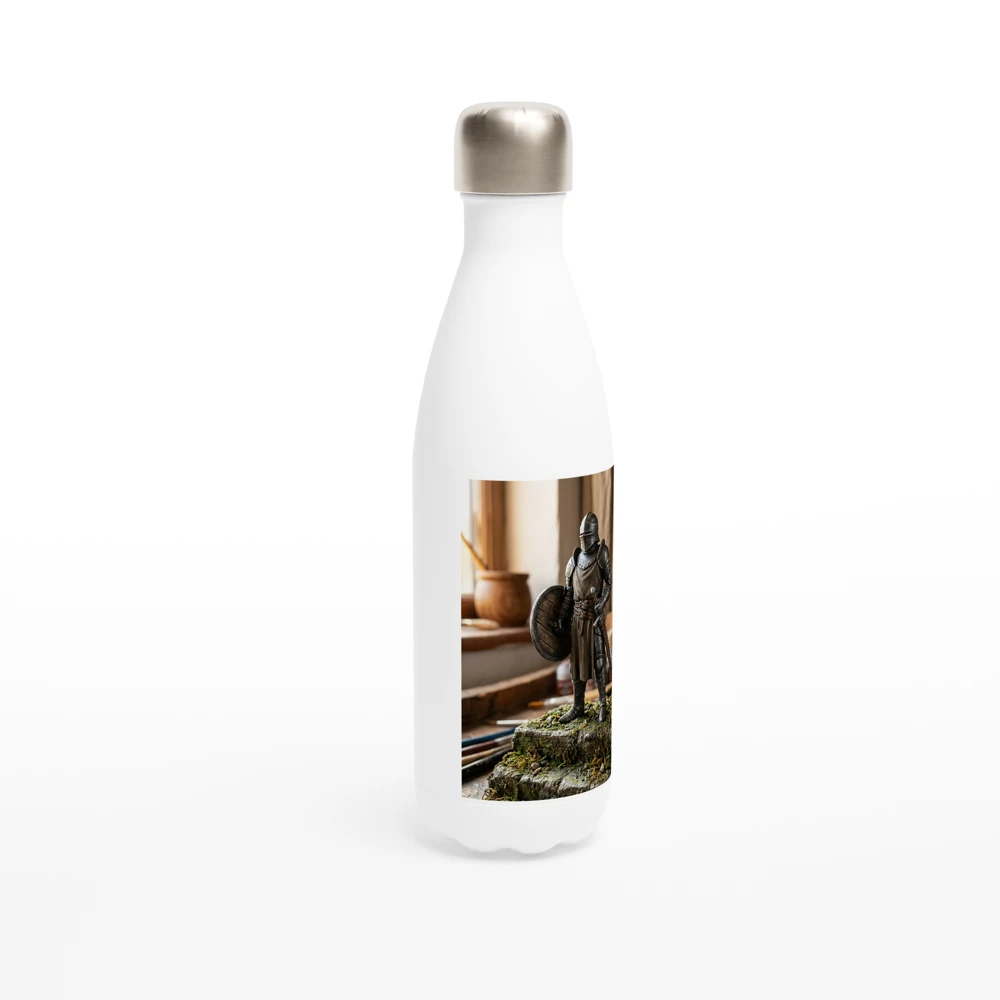 Gifts for board game lovers who own the games already Gifts for board game lovers have an obvious answer and a bad one. The obvious answer is another game, and the reason it is bad is that they know the hobby far better than you do, own the ones they want, and have opinions about the rest.
 -
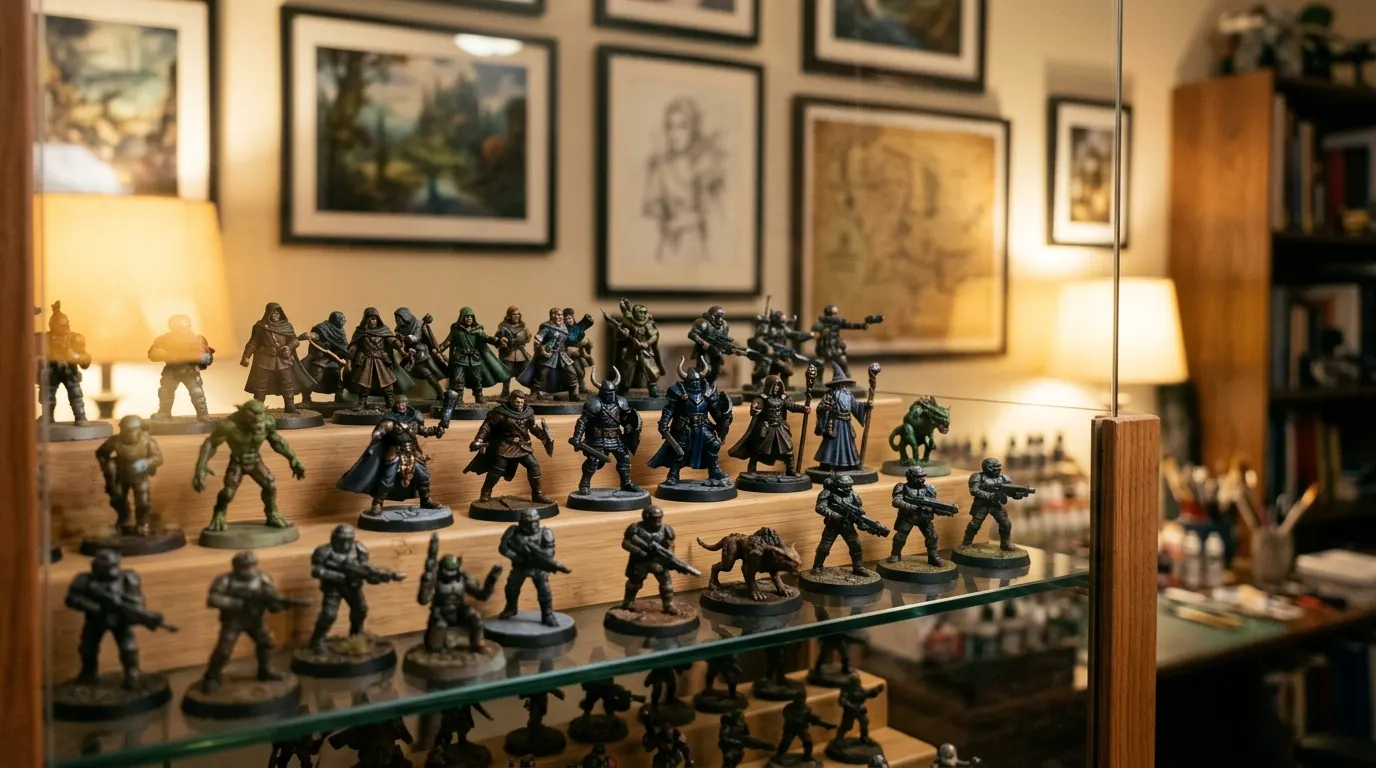 Miniature display case, open shelf, or something on the wall A miniature display case is the default answer to finished models, and it is only sometimes the right one. Cases protect and they also hide: glass reflects, depth swallows the back row, and an army that fills one is seen less than a single figure on a shelf.
 - Hobby room ideas, starting with the bench Hobby room ideas usually begin with furniture and end with a room that looks tidy and is miserable to work in. The order that works is the opposite: get the bench and the light over it right first, because everything else is decoration around a place you sit for hours.
-
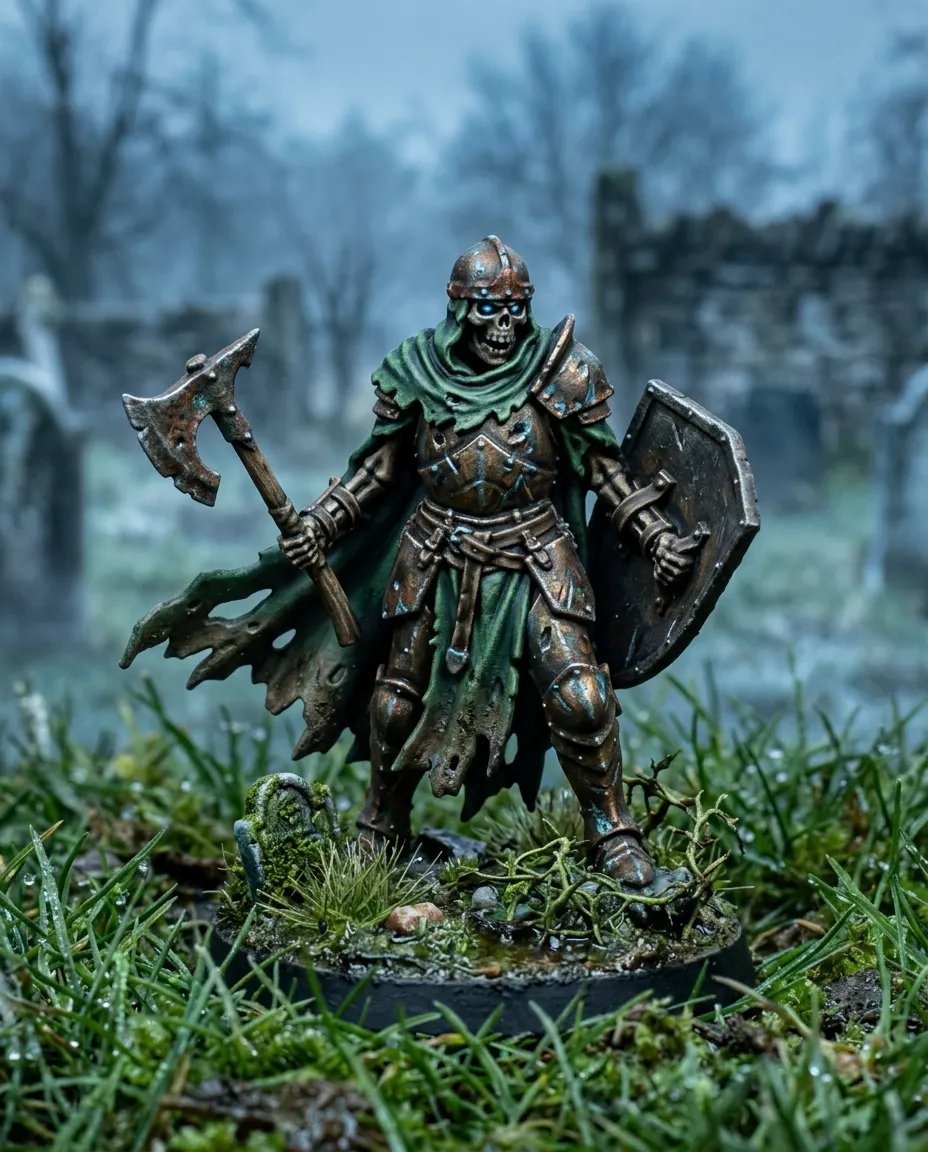 Painted miniatures: what to do once the army is finished Painted miniatures almost all end the same way: months of evenings, a finished force, and a foam tray in a cupboard. The painting gets celebrated for about a week, on a table, by the three people who were there.
 -
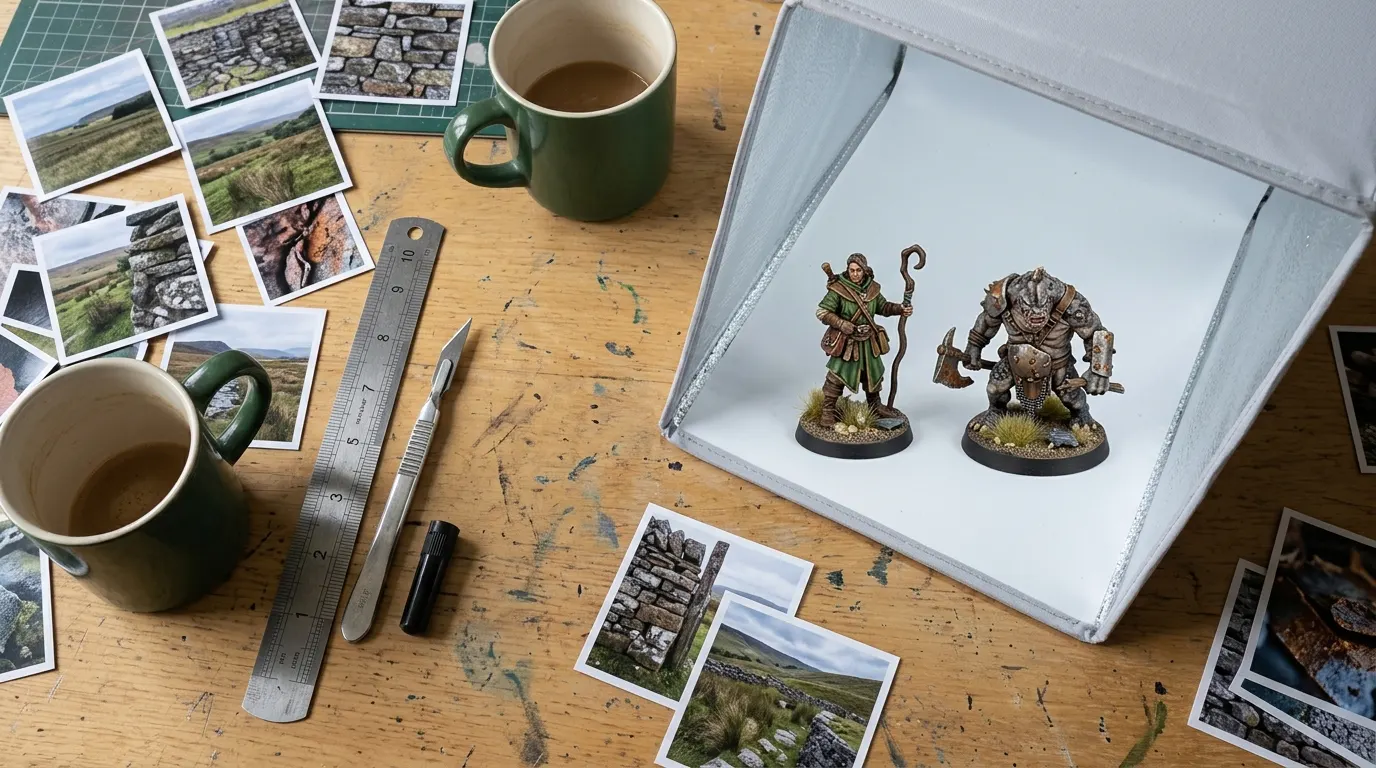 How to photograph artwork so it can be printed How to photograph artwork comes down to three problems: getting it square, getting it evenly lit, and getting the color honest. Solve those with a window and a phone and the copy will print properly. Miss any one and no amount of editing rescues it.
 -
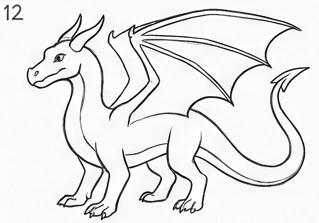 How to draw a dragon, one step at a time How to draw a dragon, in twelve steps that each add one thing. Every step below has its own drawing, and every drawing is the one before it plus whatever that step adds — so you can always see exactly what changed.
 -
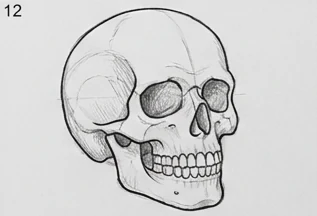 How to draw a skull that looks like bone How to draw a skull, in twelve steps built on one idea: the braincase is a ball and the face hangs off the front of it. Get that and the rest is placement. Every step below has its own drawing.
 -
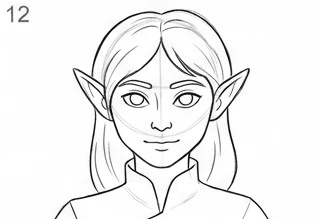 How to draw an elf, from the head ball up How to draw an elf, head and shoulders, in twelve steps. Each one has its own drawing showing exactly what it adds. The ear angle in step three is the single thing that decides whether the finished face reads as elven or as a costume.
 -
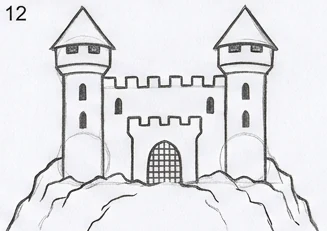 How to draw a castle that looks defensible How to draw a castle, in twelve steps, each with its own drawing. The order matters more here than in any other subject in this series: get the silhouette and the battlement spacing right early and the detail looks after itself.
 -
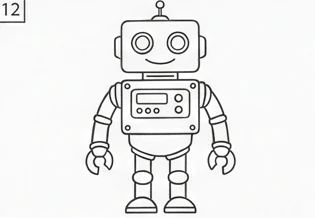 How to draw a robot, joint by joint How to draw a robot, in twelve steps with a drawing for each. The whole subject comes down to one idea: a robot is a set of separate parts with visible gaps between them, and the gaps are what make it mechanical.
 -
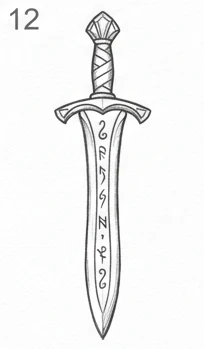 How to draw a sword, starting with one line How to draw a sword, in twelve steps with a drawing for each. Almost everything about this subject is symmetry, so the center line in step two is not a formality — it is the thing that stops the blade bending.
 -
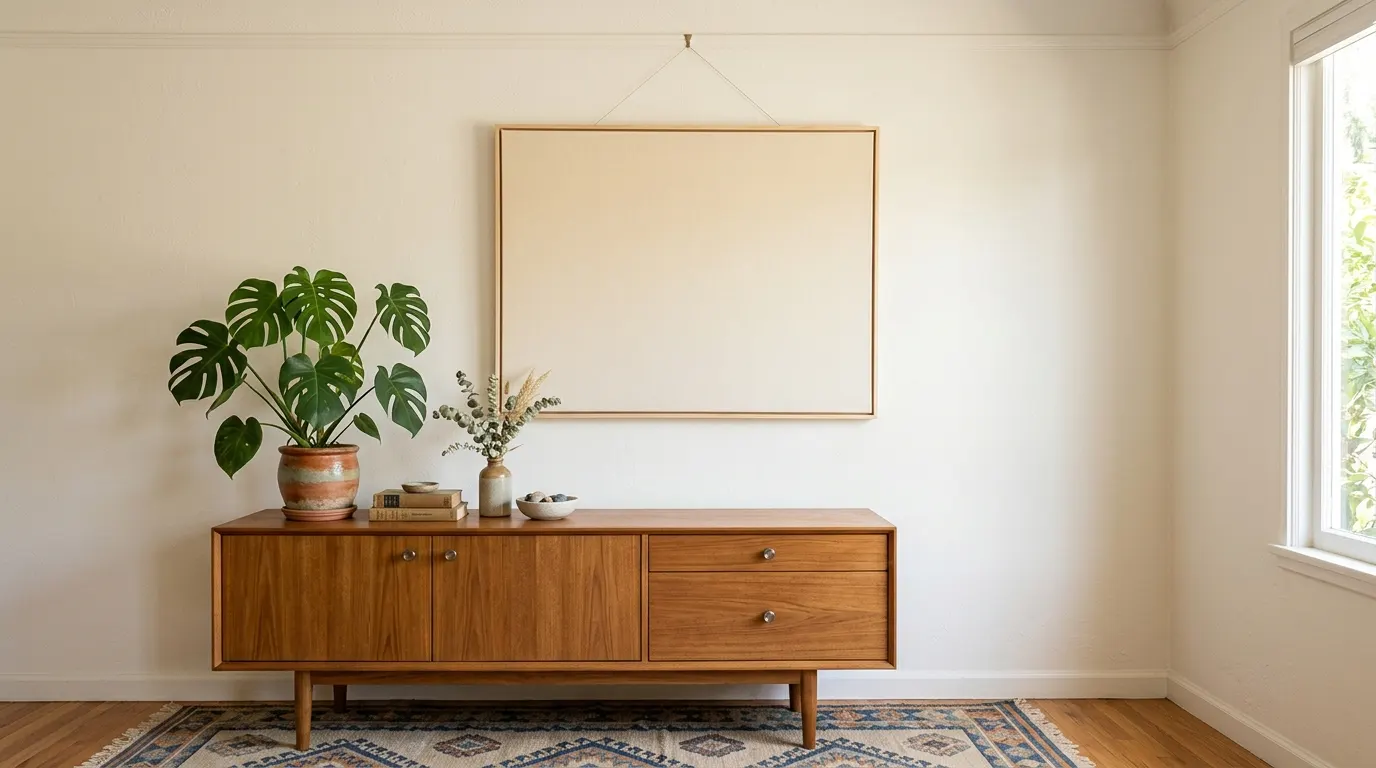 How to hang a picture, at the right height and on the right fixing How to hang a picture comes down to two decisions and one measurement. The decisions are how high and what fixing; the measurement is the one almost everybody gets wrong, because they measure to the hook rather than to the middle of the picture.
 - Gallery wall ideas that use sizes you can actually buy Most gallery wall ideas fall apart at the ordering stage, because the arrangement in the photograph was built from frames somebody already owned. These layouts are planned around the sizes you can buy, which is a different and more useful problem.
-
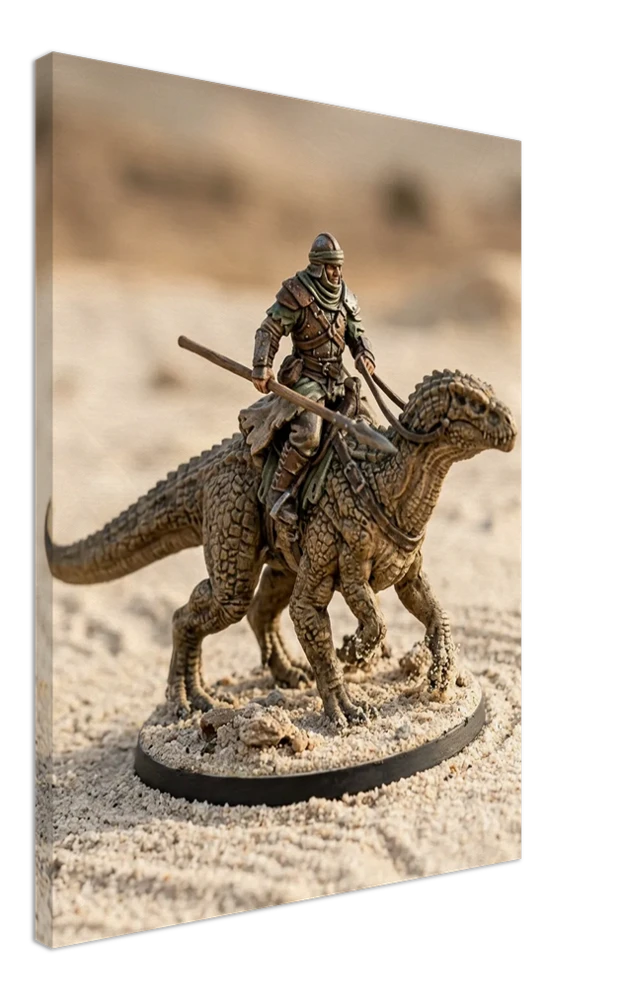 How to clean a canvas print, and what never to use on one How to clean a canvas print is mostly a question of what not to do. A print has no glass over it, so the printed surface is the surface you are touching, and most household cleaning instincts are wrong for it.
 -
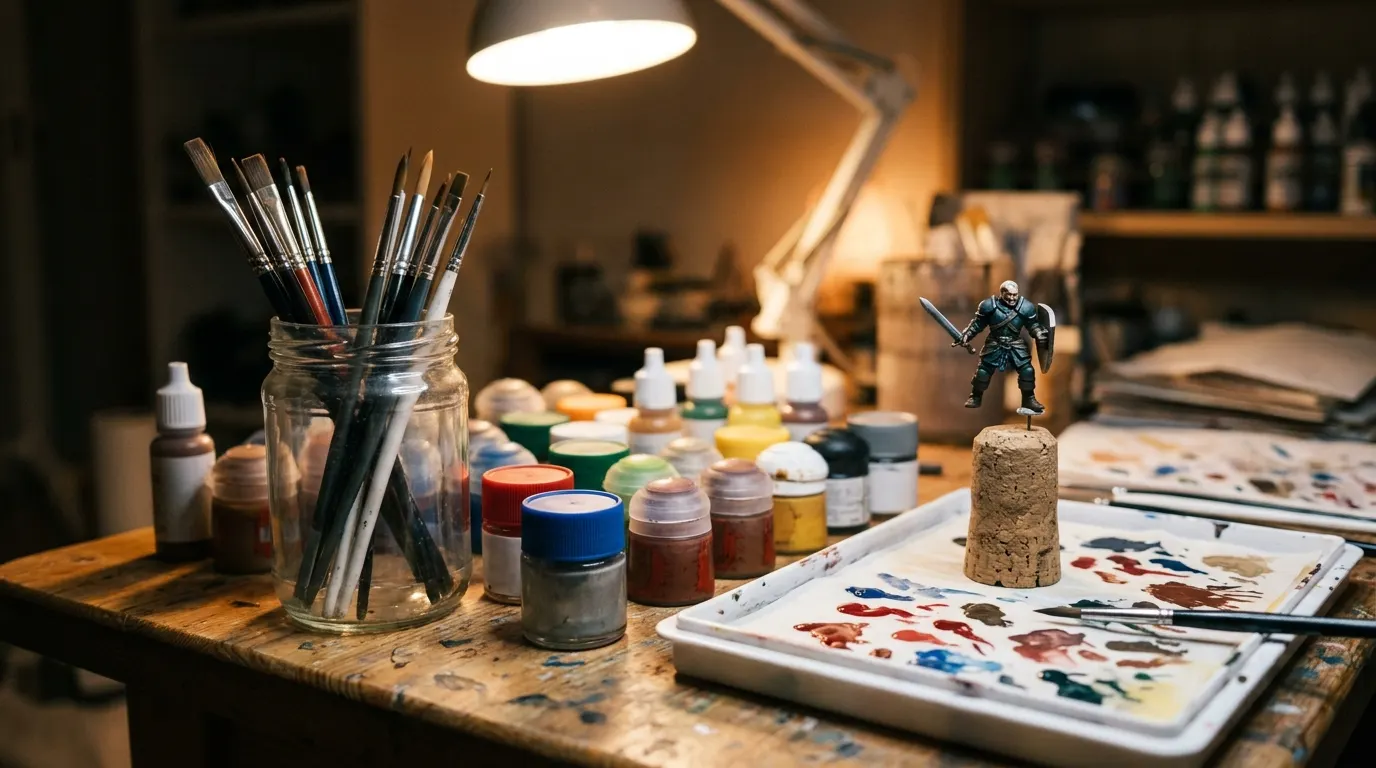 Wet palette: what it does, and how to make one for nothing A wet palette is a shallow sealed tub with a damp layer under a sheet of baking parchment. Paint sitting on the parchment draws moisture up from below, so acrylics that would skin over in ten minutes on a tile stay workable for hours, and often for days.
 - Wargaming for beginners: what it is and what it costs Wargaming is three hobbies sold as one — collecting models, painting them, and playing a game with them — and most people arrive wanting one of the three. Working out which one you are actually here for is the cheapest decision you will make.
-
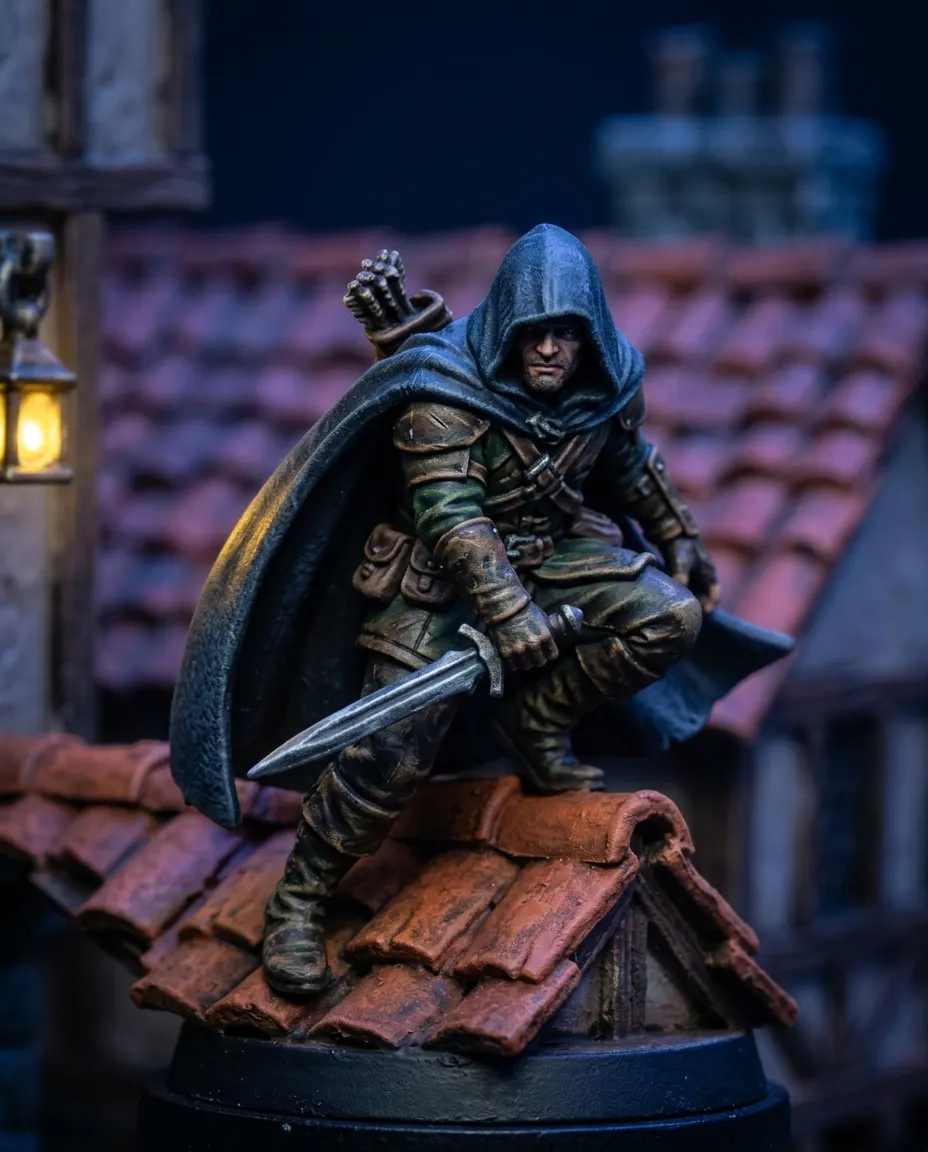 Fantasy character ideas that survive a campaign Most DnD character ideas are a costume and a voice, and both wear out by session three. The ones that last have three things instead: something the character wants, something they are bad at, and a reason to care about somebody else at the table.
 -
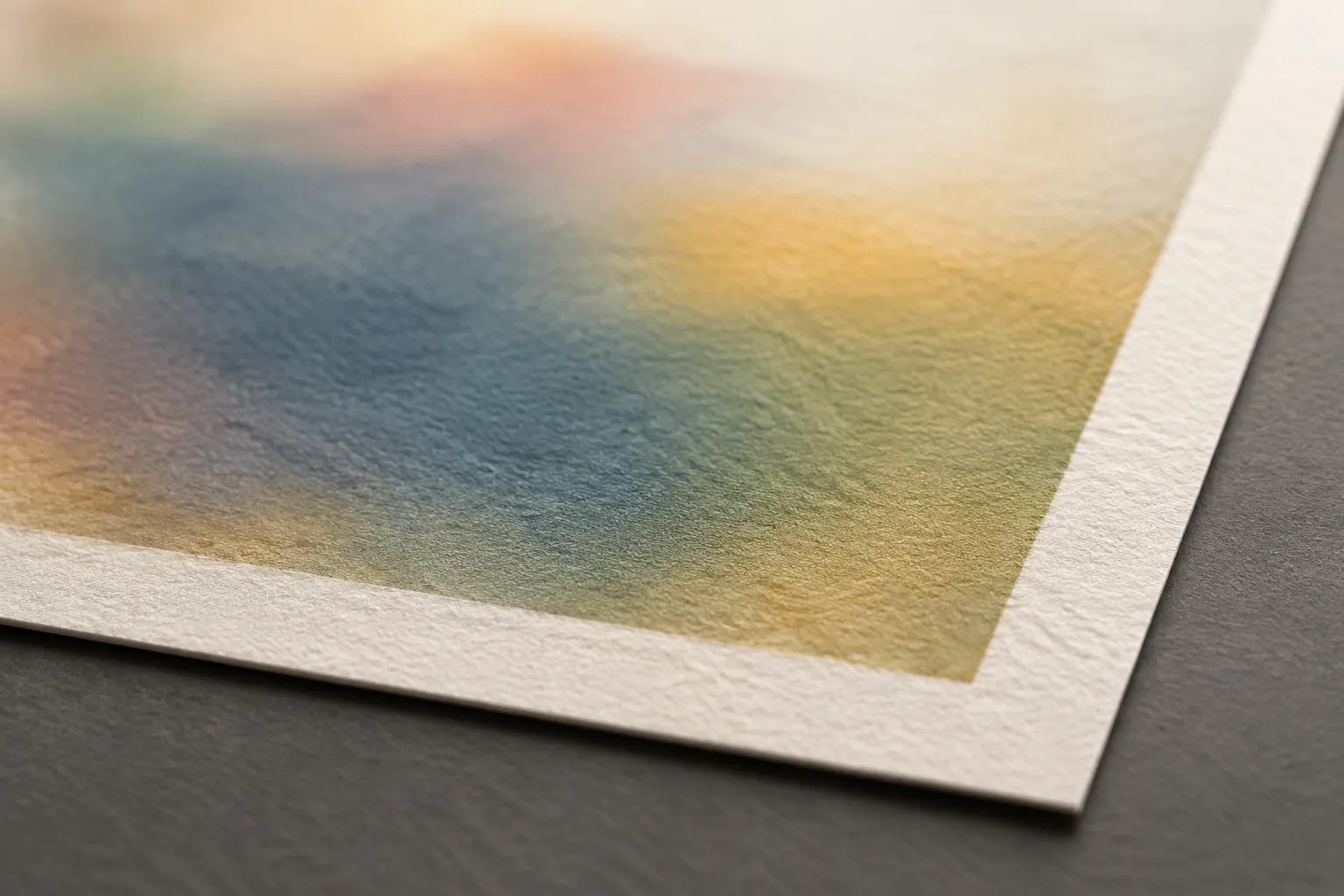 What is giclee, and does the word mean anything? What is giclee, spelled giclée when anyone is being careful? It is a marketing word for an inkjet print, coined in the early nineties to make fine-art inkjet sound like something other than an inkjet. No standards body sits behind it and there is no specification it has to meet.
 -
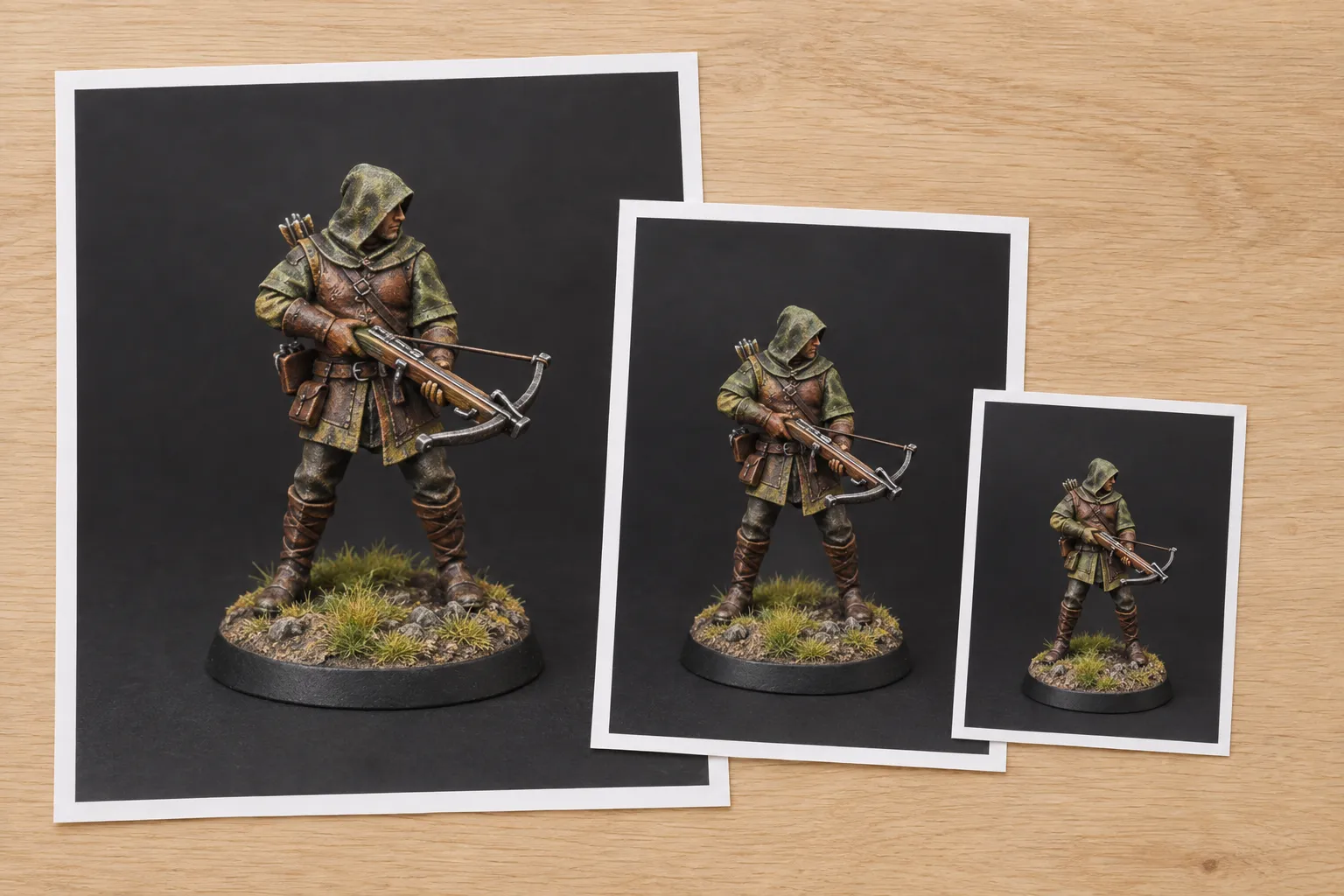 How to make art prints of work you already have How to make art prints comes down to three things in order: a clean digital copy, a size the file can carry, and a paper that suits the work. Most people start at the third and are then disappointed by the first.
 - Light box photography: what it fixes, and what it flattens Light box photography solves one problem very well — a small object on a clean background with no harsh shadows — and creates another that nobody warns you about, which is that perfectly even light makes a three-dimensional object look flat.
- iPhone macro photography, for things the size of a thumb iPhone macro photography goes wrong in one predictable way: people move the phone closer and closer until the subject fills the frame, and somewhere on that journey the picture stops being sharp. The fix is counter-intuitive — back off.
- Miniature scale converter Type a real size and a scale to get the model size, or read it backwards. Enter a figure height and the height of the person it represents to see the ratio that implies. The arithmetic is exact; the one assumption is yours to change.
- Fantasy name generator This fantasy name generator builds names rather than reciting them. Pick the kinds you want and it will build you some. Every name is assembled from syllables rather than drawn from a list, so it does not run out and it does not hand you somebody else’s character.
-
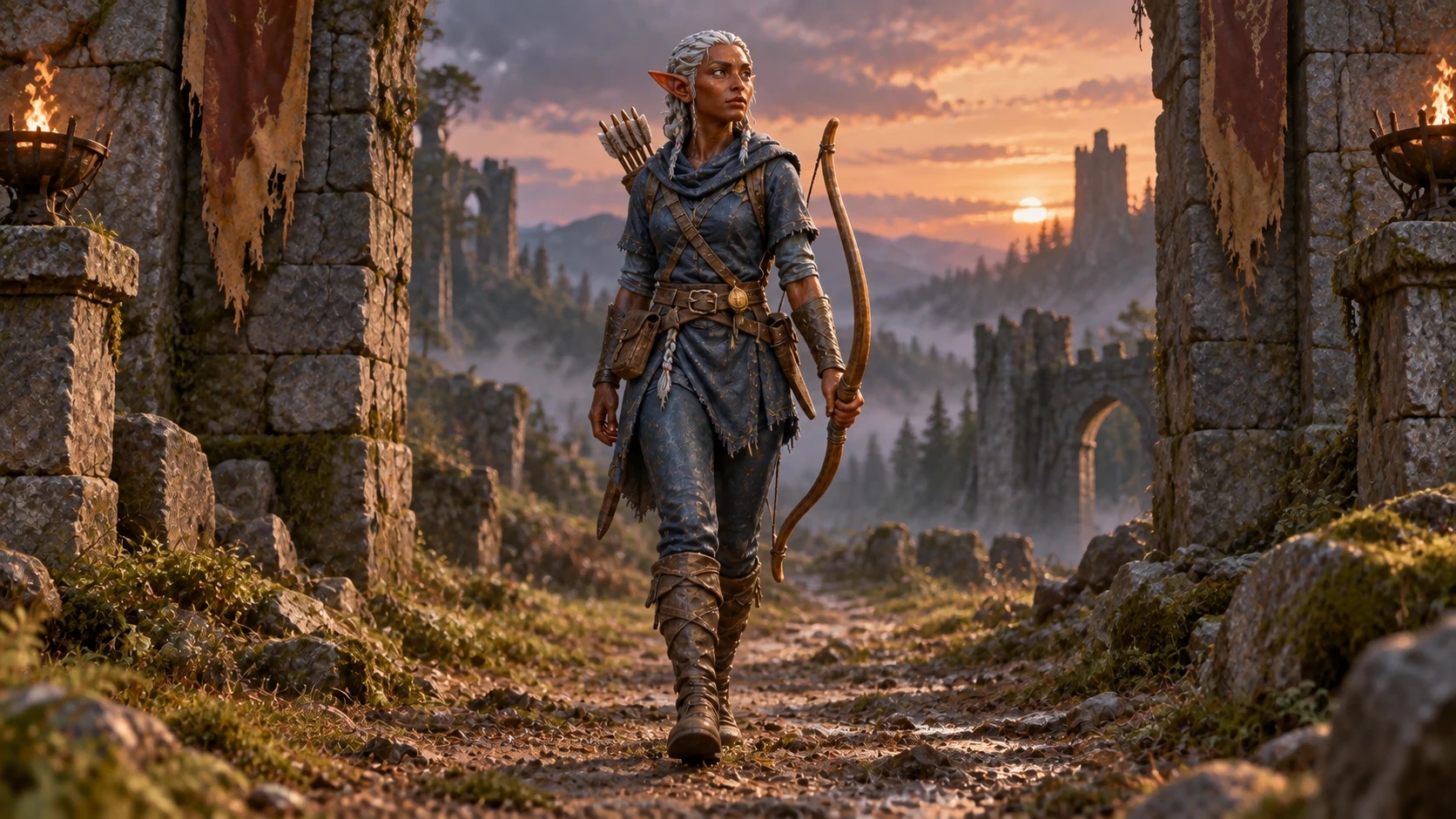 Turn photo into painting: your miniature, on the wall. Turn photo into painting, starting with the one you spent hours on. It sits on a shelf, or in a foam-lined box, where nobody sees it. Photograph it and we put it somewhere worth looking at: a woodland path, a tavern, a battlefield at sunset, or a quiet stone courtyard. Your paintwork is never touched.
 -
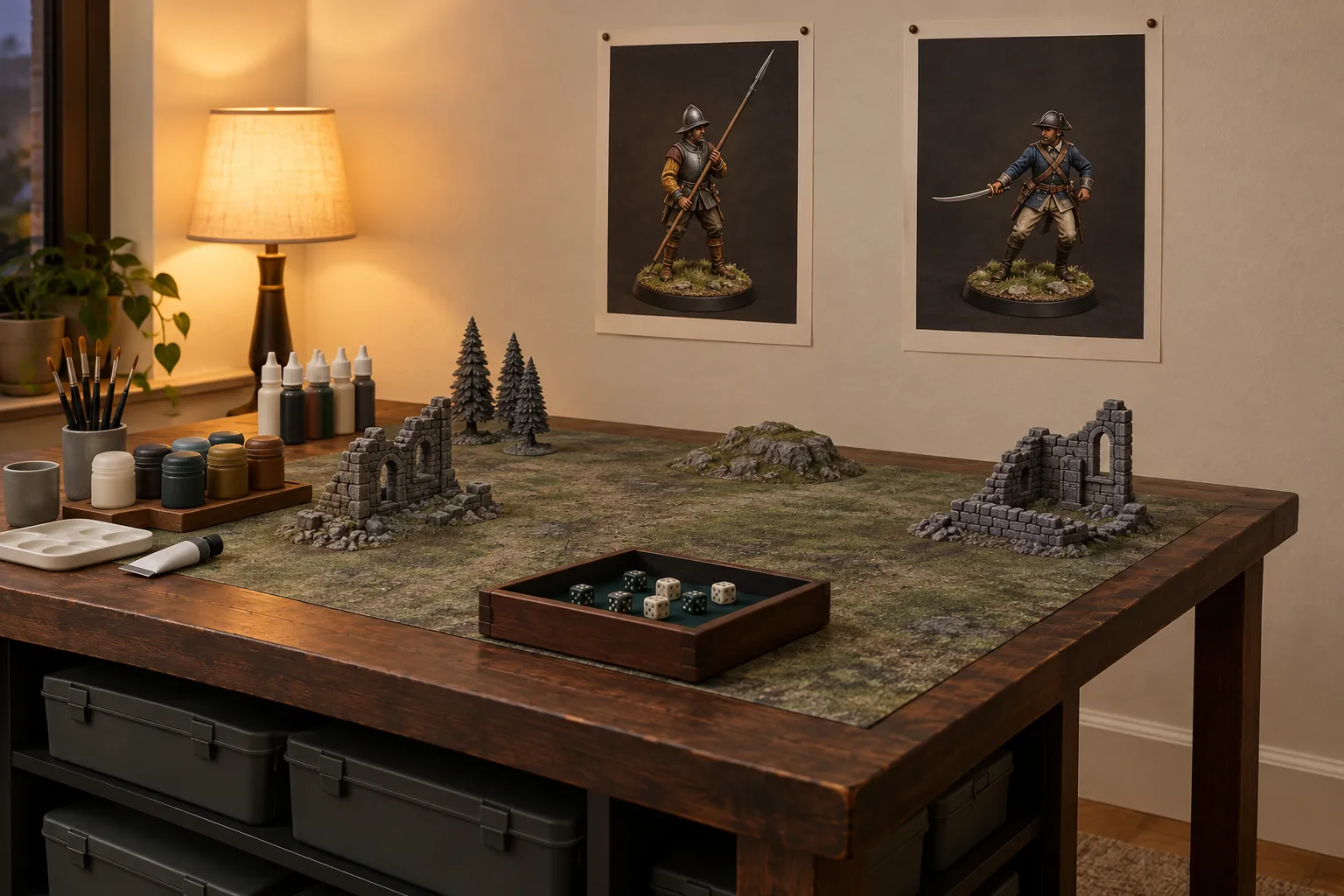 Gaming room decor: the hobby room, made deliberate. Gaming room decor for a painter starts from the same point every time: the desk is covered in pots and brushes, the shelf is full of half-painted models, and the walls are bare. The hobby has taken over the space. Here is how to make it look like you meant it.
A-series paper sizes, A1 to A5
-
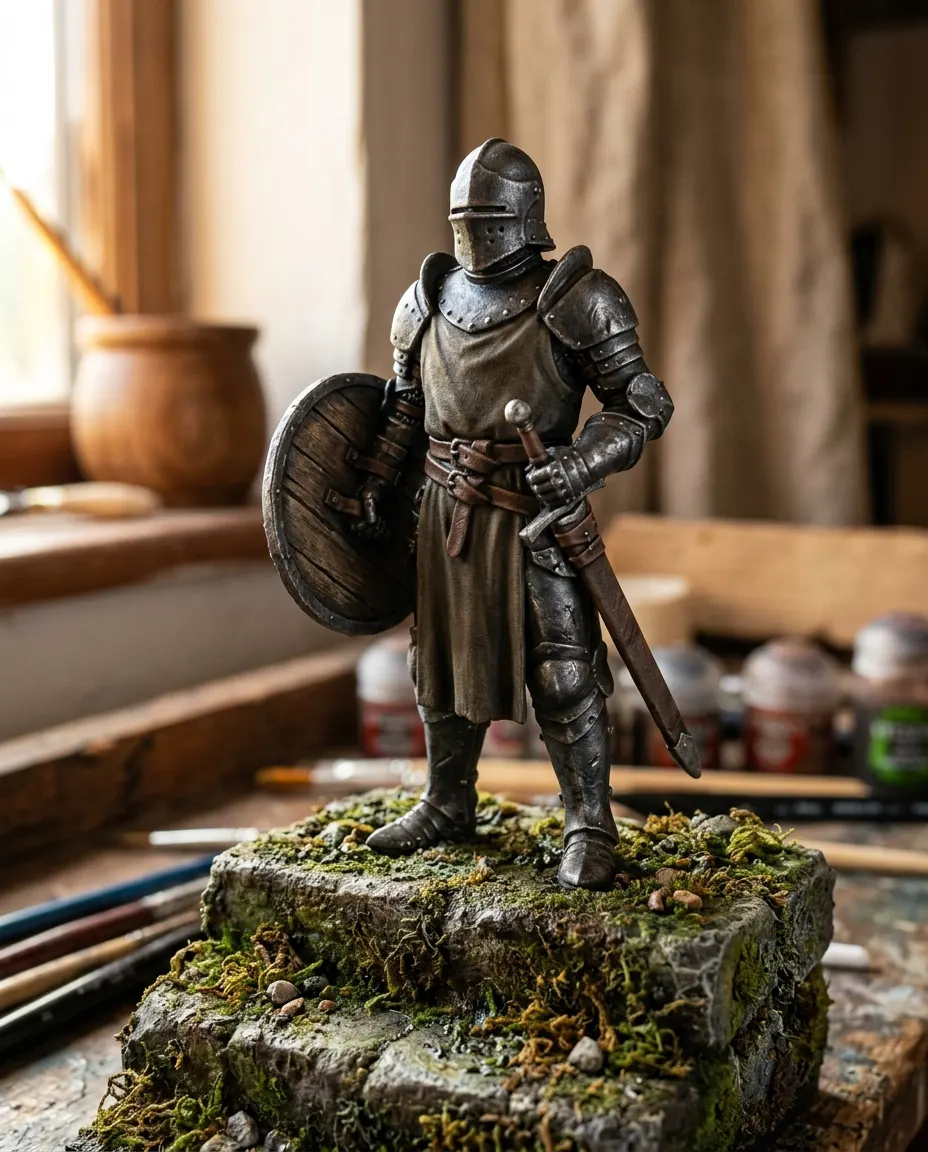 A1 size in cm, inches and pixels A1 size in cm is 59.4 × 84.1, which is 594 × 841 mm and 23.39 × 33.11 inches.
 -
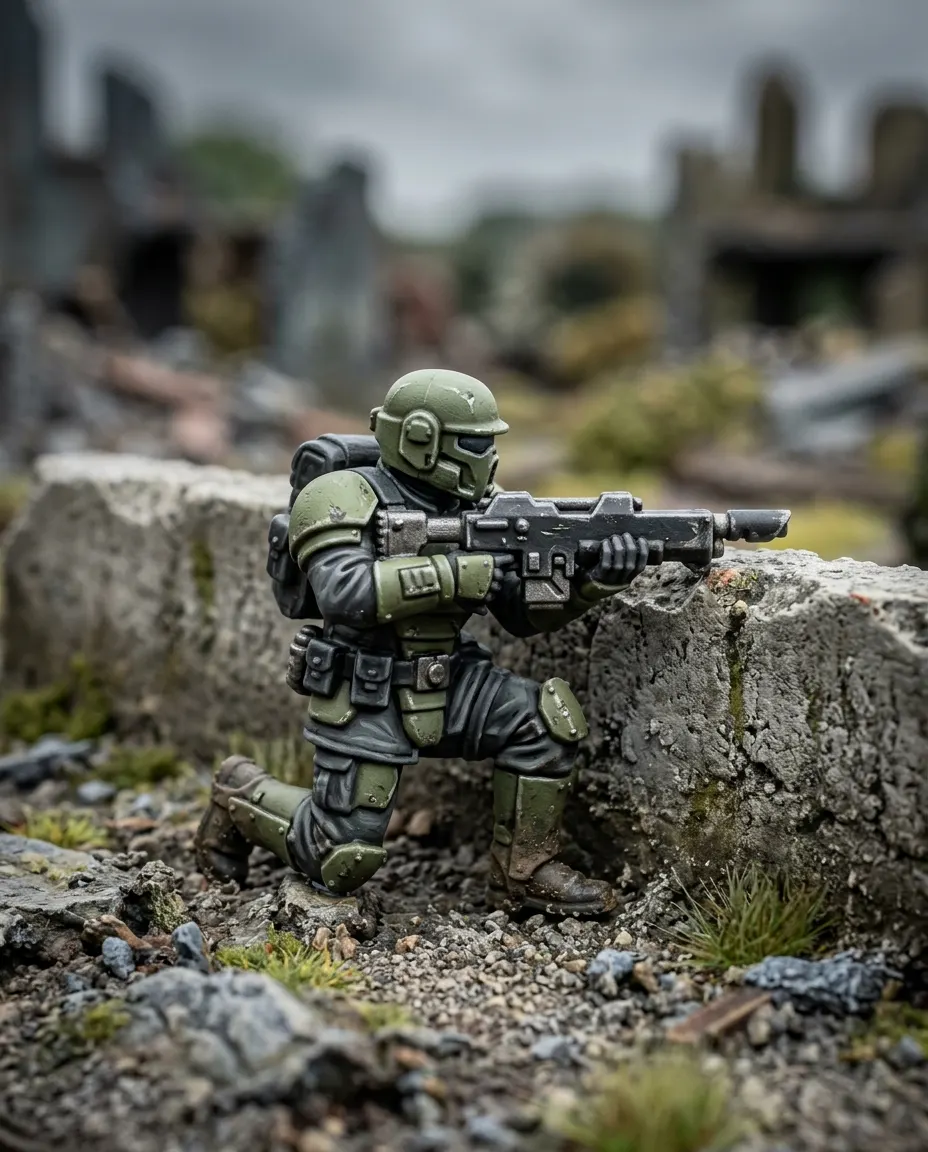 A2 size in cm, inches and pixels A2 size in cm is 42 × 59.4, which is 420 × 594 mm and 16.54 × 23.39 inches.
 -
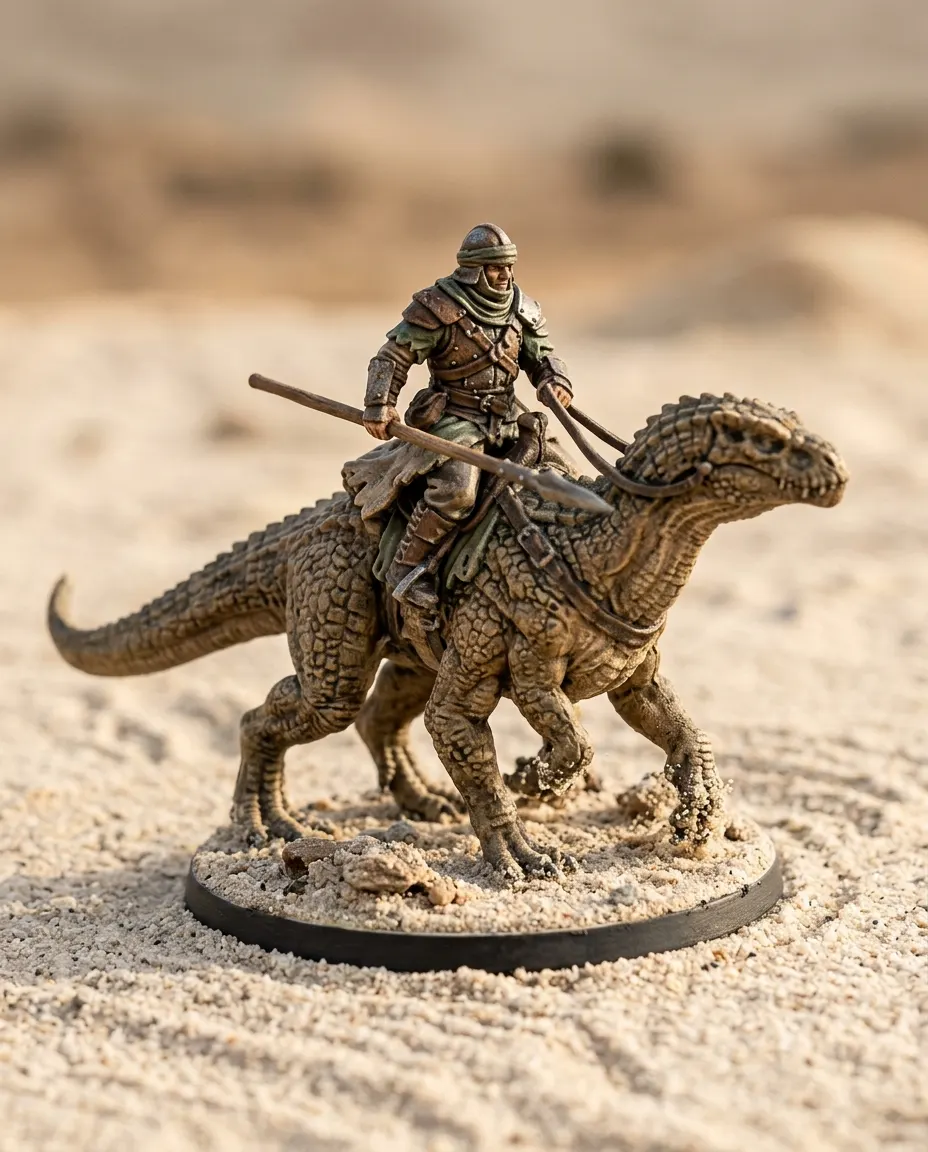 A3 dimensions: the size in cm, inches and pixels A3 dimensions are 297 × 420 mm, which is 29.7 × 42 cm and 11.69 × 16.54 inches.
 -
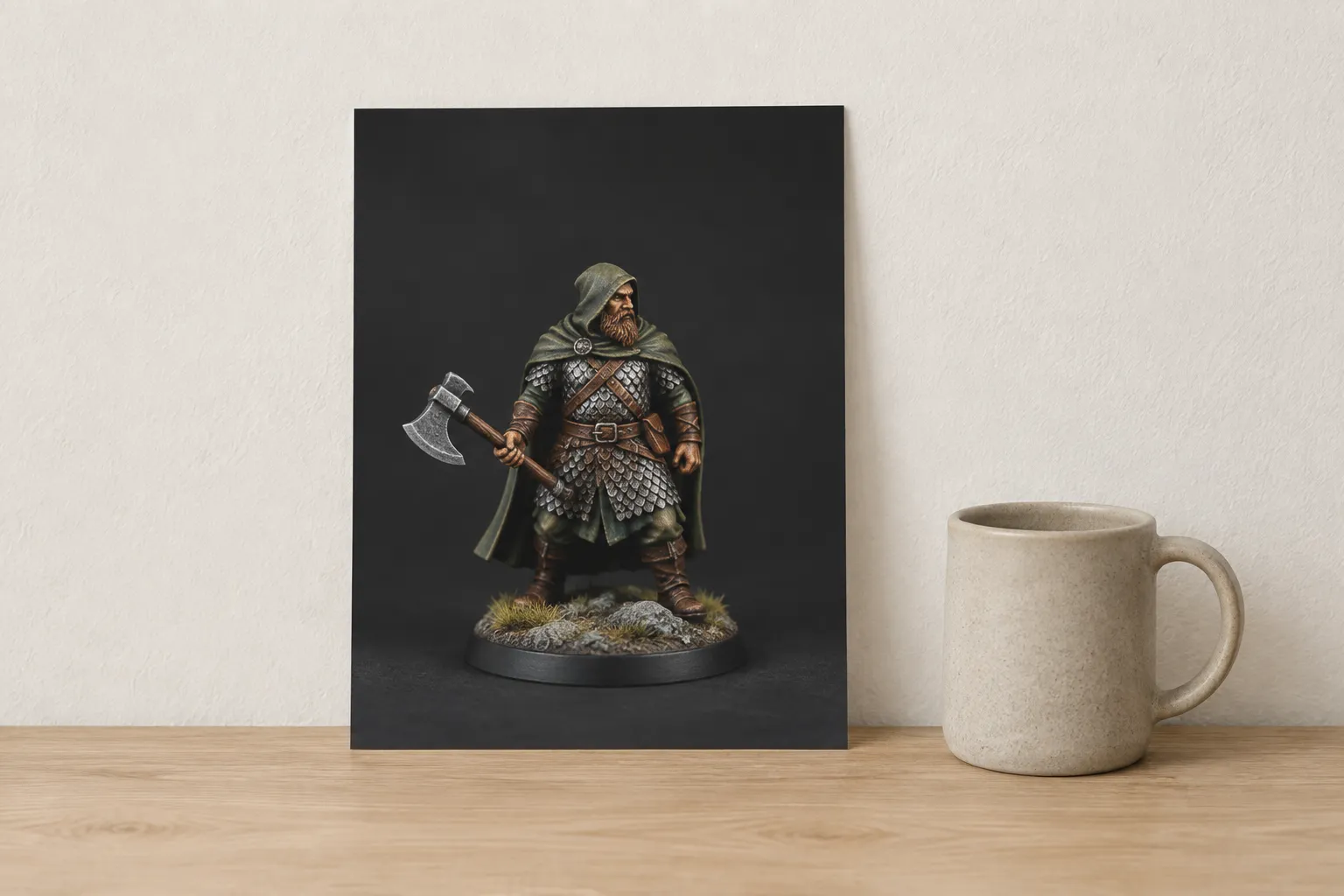 A4 size in cm, inches and pixels A4 size in cm is 21 × 29.7, which is 210 × 297 mm and 8.27 × 11.69 inches.
 -
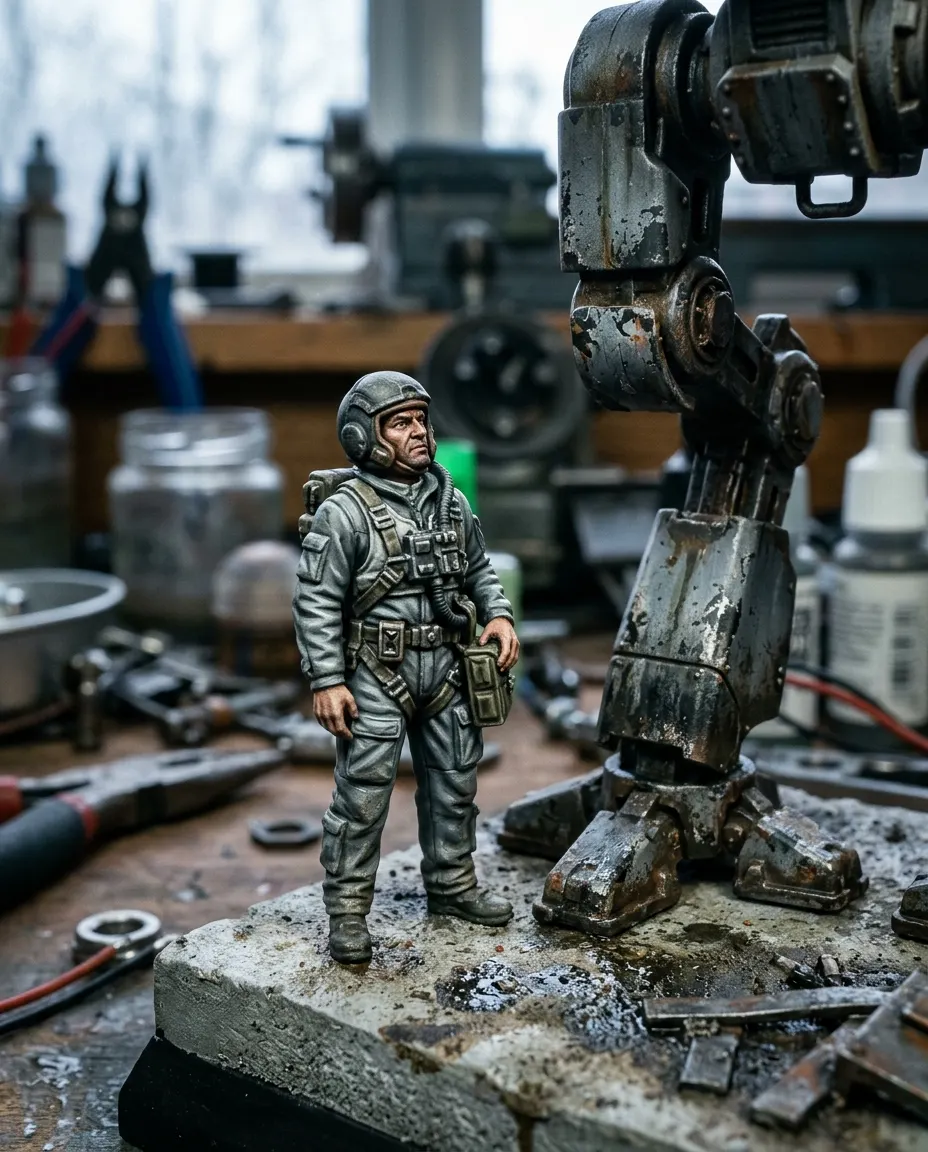 A5 size in cm, inches and pixels A5 measures 5.83 × 8.27 inches (148 × 210 mm). Compare its dimensions, pixel requirements and relationship to A4 before preparing artwork.