Where will your artwork live?
Choose the object around the way you want to enjoy the image.
Jump to a section · 8 sections
For the wall
Paper is an adaptable starting point, especially if you already have a frame. Framed prints make the framing decision part of your order. Canvas adds texture and a deeper edge; metal and wood offer surfaces with their own character.
For the everyday
Mugs and bottles suit a strong focal point. A complex scene that feels rich on a wall can look crowded on a curved or small object. Printing your artwork on a mug covers the wrap and the print area.
Which format suits which image
| Format | Suits | Check first |
|---|---|---|
| Art prints | A frame you already own | Space around important details for the crop |
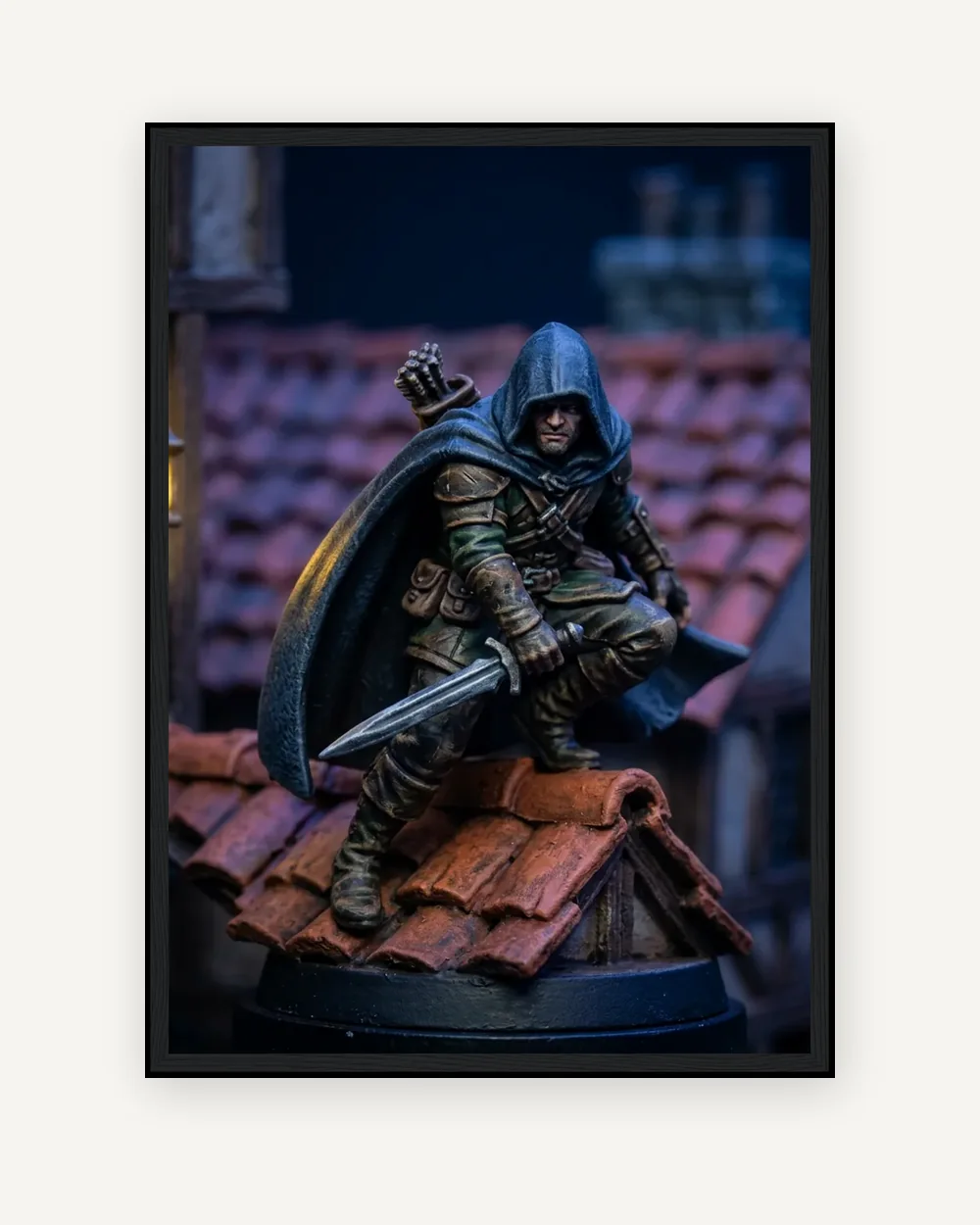
| Framed prints | An illustration or miniature portrait that needs a place of its own | Very fine detail asks to be seen up close |
| Canvas | Paintings and character scenes that gain from texture | Faces, signatures and lettering clear of the wrap |
| Framed canvas | Canvas with a black wooden frame | The frame adds to the outside size |
| Metal | Graphic artwork, saturated color, strong silhouettes | The corners at the final crop |
| Wood | A warmer result where the surface shows | Pale areas let the wood show through |
| Acrylic | Bold colors and clean shapes | Space around details near the edge |
| Mugs | A centered subject or a simple repeat | Tiny lettering and wide panoramas |
| Water bottles | One clear focal point | The print area is smaller than the bottle |
| Tote bags, T-shirts, hoodies | An image worn or carried | Only the front is printed |
| Digital download | Your own printer or framer | Nothing ships, so look at the file at full size |
Measure the space
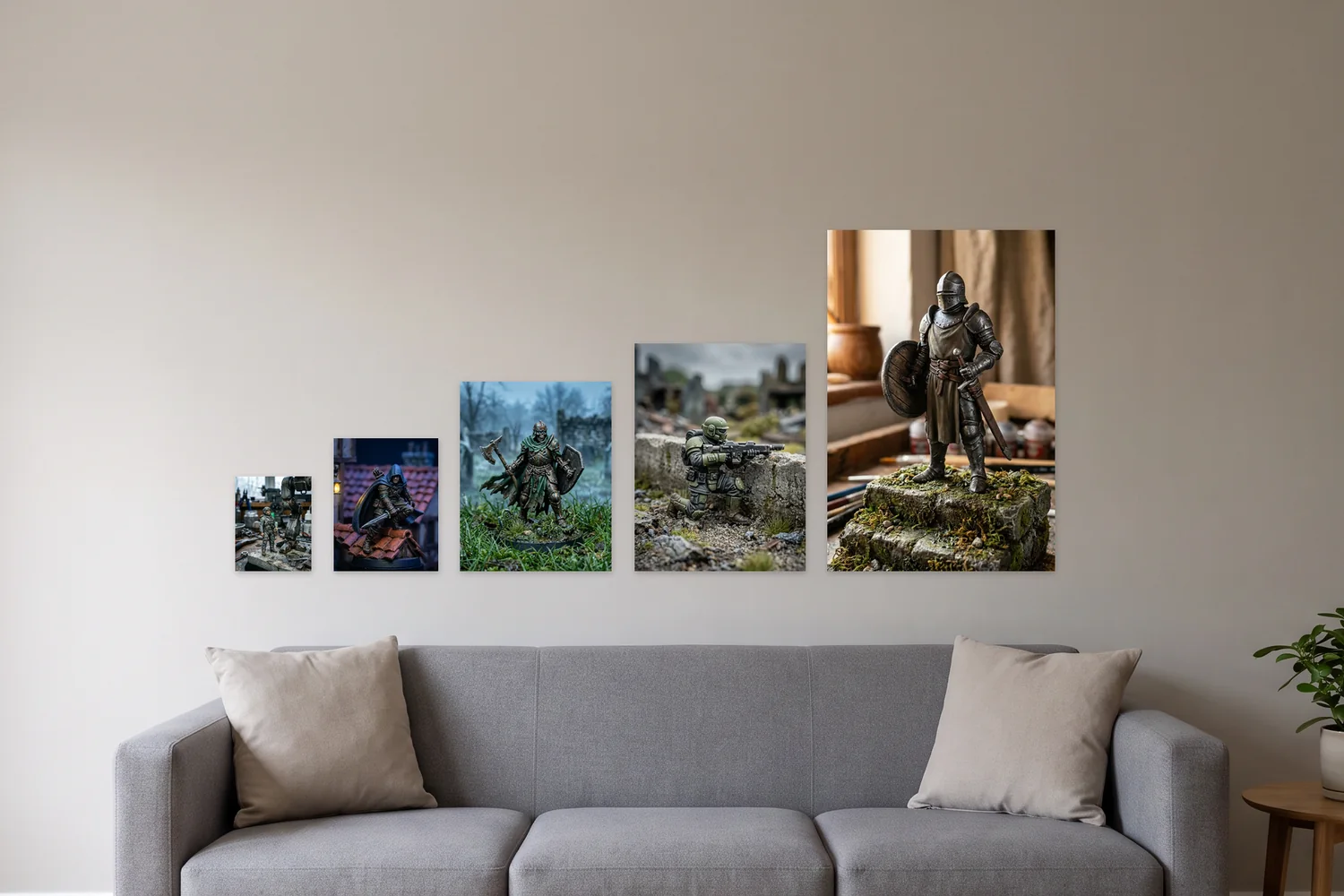
Mark the intended size with painter’s tape or a sheet of paper. Step back to the distance you’ll usually view it from. Check the listed dimensions instead of relying on a room photograph; demonstration scenes aren’t measurement guides. Once it arrives, how to hang a picture covers the height and the fixings.
Viewing distance changes the answer
Think about where people will stand. A print over a sofa is seen from across the room, so one strong shape carries further than fine linework. A framed portrait beside a desk is seen from arm’s length, and that is where small painted details, freehand on a shield or the highlight in an eye, finally pay off. Objects you hold sit closer still. On a mug or a bottle the picture curves away from you, so the subject has to read at a glance.
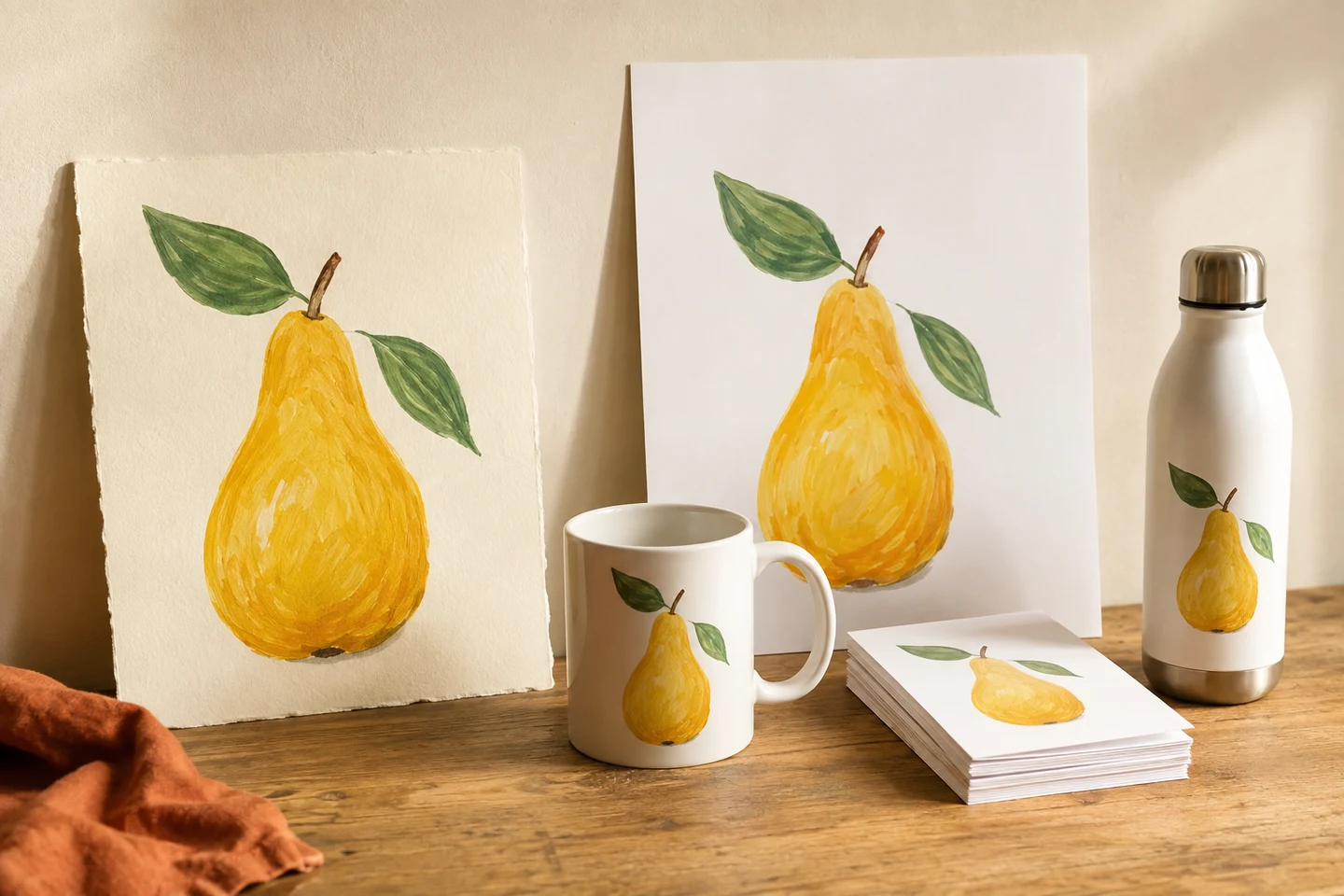
One image, two formats
You can order the same picture twice. A wide scene might go on canvas for the wall while a tight crop of the figure’s face goes on a mug. Each product shows its own crop when you select it. Check both before you pay: an edge that survives on one shape may be cut on the other.
Let the file narrow the list
The bigger the product, the more pixels it needs. When you upload, every size is graded against your file, and a size under 140 pixels per inch can’t be chosen. A small or tightly cropped photo can still suit a mug, a tote or an A4 print after the largest canvas has been ruled out. Upload before you set your heart on one format, and let the grades show you which sizes are open.
Choose, then check
Compare live sizes and prices, upload your image, and inspect the selected crop. You can change formats before ordering if the image fits something else better.