Miniature display case, open shelf, or something on the wall
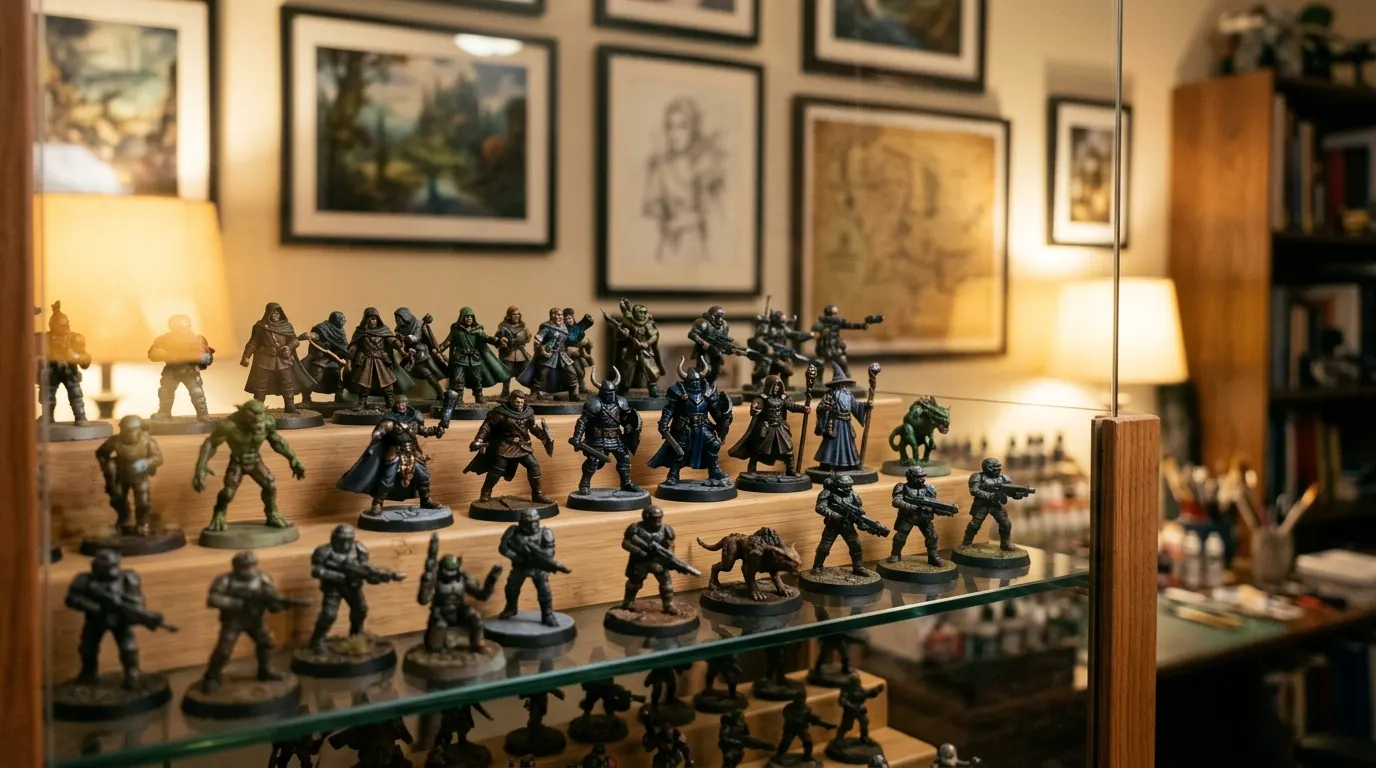
A miniature display case is the default answer to finished models, and it is only sometimes the right one. Cases protect and they also hide: glass reflects, depth swallows the back row, and an army that fills one is seen less than a single figure on a shelf.
Every painter reaches the same point. There are more finished models than places to put them, most of them are in foam, and the ones on show are dusty. What follows compares the options by what they are actually good at, without naming products — we have not tested cabinets and are not going to recommend one we have not.
Glass-fronted cases
Best at: dust, cats, and making a collection look like a collection. Worst at: light. A glazed front reflects whatever is behind you, so a case opposite a window shows you the window. Depth is the other trap — anything past the front row is in shadow and effectively stored rather than displayed.
If you go this way, the two things that matter more than the cabinet are lighting inside it and keeping it to one or two rows deep.
What a miniature display case is actually for
Worth being clear about the job before comparing products. A case does two things: it keeps dust and hands off the models, and it groups them so a collection reads as a collection rather than as clutter. It does not make any individual figure easier to look at — glass and depth both work against that.
So a case is the right answer when the collection is the point, and the wrong one when a particular model is. Most painters want both, which is why the honest answer to this question is rarely a single piece of furniture.
Open shelves
Best at: actually being seen, and being changed. A shelf at eye level with six figures on it shows those six properly, and swapping them is a two-second job, which means the display stays current instead of becoming wallpaper. Worst at: dust, which is not a small problem — a heavily-textured painted model collects it in exactly the recesses you spent longest on.
The compromise most people land on is an open shelf for the current favorites and something enclosed for the rest.
Drawers and foam
Best at: volume and safety. A drawer of foam holds an army in the space a case holds a squad, and nothing gets knocked over. Worst at: everything else. Models in a drawer are, for practical purposes, not displayed at all.
This is fine — most of a collection should be stored, and pretending otherwise leads to walls of glass nobody looks at. The question is what you do about the fact that the best work is in there.
Transport cases
A separate problem with a separate answer. If models travel to a club or an event, they need foam or a magnetized tray built for movement, and that case should not be doing double duty as your display. Kit that travels gets treated as kit; kit that is displayed gets treated as furniture.
The army that lives in a box
Here is the part the storage question does not solve. If most of what you painted is in foam, the work is finished and invisible, and no amount of shelving changes that — a hundred and twenty models will not fit on a wall.
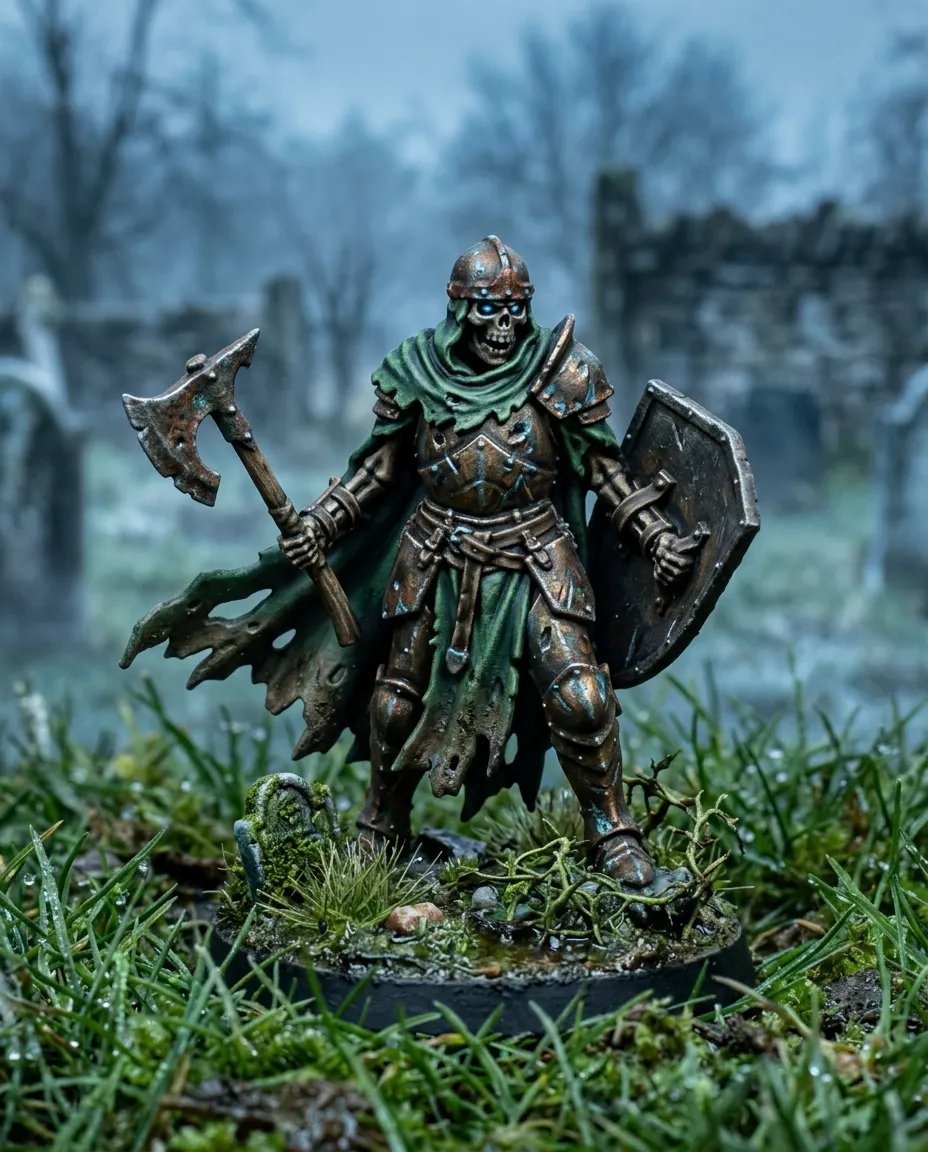
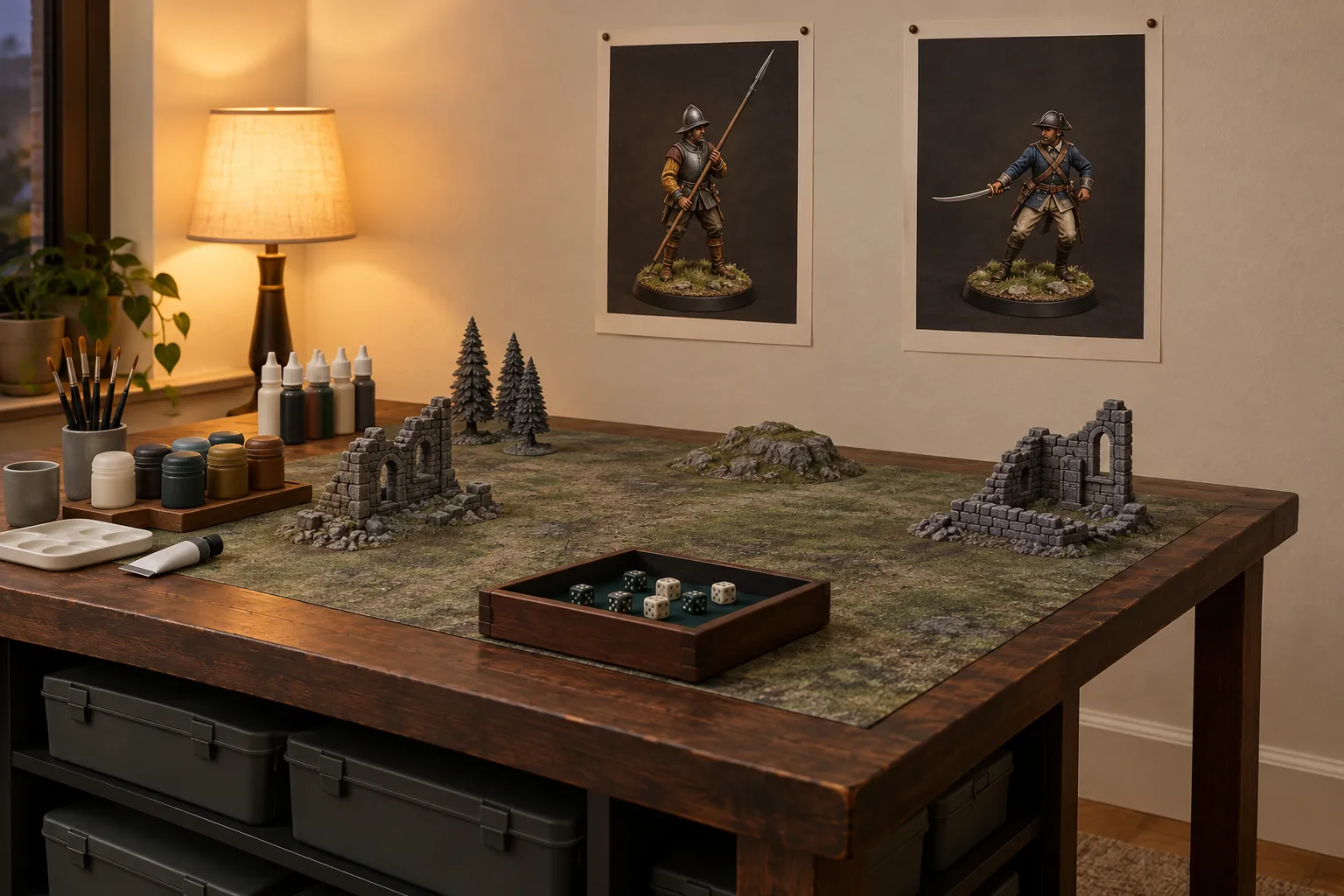
The photograph is the part that needs care, not the printing. The photography guide covers the three failures that make a figure unprintable, and the paper sizes tell you which print sizes your photograph can actually carry.
Dust, since it is the reason most people buy a case
Worth saying plainly: a soft wide brush and thirty seconds per figure, every few weeks, does most of what a case does. It is not as convenient and it costs nothing, and for a shelf of six current favorites it is entirely practical. Cases earn their keep at volume, not at six.
A rule of thumb that has survived contact
Display the few, store the many, print the best. Trying to display everything produces a room full of glass and a collection nobody looks at, including you.
Compare the available US sizes and USD product prices before ordering. Shipping is calculated at checkout for your cart and US address; an expedited rate appears when available.
Good to know
Is a display case or an open shelf better for painted miniatures?
A case is better against dust; a shelf is better for actually being seen and for changing what is on show. Most people end up with a shelf for current favorites and something enclosed for the rest.
Why do models look worse inside a glass case?
Reflections and depth. A glazed front shows you whatever is behind you, and anything past the front row sits in shadow. Internal lighting and one or two rows deep fix most of it.
What do I do with an army that lives in foam?
Accept that most of a collection is stored, and print the best of it. One figure photographed well at A3 puts the work where people see it without needing more shelving.
Should my transport case double as display?
No. Kit that travels takes knocks and gets handled; display is furniture. Keeping them separate saves the paint on both.