Wet palette: what it does, and how to make one for nothing
A wet palette is a shallow sealed tub with a damp layer under a sheet of baking parchment. Paint sitting on the parchment draws moisture up from below, so acrylics that would skin over in ten minutes on a tile stay workable for hours, and often for days.
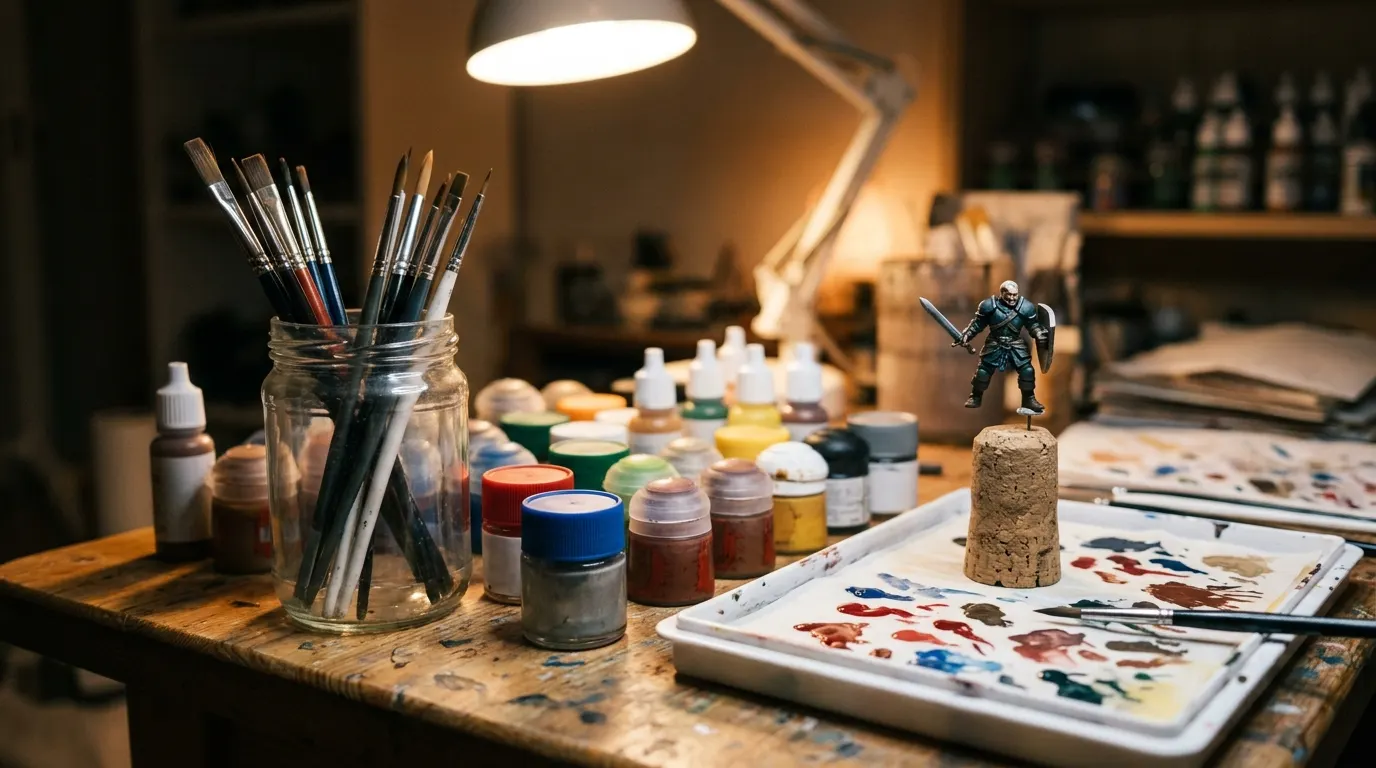
Acrylic paint dries by evaporation, which is exactly what you do not want while you are mixing a color. A wet palette interrupts that: water moves up through a membrane into the paint from underneath, replacing what evaporates off the top.
Why a wet palette changes how you paint
Three things follow from paint that stays wet, and the third is the reason experienced painters will not go back.
- Mixes survive. The exact skin tone you spent ten minutes arriving at is still there tomorrow evening, so a figure painted over a week stays consistent.
- Thinning gets easier. Paint on a dry palette thickens continuously, so you are chasing it with water. On a wet palette the consistency holds while you work.
- You waste far less. Most paint on a dry palette is thrown away, not used. That is real money over a year, and it is the argument that usually persuades people.
How to make a wet palette from a takeaway tub
You need a shallow container with a lid, something absorbent, and a semi-permeable sheet. That is it.
- Take a clean takeaway tub, the flatter the better.
- Cut a sponge, a few folded sheets of kitchen roll, or a kitchen cloth to fit the bottom.
- Soak it, then press the excess out. It should be thoroughly wet and not standing in water.
- Lay baking parchment on top, cut to size. Greaseproof paper works; ordinary kitchen roll does not, because paint sinks straight into it.
- Smooth out the air bubbles, put paint on the parchment, and keep the lid on between sessions.
No brand recommendation here, because we have not tested any and will not repeat somebody else's. The bought versions are a tub, a sponge and a pack of paper, sold together.
How long paint actually lasts on one
Overnight is reliable. Two or three days is normal with the lid on. Beyond that it depends on your room and how wet the layer underneath is, and the honest answer is that you will know by looking - paint that has begun to gel on the parchment has gone, and stirring water into it does not bring it back.
What surprises people is that the useful window is not the paint staying liquid, it is the MIX staying available. Re-mixing a color from scratch is the part that eats an evening, and a palette that holds it for two days removes that.
The two things that go wrong
Too wet, and paint spreads and thins itself on the parchment until it is useless. The fix is to press more water out of the layer underneath, not to add thicker paint.
Left too long, and it grows mold - a wet sealed box is exactly the environment for it. Change the water weekly if you paint often, let it dry out completely between longer gaps, and rinse the sponge rather than just topping it up.
Parchment, and why the brand of paper matters less than the fit
Cut the sheet slightly smaller than the tub rather than larger. A sheet pressed up the sides wicks water round the edges and floods the corners, which is where most paint gets ruined.
Smooth the air out from the middle when you lay it down. A trapped bubble is a dry spot, and a dry spot under the parchment is a patch of paint that skins over while everything round it stays wet - which is confusing enough to make people blame the paint.
Storing it between sessions
Lid on, somewhere cool, and out of the sun. A palette left on a warm windowsill dries through the lid faster than you would expect, and one left in a cold room lasts noticeably longer.
When a wet palette is the wrong tool
Metallics, which separate if they sit. Washes and inks, which are already thin and will thin further. And a fifteen-minute session where the setup takes as long as the painting.
Once the figure is finished
Compare the available US sizes and USD product prices before ordering. Shipping is calculated at checkout for your cart and US address; an expedited rate appears when available.
Match the palette to the paint
For preparation and maintenance, see The Army Painter’s wet-palette guide. Different paint formulas need different handling; check the maker’s instructions before thinning. When your miniature is finished, use our miniature photography guide to record the paintwork.
Good to know
What is a wet palette used for?
Keeping acrylic paint workable. A damp layer under baking parchment feeds moisture up into the paint, so mixes last hours or days instead of drying out in minutes.
What paper do you use in a wet palette?
Baking parchment or greaseproof paper. Kitchen roll does not work as the top sheet - paint sinks into it rather than sitting on it.
Why has my wet palette gone moldy?
A sealed damp box is ideal for mold. Change the water weekly if you paint often, rinse the sponge rather than topping it up, and let it dry out completely between longer breaks.
Is a wet palette worth it for a beginner?
Yes, and a homemade one costs nothing. The paint you stop throwing away pays for a bought one within a year anyway.