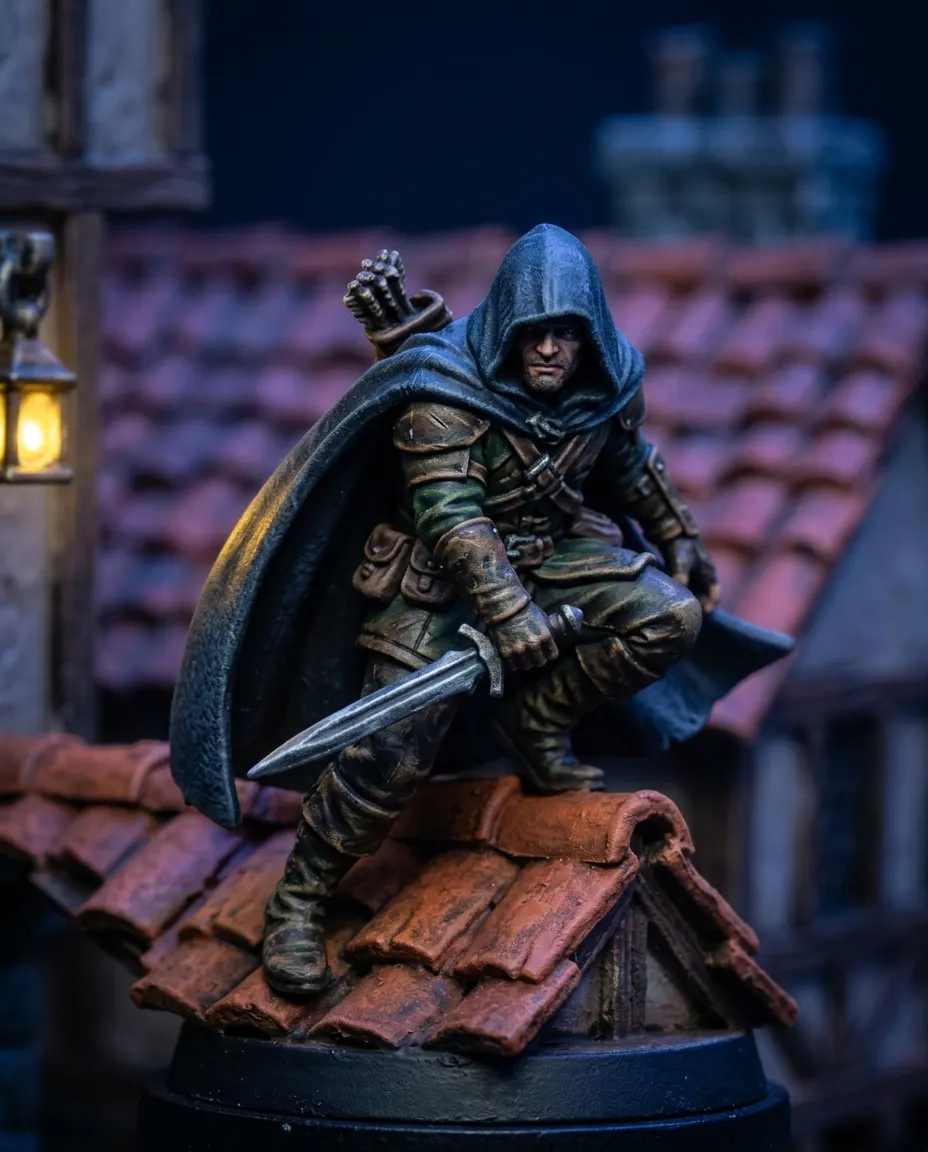
Wargaming for beginners: what it is and what it costs
Wargaming is three hobbies sold as one — collecting models, painting them, and playing a game with them — and most people arrive wanting one of the three. Working out which one you are actually here for is the cheapest decision you will make.
Brush & Paint is not affiliated with Games Workshop or any other publisher and sells nothing of theirs. This is an orientation to the hobby, written because a lot of people who end up printing their painted models started by not knowing where to begin.
The three hobbies inside wargaming
Collecting, painting and playing overlap and are not the same pursuit. Plenty of people paint and never play. Plenty play with unpainted plastic for years. The reason this matters is that the advice for each is different, and most starter advice assumes you want all three at once.
If it is painting you are drawn to, you need one model and some paint, not an army. If it is playing, the fastest route is a club night where somebody lends you a force.
How to play Warhammer, and the others like it
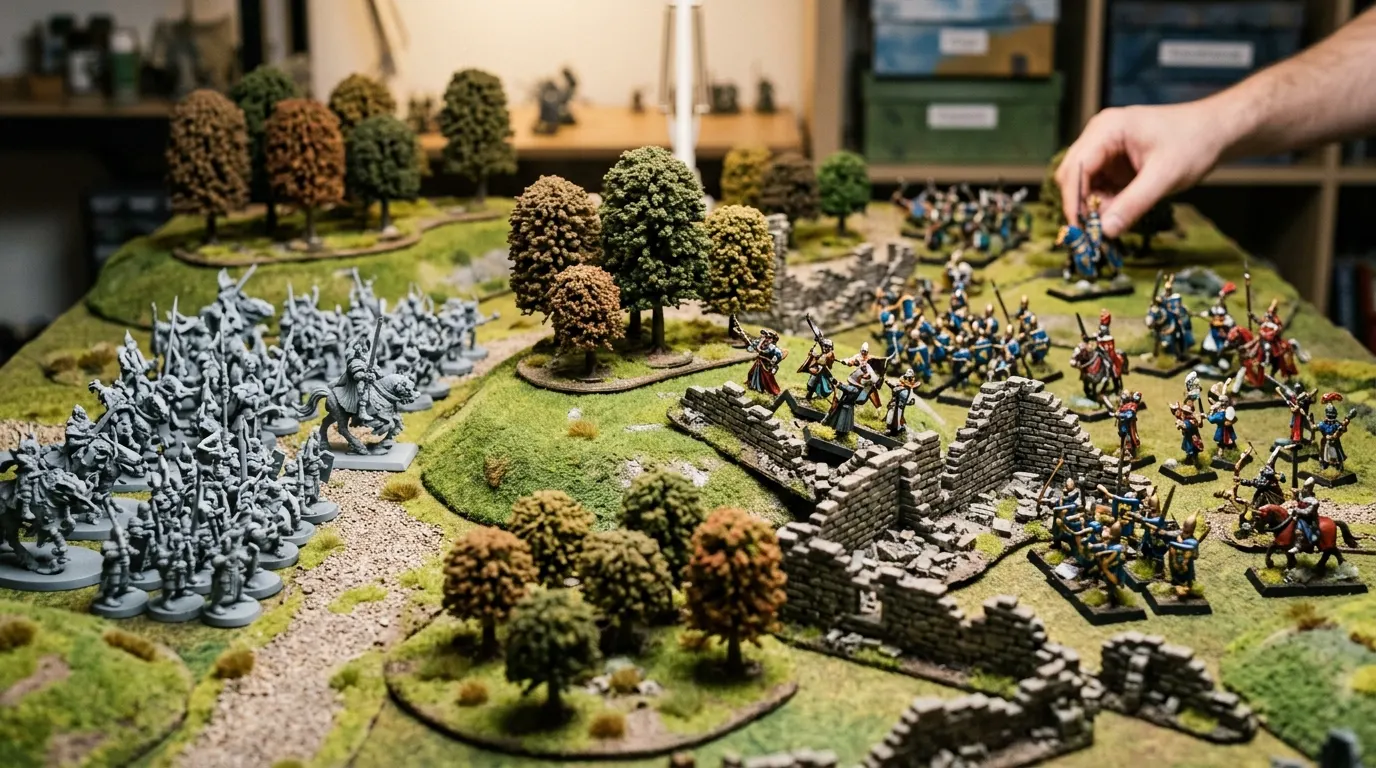
Warhammer 40,000 and Age of Sigmar are the two biggest systems, both from Games Workshop, and the pattern is common to most of the genre: two players each bring a force built to an agreed points total, deploy on a table with terrain, and alternate turns of moving, shooting and fighting, with dice resolving each action against the rules.
Kill Team and Necromunda are smaller-scale games from the same publisher, using a handful of models rather than dozens - which makes them much cheaper to start and much quicker to play. Outside that publisher there are dozens more: Bolt Action for the Second World War, Battletech for giant machines, Frostgrave and Mordheim for small warbands, Trench Crusade and Turnip28 for the strange end. The rules differ; the shape of an evening does not.
We do not reproduce any system's rules here. Every publisher sells or gives away their own, and several - One Page Rules among them - publish free rulesets you can read before spending anything.
What it actually costs
Honestly: it varies more than any guide admits, because it depends entirely on which of the three hobbies you are in. What is consistent is the shape of the spending.
- The models are the largest cost and the one people quote. A boxed starter set is the cheapest entry; a full army bought at once is not.
- Paint and brushes are a smaller but real cost, and the paints last. A wet palette costs nothing to make and reduces how much paint you waste.
- Rules vary from free to a hardback book.
- Terrain can be books under a cloth for a long time before it needs to be anything else.
The cheapest honest start is a club night and somebody else's models, which costs a subs fee and tells you within one evening whether you want any of it.
The bit nobody warns you about: assembly
Between buying models and painting them sits an evening or several of cutting parts off a sprue, cleaning the seams and gluing them together. It is not difficult and it is not optional, and people who assumed they were buying something ready to paint are the ones who stall here.
Budget the time honestly. A squad is an evening. An army is a season, and it is the reason smaller games like Kill Team and Necromunda are a kinder start than a full force.
Age of Sigmar or 40,000?
A fantasy setting and a science-fiction one, from the same publisher, with broadly similar mechanics. People generally choose on which models they would rather look at for a year, which sounds glib and is actually the right criterion — you will spend far more hours painting them than playing them.
Where to actually start, in order
Borrow before buying. Then buy one box of models and paint one of them badly, which teaches you more about whether you enjoy this than any amount of reading. Then decide whether you are collecting, painting or playing, and spend accordingly.
The order matters because the expensive mistake is buying an army for a game you have not played, and it is the mistake the hobby is structured to encourage.
When you have painted something
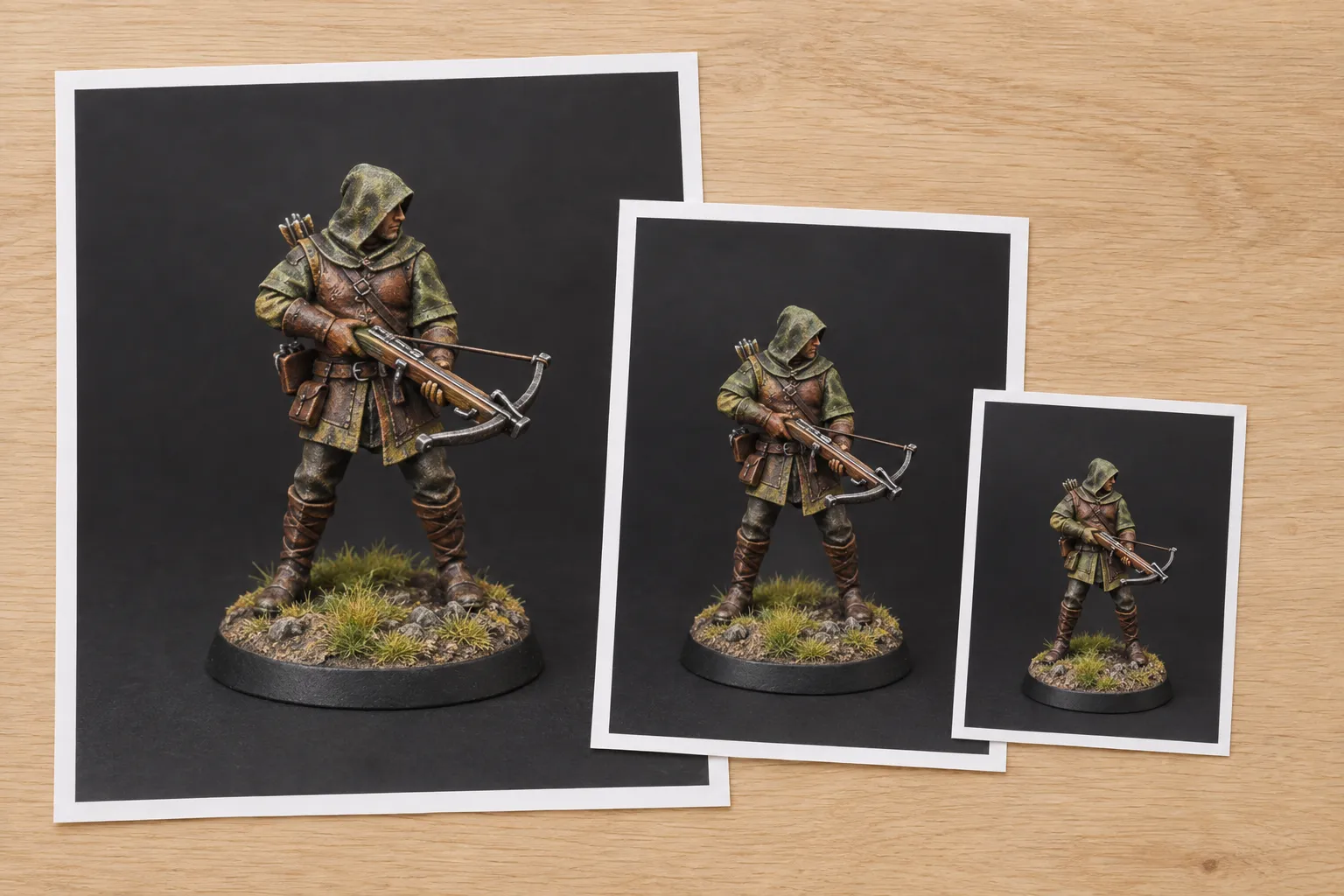
Compare the available US sizes and USD product prices before ordering. Shipping is calculated at checkout for your cart and US address; an expedited rate appears when available.
Find a game and learn the painting basics
The Historical Miniatures Gaming Society’s introduction explains historical miniature wargaming and ways to find other players. For painting techniques across fantasy subjects, browse Reaper’s craft tutorials. Our miniature scale converter helps compare model sizes; it does not establish compatibility with a game’s rules.
Good to know
Is wargaming expensive to start?
It varies more than most guides admit, because the models are the main cost and how many you buy is up to you. The cheapest real start is a club night with borrowed models and a subs fee.
What is the difference between Age of Sigmar and Warhammer 40,000?
A fantasy setting and a science-fiction one from the same publisher, with broadly similar mechanics. Most people choose on which models they would rather paint, which is reasonable - painting takes far more hours than playing.
Do I need to paint my models to play?
No. Plenty of people play with unpainted plastic for years, and plenty of painters never play at all. They are separate hobbies that happen to share the same boxes.
What is the cheapest way to try wargaming?
A local club night, where somebody will usually lend you a force, plus a free ruleset - several publishers give theirs away. One evening tells you whether you want any of it.