How to photograph artwork so it can be printed
How to photograph artwork comes down to three problems: getting it square, getting it evenly lit, and getting the color true. Solve those with a window and a phone and the copy will print properly. Miss any one and no amount of editing rescues it.
Jump to a section · 7 sections
This is about flat work: drawings, paintings, prints, anything on paper or board. Photographing a three-dimensional object is a different job with different rules, and the miniature photography guide covers that one.
Square first, because it cannot be fixed later
If the camera is not parallel to the artwork, the rectangle becomes a trapezium: the far edge is shorter than the near one. Software can stretch it back, and stretching resamples every pixel, which softens exactly the fine marks you were trying to capture.
Lay the work flat on the floor and stand directly over it, or put it on a wall and stand back at its center height. Get the edges parallel to the frame of the shot before you press anything. If the top and bottom edges are the same length in the viewfinder, you're square.
How to photograph artwork evenly, which beats brightly
One lamp or one window on one side gives you a gradient: bright at that edge, dim at the other. It looks fine on screen and prints as a page that's dirty down one side.
Two options work without equipment. Outdoors on an overcast day is excellent: the whole sky is a softbox and the light is uniform edge to edge. Indoors, use a large window but turn the artwork so the window is along one long edge, then bounce light back from the other side with a sheet of white card. Switch the room lights off while you do it: mixing daylight and a bulb gives you two colors of light across one surface, which is the hardest thing of all to correct.
| Fault | Cause | Fix |
|---|---|---|
| A trapezium | Camera not parallel | Stand square; edges the same length |
| Dirty down one side | Light from one side | Overcast daylight, or a window and white card |
| Two color casts | Daylight and a bulb mixed | Room lights off |
| Blue or orange whites | Phone color processing | Check against something white |
| A reflection | Glass, gloss or varnish | Out of the frame; light further to the side |
| A soft copy | Focus and camera shake | Brace the phone and use a timer |
Color you can trust
Phones make pictures look nice, which is not the same as making them look right. They warm up skin tones, lift shadows and saturate. For a copy you intend to print, that's all working against you.
Include something white in the shot (the margin of the paper, or a sheet of plain white card at the edge) and use it as the reference when you check the result. If the white looks blue or orange on screen, everything else is shifted too. Correcting from a known white is quick; guessing isn't.
Then compare the photograph to the original side by side, in the same light, before you do anything else. It's the check that settles it, and it's the one people skip.
Glass, gloss and varnish
If the work is framed behind glass, take it out. There's no technique that removes a reflection of you from the middle of a drawing.
Varnished or heavily-worked oil surfaces reflect too, in patches, and the fix is angle: move the light further round to the side until the sheen falls outside the frame. Polarizing filters exist and are the right answer for this, but for most people moving the lamp is quicker and free.
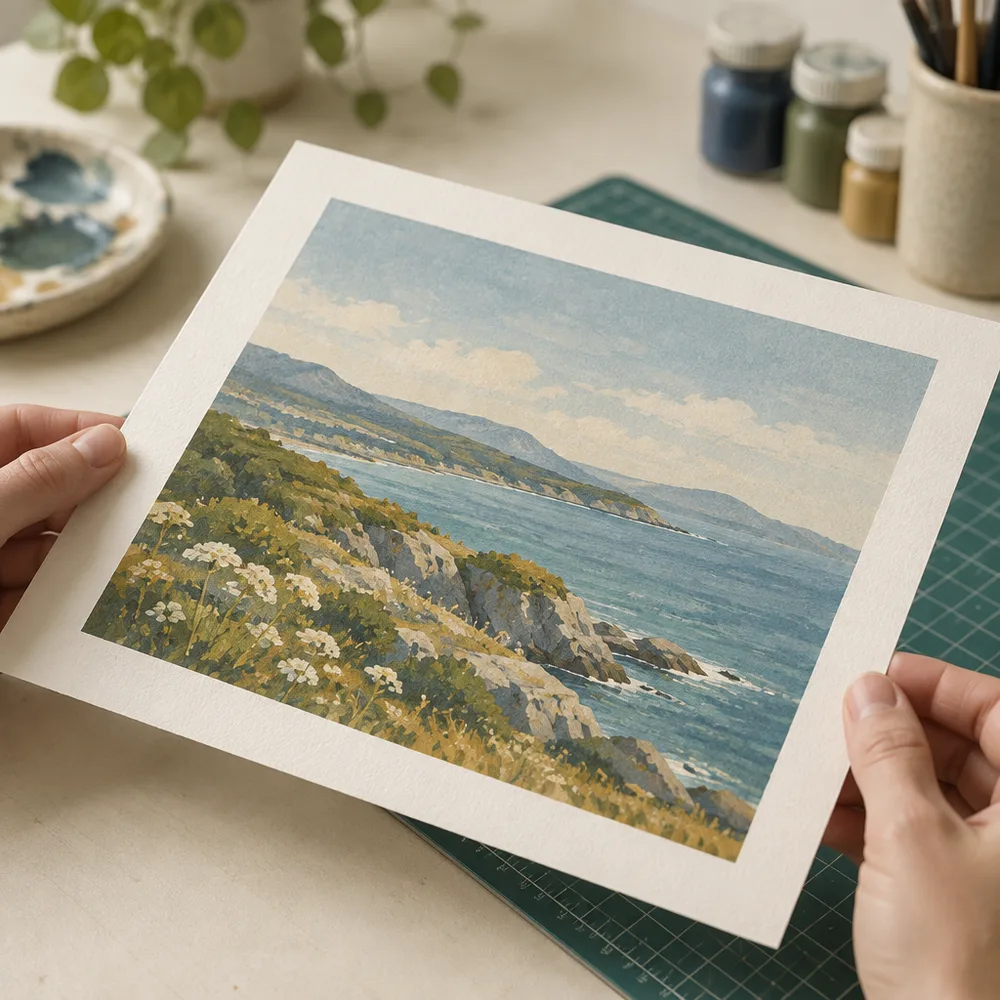
Resolution, and what size it buys you
A modern phone photograph is comfortably enough for A3 and usually for A2. The limit is rarely the sensor; it is focus and camera shake, both of which look like "not enough resolution" and are not.
Brace the phone or prop it on something. If you're shooting on a timer with the phone resting on a stack of books, you have removed the largest single cause of soft copies. Every A size and the file it needs is set out on the paper sizes pages, and the upload check here withdraws anything that would print soft, so you can't order it by accident.
How to photograph paintings specifically
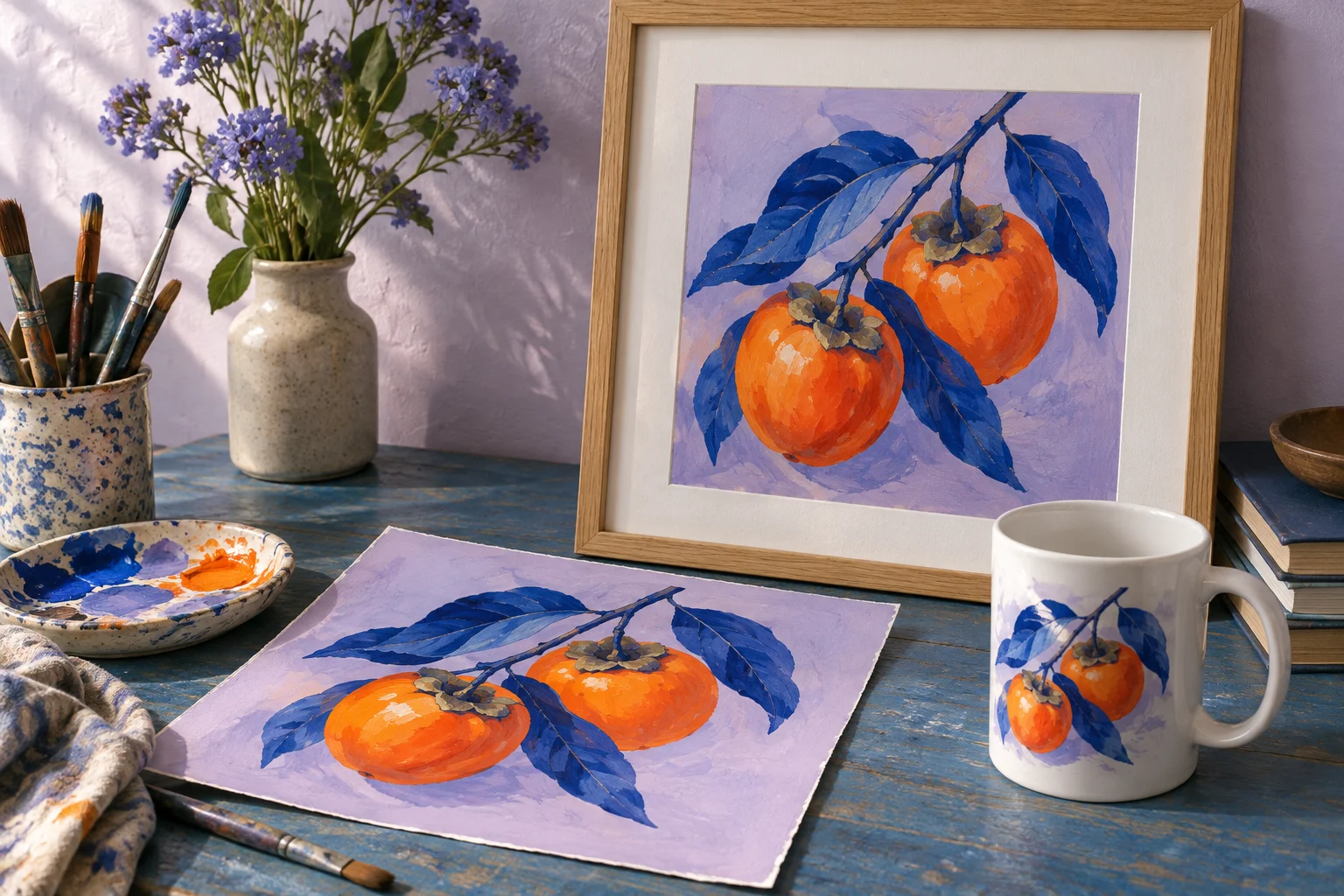
Texture is the difference. A drawing wants to look flat; a painting often has impasto and brush marks that are part of the work, and lighting it completely flat kills them. Bring the light round slightly so it rakes across the surface a little, enough to show the texture without casting a shadow from the frame edge.
That is a judgment call, not a rule, and it is worth taking two versions (one flat, one raked) and comparing them against the painting itself before deciding which one to print. The format guide covers which surface suits the result.
Compare the available US sizes and USD product prices before ordering. Shipping is calculated at checkout for your cart and US address; an expedited rate appears when available.
Keep the original safe
For handling and storage of original drawings and prints, consult the Library of Congress guidance for works on paper. Once photographed, use our file preparation guide before selecting a print size. Then upload it to custom art prints, which prints your photo of the work as it is, on archival paper.
Questions and answers
How do I photograph artwork without a camera?
A phone is fine. What matters is being square to the work, even light, and true color: none of which needs a camera, and all of which are ruined by a bad setup regardless of one.
What is the best light for photographing art?
An overcast day outdoors, or a large window with the artwork turned so the window runs along one long edge and white card bounces light back from the other. Turn the room lights off.
Should I take artwork out of its frame first?
Yes, if it is behind glass. No technique removes a reflection from the middle of the picture.
How big can I print a phone photograph of a drawing?
Comfortably A3 and usually A2. The limit is normally focus or shake, not pixels: brace the phone and use a timer.