Miniature painting supplies: what to buy first
Miniature painting supplies for a first model come down to a short list. This guide covers what each item does, what can wait until later, and how to judge a starter kit on its contents.
Jump to a section · 10 sections
Brush & Paint is not affiliated with Games Workshop or Wizards of the Coast, and sells nothing of theirs. We don't sell painting supplies either, so nothing below is a product recommendation. It's a list of what each thing is for.
Miniature painting supplies: the short list
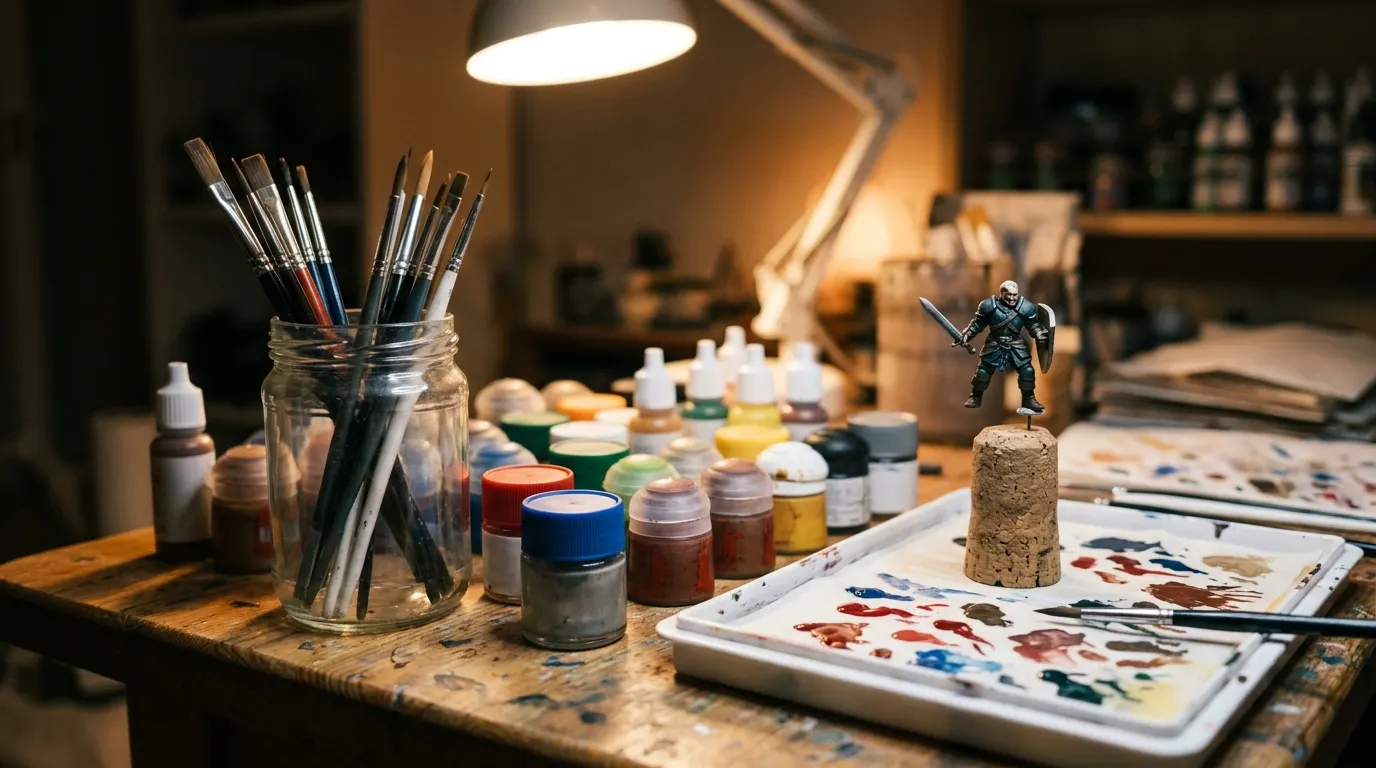
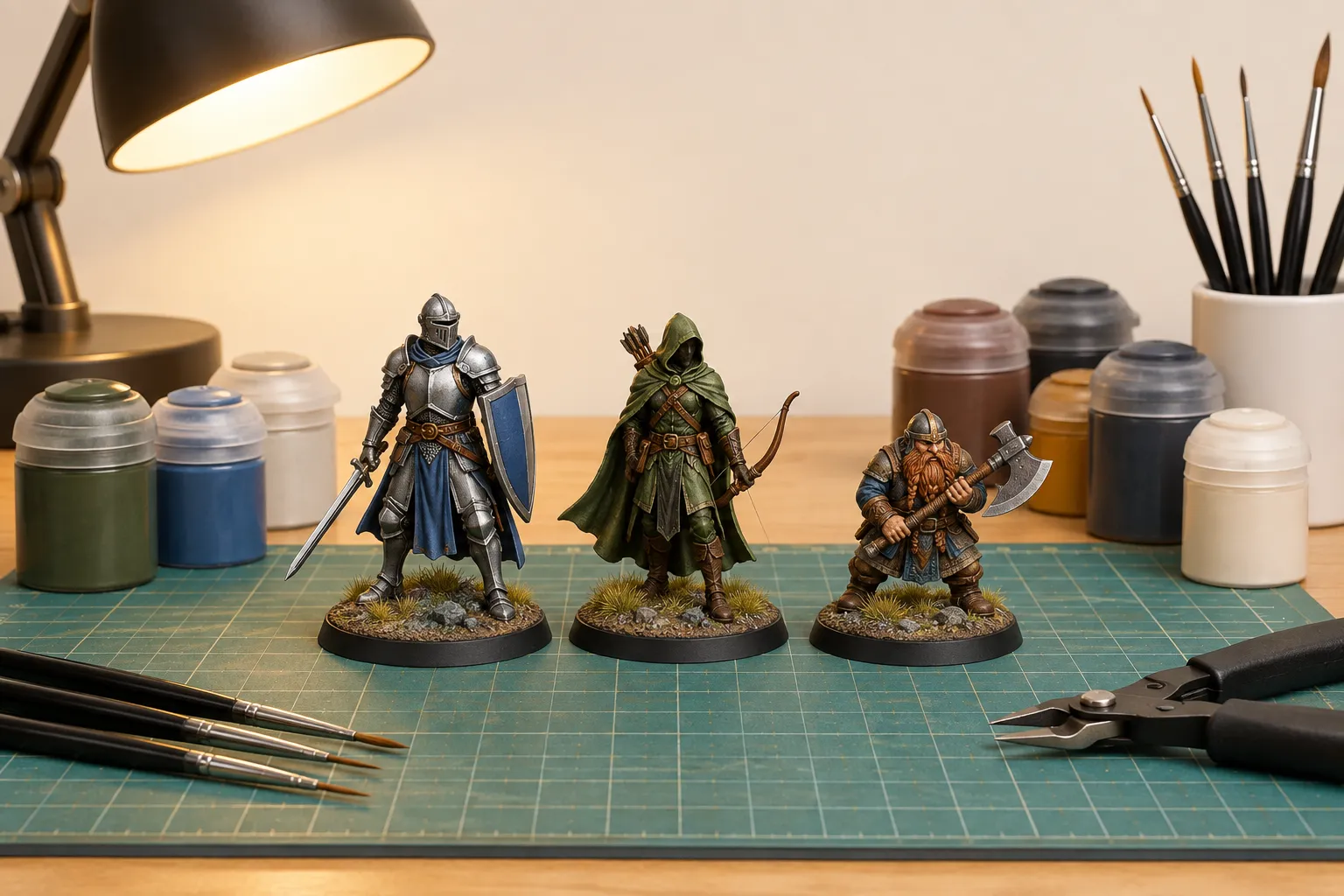
For a first model you need a few acrylic paints, a primer, two brushes, something to mix paint on, water, a paper towel, cutters or a craft knife for the frame, and glue. That's enough to take a model from the frame it came on to a finished figure, and how to paint miniatures walks through doing exactly that. Everything else on a supply shelf solves a problem you haven't met yet.
Paints
Acrylics are the default. Wikipedia's figure painting article reports that most painters, display and competition painters above all, work exclusively or mostly in acrylic, and explains the difference between the kinds you'll see. Acrylics made for figure painting are thinner than artist acrylics, flow more easily, and carry more finely ground pigment than cheaper craft acrylics. Artist-grade heavy-body acrylics can also give detailed results. Enamel paints are the older option, and the same article lists why most figure painters moved on: they need specialist thinners for thinning and cleaning brushes, dry slowly, and need to be used outside or somewhere well ventilated because of their fumes.
Start with the colors the model in front of you needs, not a full set. You'll learn which ones you actually reach for.
Primer
Primer goes on after the model is assembled and before any color; if it comes as a spray, use it outside or with the windows open, and see how to paint miniatures for the ventilation guidance and the rest of the priming step.
| Item | What it is for |
|---|---|
| Acrylic paints | Color; figure-painting acrylics are thinner and finely ground |
| Primer | The first coat, after assembly and before any color |
| Two brushes | One for larger areas, one with a fine point |
| A palette | Any non-porous surface to thin and mix on, such as a ceramic tile |
| Water and a paper towel | Rinsing the brush before paint dries in it |
| Cutters or a craft knife | Freeing parts from the frame, the sprue |
| Glue | Superglue, or plastic cement for plastic models |
Brushes
Two are enough to start: one for covering larger areas and one with a fine point for detail. Resist the smallest brush in the rack; how to paint miniatures explains why a tiny brush and acrylic don't mix. The figure painting article records that many acrylic painters consider kolinsky sable brushes the best quality for painting, for their control over the flow of paint and their sharp, precise tip. For enamels, lacquers and oils, synthetic brushes are often recommended for longer life, because those thinners can make natural fibers deteriorate.
A palette and water
You need a surface to thin and mix paint on. Any non-porous material works, and the article gives a ceramic tile as an example. According to the same article, a wet palette is how many acrylic painters stop paint drying out mid-session; ours explains how to make one from household supplies. Keep two pots of water if you can, one for rinsing and one clean, and rinse the brush before paint dries in it.
Tools for cleaning up the parts
Parts in plastic or resin generally come on a frame, the sprue, and need cutting free. The figure painting article lists the tools: a hobby knife or small scissors, or purpose-made hobby clippers that cut flush to the part, and a hobby knife or a mold line remover for the thin seams left by casting. Parts are glued with superglue or, for plastic models, plastic cement. Small files or fine sandpaper tidy up joins, and gaps can be filled with epoxy putty. Clippers, a knife and one glue will cover a first model.
Miniature painting accessories: what to add later
Miniature painting accessories is a loose term, and this guide uses it for anything beyond the short list above. None of it is needed for a first figure, and we sell none of it.
Pinning. The figure painting article says that once the parts are cleaned and glued, pinning may also be necessary. Nothing in a first kit calls for it, so leave it until a model gives you a reason.
Ready-made palettes. According to the same article, hobby companies sell wet palettes and palette paper pads, and many painters make a wet palette from household supplies instead. Our wet palette guide shows the homemade version, which lets you judge whether a bought one adds anything.
Airbrush details. If you do add an airbrush later, the article says gravity-feed airbrushes are preferred over side- or bottom-feed because there is less paint wastage, and dual-action is often preferred over single-action because it gives greater spray control. It adds that smaller needle sizes are preferred for fine detail work and larger ones speed up less detailed applications.
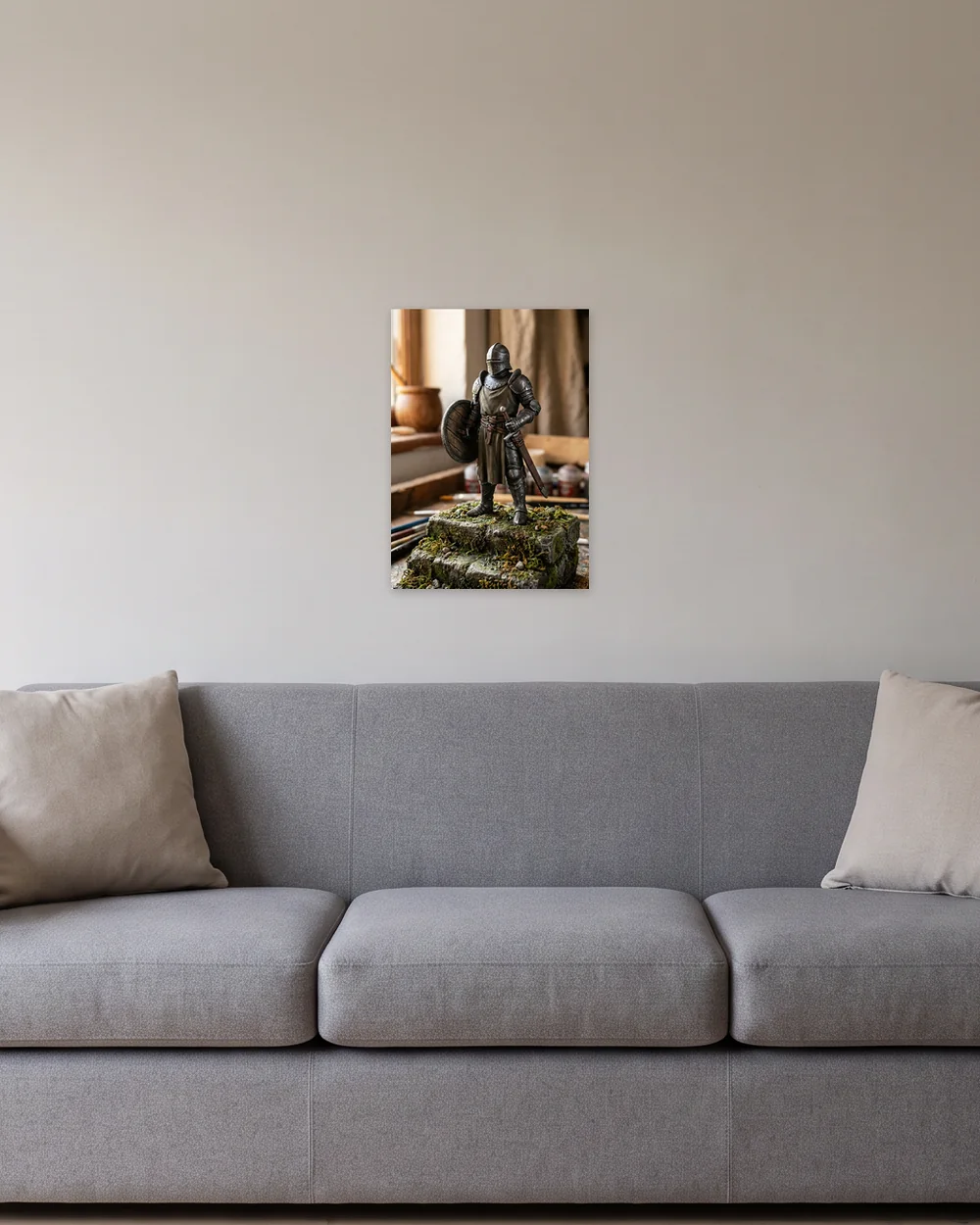
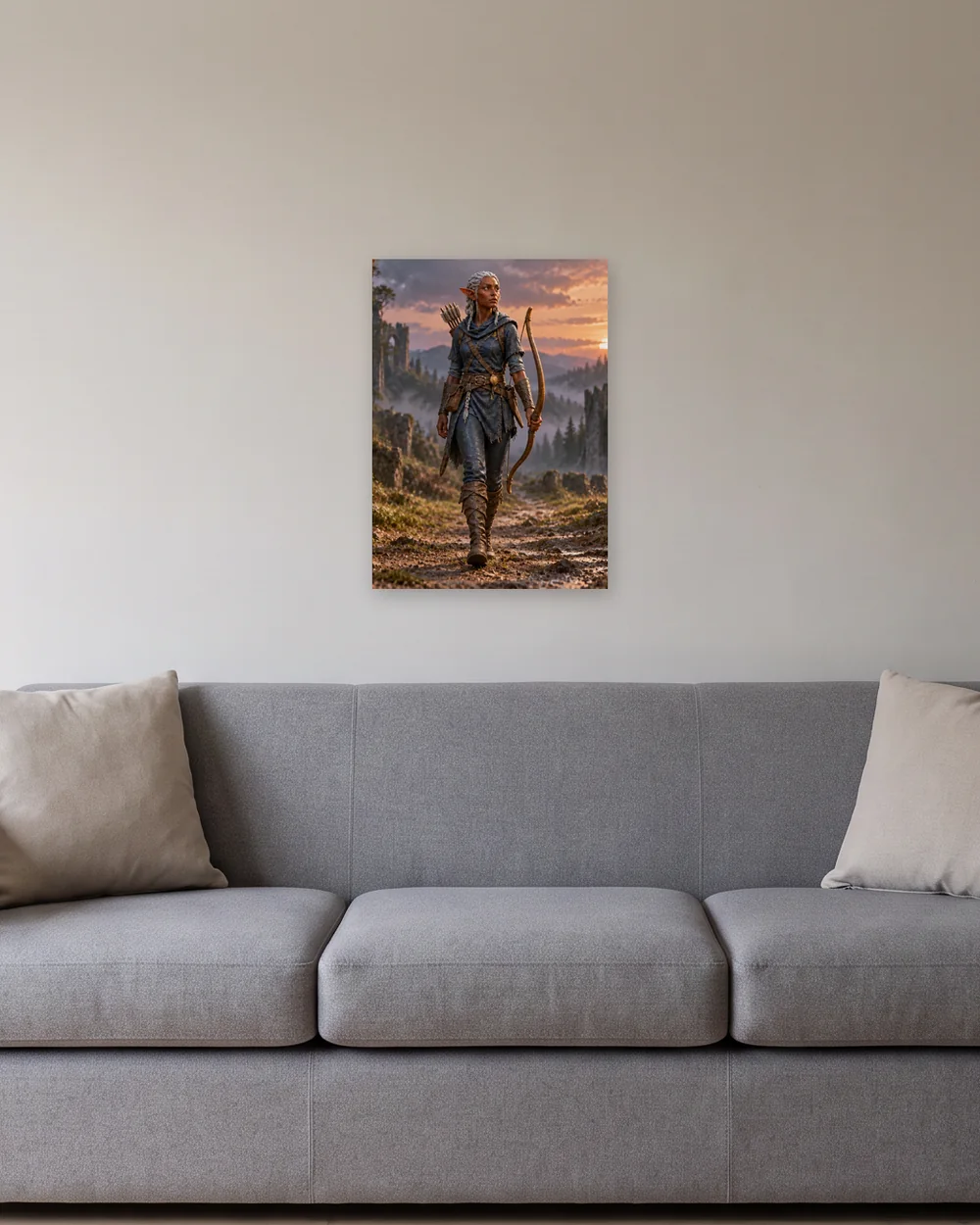
Whatever you add, the paintwork is worth recording. Photograph the finished figure before it goes on a shelf, and a good photo can become an art print.
| Item | When it makes sense |
|---|---|
| Pinning | When a model gives you a reason |
| A bought wet palette | After you have tried the homemade one |
| An airbrush | Once you know how much you will paint |
| Varnish | When a model is going to be handled |
| Basing materials | Optional; not every painter bothers with bases |
What can wait
An airbrush can wait. The article describes it as a common tool for applying primer, basecoats and varnish quickly across large areas, and for smooth color gradients. It makes sense once you know how much you'll paint. Varnish can wait until a model is going to be handled. Basing materials, from textured pastes and grit to static grass, are optional too: the article notes not every painter is concerned about bases at all.
If a younger painter is joining in
Look for the Approved Product seal from the Art and Creative Materials Institute. ACMI says the AP Seal identifies art materials certified by a board-certified toxicologist "to contain no materials in sufficient quantities to be toxic or injurious to humans, including children", and it recommends checking for it on products for kids in sixth grade or younger. Read the label on anything with a CL seal, which carries cautionary labeling instead.
When the first model is done
Photograph it before it goes on a shelf: the miniature photography guide covers the light. If you're shopping for someone who already paints, gifts for miniature painters starts from the work they've made, not from more supplies.
Compare the available US sizes and USD product prices before ordering. Shipping is calculated at checkout.
And if you'd like that first figure in a setting of its own, try it in a new scene: the preview costs nothing, and you decide whether it works.
Questions and answers
What are the must-haves for miniature painting?
A few acrylic paints, a primer, two brushes (one for larger areas, one with a fine point), something non-porous to mix on, water, cutters or a craft knife, and glue. That covers a first model from the frame to the finished figure.
Where's the cheapest place to get art supplies?
We don't name or compare stores. What keeps the cost down is buying less: the short list above is enough for a first model, a ceramic tile works as a palette, and a wet palette can be made from household supplies.
What is the best starter kit for miniature painting?
There isn't one best kit. Check what's in the box against the short list: some paints, a primer, a brush with a fine point and one for larger areas. If a kit leaves out primer, or only includes very small brushes, plan to buy those separately.