How to clean a canvas print, and what never to use on one
How to clean a canvas print is mostly a question of what not to do. A print has no glass over it, so the printed surface is the surface you are touching, and most household cleaning instincts are wrong for it.

Jump to a section · 8 sections
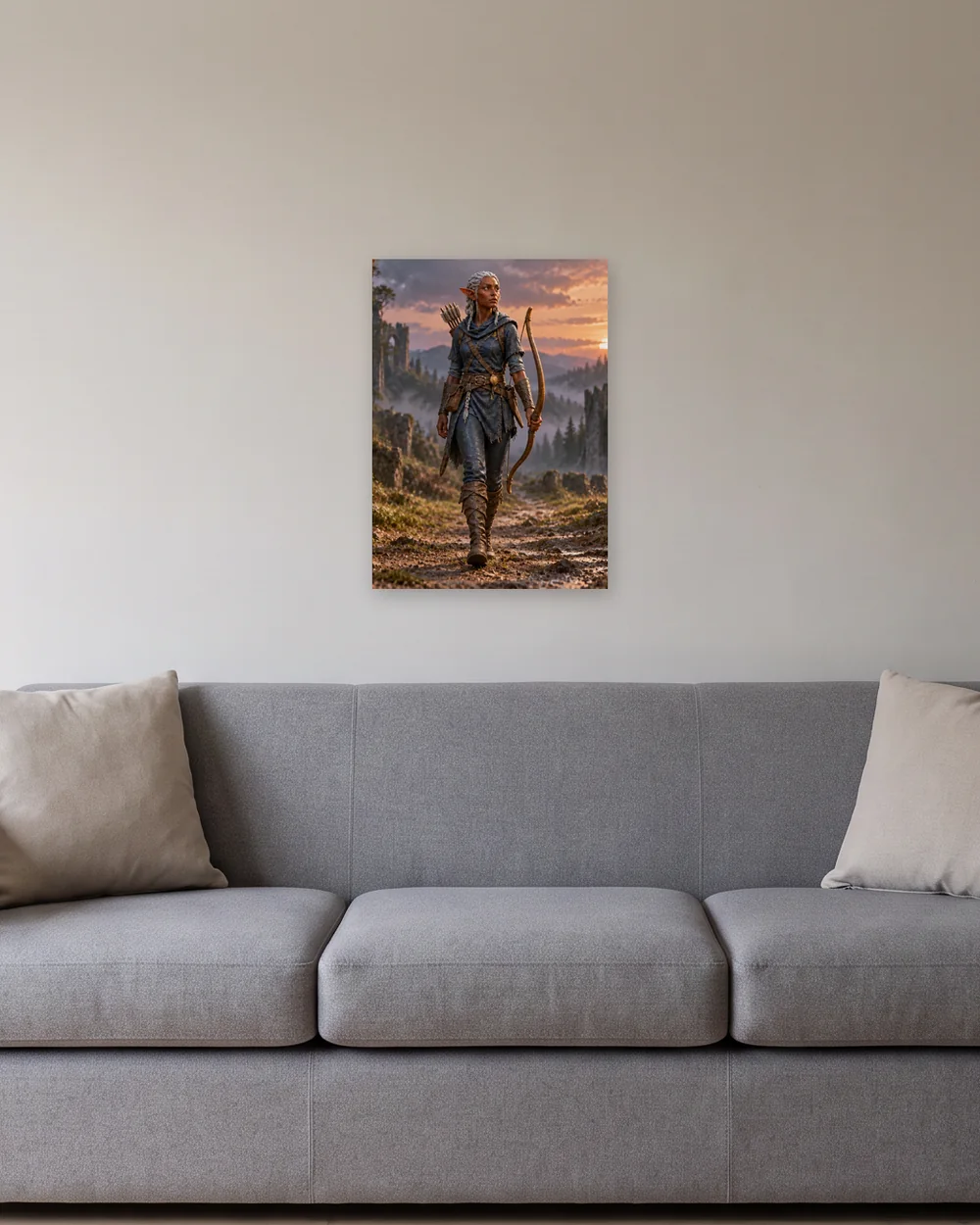
Ours are printed onto canvas stretched over a 2 cm FSC-certified wood stretcher, with no glazing. That is why they have no reflections and why they need treating differently from a framed print behind glass.
How to clean a canvas print: dry first, and usually dry only
A soft dry brush or a clean microfiber cloth, worked gently from the top down. Do it every few months and, short of an actual spill, that is usually the whole job. In normal conditions dust is what accumulates on a wall-mounted canvas, and dust comes off dry.
Work with the weave instead of scrubbing across it, and keep the pressure light. The canvas is stretched, so pressing into the middle pushes the whole surface and can leave it slack.
If something has actually marked it
Barely damp, not wet. A cloth wrung out in plain water until it feels cool, not damp, dabbed, not rubbed, then dried immediately with a second cloth. Work from the outside of the mark inwards so you don't spread it.
Test any of this in a corner first. And accept that some marks won't come out: an inkjet print on canvas isn't a wipeable surface, and trying harder is how a small mark becomes a bare patch.
What to keep away from it entirely
- Any household cleaner, spray or solvent. Including the gentle ones, including glass cleaner, including anything with alcohol in it.
- Soap of any kind. It leaves a residue that attracts more dust than it removed.
- Anything abrasive, which includes a kitchen sponge's green side and a paper towel.
- Heat. No hairdryer to speed up drying, and not over a radiator.
Dusting a textured surface
Canvas has a weave, and a weave holds dust in a way that glass does not. A soft brush gets into it; a cloth tends to skate across the high points and leave the hollows. If you only own one tool for this, a clean soft paintbrush is the better one.
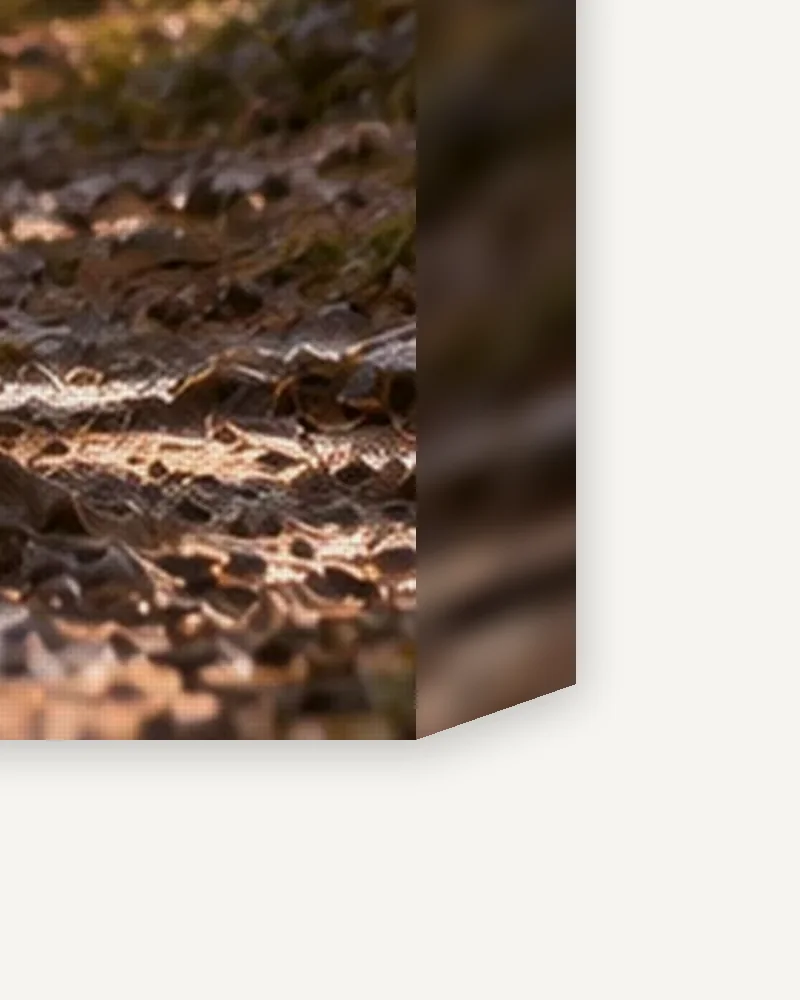
Go gently around the edges, where the canvas turns over the stretcher. That fold is the part that gets knocked when a print is moved, and it is also where a heavy hand will leave a shiny mark that does not come back out.
Where you hang it does more than cleaning ever will
Direct sunlight fades any print, and a canvas can't be protected by UV glazing because it has no glazing. A wall that gets direct sun for part of the day will visibly age a print over years. Somewhere bright but out of the sun's actual path is the single best thing you can do for it.
Kitchens and bathrooms are the other two to think about: grease carries in the air further than people expect, and sustained humidity isn't kind to a stretched fabric.
Framed prints and glass, which is a different job
If the piece is behind glazing you are cleaning the glazing, not the print, which is easier - with one caveat that matters here: our framed prints use plexiglass, not glass, and glass cleaner is the wrong thing for it. Use a barely damp soft cloth, spray the cloth and never the panel, so nothing runs down into the frame and reaches the paper edge.
Never spray anything directly at a frame. Liquid finds the gap between glass and rebate, sits there, and the first you know about it is a tide mark on the print months later.
How to flatten a rolled poster
An unframed print that has traveled rolled arrives with a memory of the tube. Unroll it and lay it face down under a few heavy books with a clean sheet of paper between, and leave it a day or two. Time does the work.
Don't reverse-roll it to "cancel out" the curl, which creases the surface, and do not iron it. If you are framing it anyway, the frame will flatten it for you and you can skip this entirely.
| Surface | Use | Avoid |
|---|---|---|
| Canvas, dusty | A soft dry brush or microfiber cloth | Pressing into the middle |
| Canvas, marked | A cloth barely damp with plain water, dabbed | Cleaners, soap, abrasives, heat |
| Plexiglass on a framed print | A barely damp soft cloth, sprayed on the cloth | Glass cleaner; spraying the frame |
| A rolled poster | Face down under books for a day or two | Reverse-rolling, ironing |
How to frame a poster
A3 and A2 are the two sizes we frame ourselves, so if you want it done for you, order it framed. If you are framing an unframed print, buy the frame for the size you ordered instead of trimming the print to fit a frame you own. Our posters are printed edge to edge, so a trim takes image, not border.
The canvas prints list the sizes, and the hanging guide covers fixings for a stretcher bar.
Compare the available US sizes and USD product prices before ordering. Shipping is calculated at checkout for your cart and US address; an expedited rate appears when available.
Questions and answers
Can you clean a canvas print with water?
Only barely damp, and only for an actual mark - a cloth wrung out until it feels cool, dabbed not rubbed, dried immediately. Routine dust comes off dry with a soft brush.
What should you never use on a canvas print?
Household cleaners, sprays, solvents, soap, anything abrasive, and heat. A printed canvas has no glazing, so whatever you use touches the print itself.
How do I flatten a rolled poster?
Lay it face down under heavy books with clean paper between, for a day or two. Do not reverse-roll it and do not iron it. Framing it will flatten it anyway.
Does sunlight damage a canvas print?
Yes, over years, and a canvas cannot be protected by UV glazing because it has none. Bright but out of the sun's direct path is the best place for one.